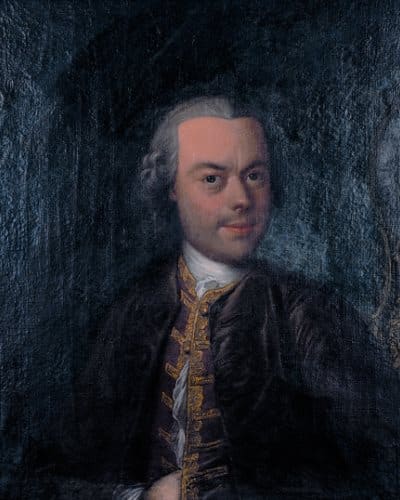
Primarily celebrated for the expression of philosophical and scientific free thought, the Age of Enlightenment also marked watchmaking’s entry into modernity. This entry, as discreet in its form as it was groundbreaking in its implications, was superbly embodied by the famous watchmaker Pierre Jaquet-Droz. A herald of precision mechanics and a meticulous genius, he also captivated Europe with his famous automatons, almost as lifelike as their models.
An “Improver” rather than a Creator
As skilled as he was meticulous, Pierre Jaquet-Droz became known in the world of watchmaking primarily for his extraordinary ability to improve – no: to elevate – mechanisms created by others. He elevated ornamentation and refinement to the level of art, adapting chimes, flute-playing mechanisms, music boxes, or tiny automatons to common clocks and watches, transforming existing pieces according to his fancy, to make them ever more original and mysterious.
Without having strictly designed innovative mechanisms, Jaquet-Droz nonetheless attracted the attention of the world’s elite (and a richly endowed clientele) by offering timepieces that were more appealing and more in tune with the artistic tastes of the era. As an avant-gardist, Jaquet-Droz indeed focused on developing an aesthetic reflection around his ornamentation work, thus conceiving works of art rather than mere clocks, unique pieces crafted on demand for his opulent clients.
While not innovating himself, Pierre Jaquet-Droz helped popularize the creations of his contemporaries, including the bridge caliber with suspended barrel by Jean-Antoine Lépine, self-winding watches, the keyless watch mechanism, and the principle of decorating the exterior of luxury timepieces.
There is, however, one area in which the Jaquet-Droz, father and son, earned a reputation as ingenious inventors: the still-nascent field of automatons. Certainly, automatons were not new in the 18th century: the moving figures designed by Leonardo da Vinci two centuries earlier are proof of this. But the automatons of Jaquet-Droz were quite different, as they were animated by high-precision mechanics – the watchmaker’s hallmark. Between 1767 and 1774, they thus created three particularly astonishing protagonists: the writer, the musician, and the draftsman.
A famous anecdote reveals both Pierre Jaquet-Droz’s talent for creating automatons and his mischievous side, characteristic of a genius who knows how to amuse himself through his work. In 1758, after a long journey to the court of the King of Spain, he presented Ferdinand VI with a magnificently ornamented clock. On it were placed three small figures, including a shepherd and his dog, which, when the clock struck the hour, came to life to play the flute and bark. But the animal’s barking was so realistic that it caused the courtiers to flee the room… and, in turn, made the king’s own dog react!
The Lives and Clocks of Pierre Jaquet-Droz
Pierre Jaquet-Droz was born in Switzerland, in the municipality of La Chaux-de-Fonds, in 1721. Very early on, encouraged by his family, he showed a certain inclination for clocks, whose ticking nurtured his taste for precision. After studying at the universities of Basel and Neuchâtel (mathematics, physics, then theology), the young man began an apprenticeship in watchmaking, thus returning to his first love.
It was in Paris, where he settled in the 1740s, that Jaquet-Droz specialized in improving timepieces. He transformed pieces as he pleased, adding a miniature automaton here, a decorative ornamentation there, or a chime elsewhere; orders poured in, and his pieces, metamorphosed by his deft hands, became collector’s items. After the successive deaths of his wife and daughter in 1755, he took his son Henry-Louis under his wing and had him work alongside him in the workshop. Together, they would produce the most incredible automatons ever seen.
A visit to the court of the King of Spain propelled Pierre Jaquet-Droz’s career, making him known throughout Europe. Introduced by the governor of the Principality of Neuchâtel, he loaded six of his creations onto a carriage and set off for Madrid. Besides the aforementioned episode of the dog automaton, the watchmaker impressed Ferdinand VI enough for the king to purchase all the pieces he had brought with him. Upon his return to Switzerland in 1759, he had carved out an exceptional reputation for himself throughout Southern Europe.
This marked the beginning of a new life – and a vast commercial expansion. In partnership with his son, Pierre Jaquet-Droz opened a workshop in the heart of London in 1774, entrusting its management to Henry-Louis: this was the first step. The industrial, scientific, and commercial dynamism of the British capital radiated throughout Europe, attracting the most cutting-edge inventors and technicians into its fold. The second step, made possible with the assistance of Jean-Frédéric Leschot, the family’s other associate, was to extend their renown to the Far East: first in China, at the Emperor’s court in Beijing, which imported Jaquet-Droz branded watches and clocks, then to Japan and the Indies.
The Zenith of the Jaquet-Droz
Just like London, though to a lesser extent, the city of Geneva also enjoyed a certain artistic and cultural influence. It was there that the final stage of the Jaquet-Droz empire’s development, and the zenith of their history, unfolded, after Henry-Louis had settled there. Admitted to the Société des Arts, he founded the first watchmaking manufacture there and opened a factory-school for the dial-making of repeater watches, with Leschot’s help. In this workshop, the son and father (who had left La Chaux-de-Fonds to join him) dedicated themselves to manufacturing watches with complications, which they exported to England and the East.
Unfortunately, even the most precise watches eventually go out of adjustment. In 1790, a grim economic climate – with partners in London and Canton experiencing significant financial difficulties – brought an end to the vast empire built by the Jaquet-Droz. The successive deaths of the father and son, in 1790 and 1791, marked the end of a flourishing enterprise.
Today, the Jaquet-Droz brand is owned by the Swatch Group, that of the creator of the watch of the same name, Nicolas Hayek. The factory in La Chaux-de-Fonds was reopened on this occasion, and as a tribute to Pierre Jaquet-Droz, Hayek founded a workshop dedicated to haute horlogerie (fine watchmaking) in the municipality. A way to not forget what contemporaries owe to the great men of the past.