From Renaissance Horology to the Marine Chronometer
The transformations in horology during the Renaissance and Classical era directly stem from the changes that marked the end of the Middle Ages in the conception of time. By becoming prevalent on public monuments, tower and belfry clocks tended to democratize the measurement of hours, making it universal. All that was missing was miniaturization and the improvement of existing mechanisms for the clock to enter its fully modern form; and it was, in part, the work on the marine pendulum that made this possible. Discover the history of horology between 1500 and 1800.
Developments in Horology During the Renaissance and Classical Era
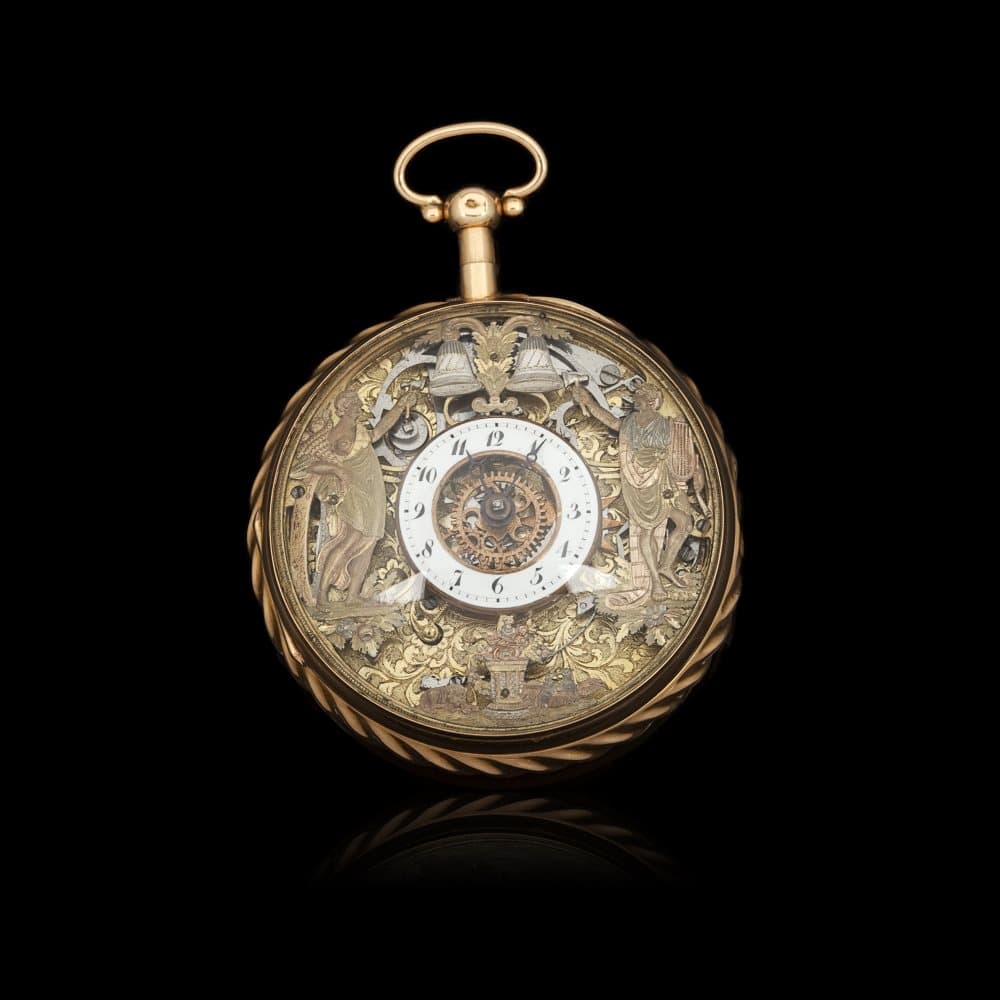
The concept of miniaturizing timepieces, and thus their portability, emerged towards the end of the Gothic period; this would lead to the modern understanding of the concept of a watch, and it is a concern that runs through the entire history of horology during the Renaissance and Classical era.
The widespread adoption of the clock – its entry into homes as common equipment – required its necessary miniaturization. The small format was an essential goal for timepieces to leave town halls and churches and integrate into the interiors of workshops and homes; consequently, an entirely new technology had to be invented, and the entire mechanism had to be rethought. Reduced dimensions implied the use of a screw; the screw, in turn, allowed the development of other mechanisms; the market opened by miniaturization created a demand which, itself, pushed for the creation of new models accessible to a wider audience; etc.
In any event, it was the invention of the mainspring in the 15th century, replacing the pendulum specific to clocks, that gradually allowed for the reduction in the size of timepieces. By expanding and contracting, the spring provides the necessary energy for the mechanism to function, without the need for a large object like the pendulum.
From Clock to Watch
Peter Heinlein is generally credited with the invention of the pocket watch, the starting point of Renaissance horology; it was worn as a pendant or around the neck, at the end of a chain. By flattening, it would later become the fob watch. We are then in Augsburg, Germany, at the dawn of the 16th century; along with Nuremberg, these two cities constituted the first horological centers in Europe. The center of gravity for horology quickly shifted towards Geneva and London: by the end of the 16th century, the former already had 25 master watchmakers; a century later, there were nearly a hundred. As for England, the watchmakers’ guild was officially established there in 1631: it responded to the concern of local artisans who saw precision work on timepieces monopolized by technicians from across the Channel. The development of the pocket watch was thus accompanied by the rise of horology as an industry.
Finally, the wristwatch, the culmination of this slow shift from clock to watch (both miniaturized and portable), appeared towards the end of the 18th century, when Pierre Jaquet-Droz designed and produced his first models in Geneva. The history of horology sometimes mentions the existence of wristwatches long before this date (Queen Elizabeth I is said to have received, at the end of the 16th century, a bracelet decorated with a small timepiece), but it remains difficult to judge the authenticity of these references.
Marine Clock and Chronometer: the Grail of 17th-Century Inventors
The history of horological development is intimately linked to the evolution of the marine chronometer: it was the human need to determine a precise position on the oceans that pushed classical-era inventors to design instruments intended for use at sea, in order to calculate longitude at any time – a much more complex matter than determining latitude, for which it was sufficient to know the Sun’s height above the horizon.
Inspired by the work of Galileo, who was never able to complete his designs for a marine timekeeper usable on a ship’s deck, Dutch and English inventors pondered marine chronometers increasingly advanced. Galileo had “discovered” the isochronism of the pendulum in 1583, during a visit to the Pisa Cathedral baptistery, when he was only 19 years old; in the mid-17th century, Christiaan Huygens adopted the use of the balance wheel and adapted it to create a marine pendulum.
When Huygens created the first spiral spring watch in 1674, the English inventor Robert Hooke cried foul: he claimed to have been the originator of this discovery in 1658. Be that as it may, the combination of the mainspring as a driving force and the balance spring as a regulator paved the way for the design of the classical marine chronometer. Once this system was found, all that remained was to offer motivation: this was the competition launched in 1714 by the British Parliament, with a reward for whoever could create a marine chronometer capable of measuring longitude with sufficient precision.
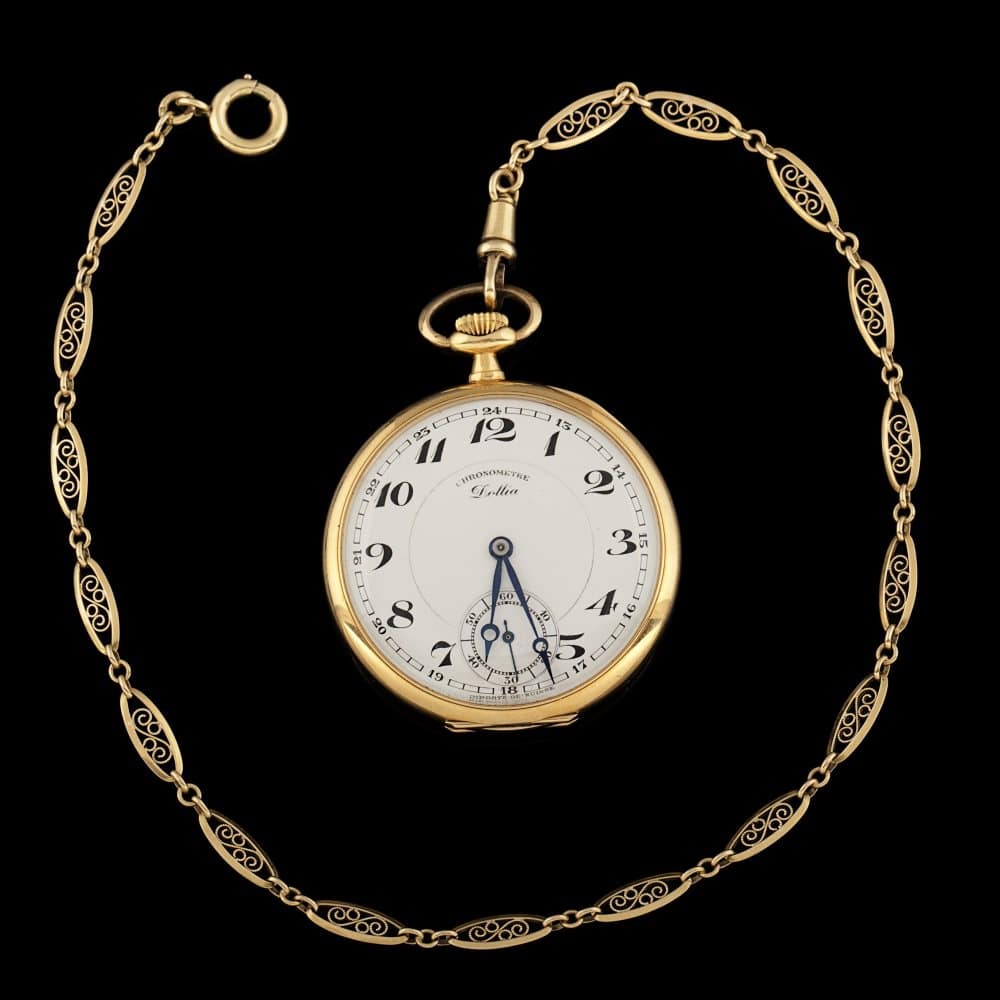
The winner of this competition was John Harrison. Financially aided by the famous George Graham, he completed in 1761 a marine chronometer model – number 4 – which was only 5 seconds slow (equivalent to just 1 and a half minutes of longitude) over 6 months of travel between London and Jamaica. But this was not the only revolution. For Harrison’s marine chronometer was the equivalent of a large watch, meaning it was transportable on land as well as at sea (the spring mechanism defying gravity) and easily readable by sailors. Much simpler to use than the complex mathematics required for navigation at sea, the marine chronometer gradually became widespread throughout Europe, paving the way, through its increasingly precise mechanisms, for modern horology.




 Developments in Horology During the Renaissance and Classical Era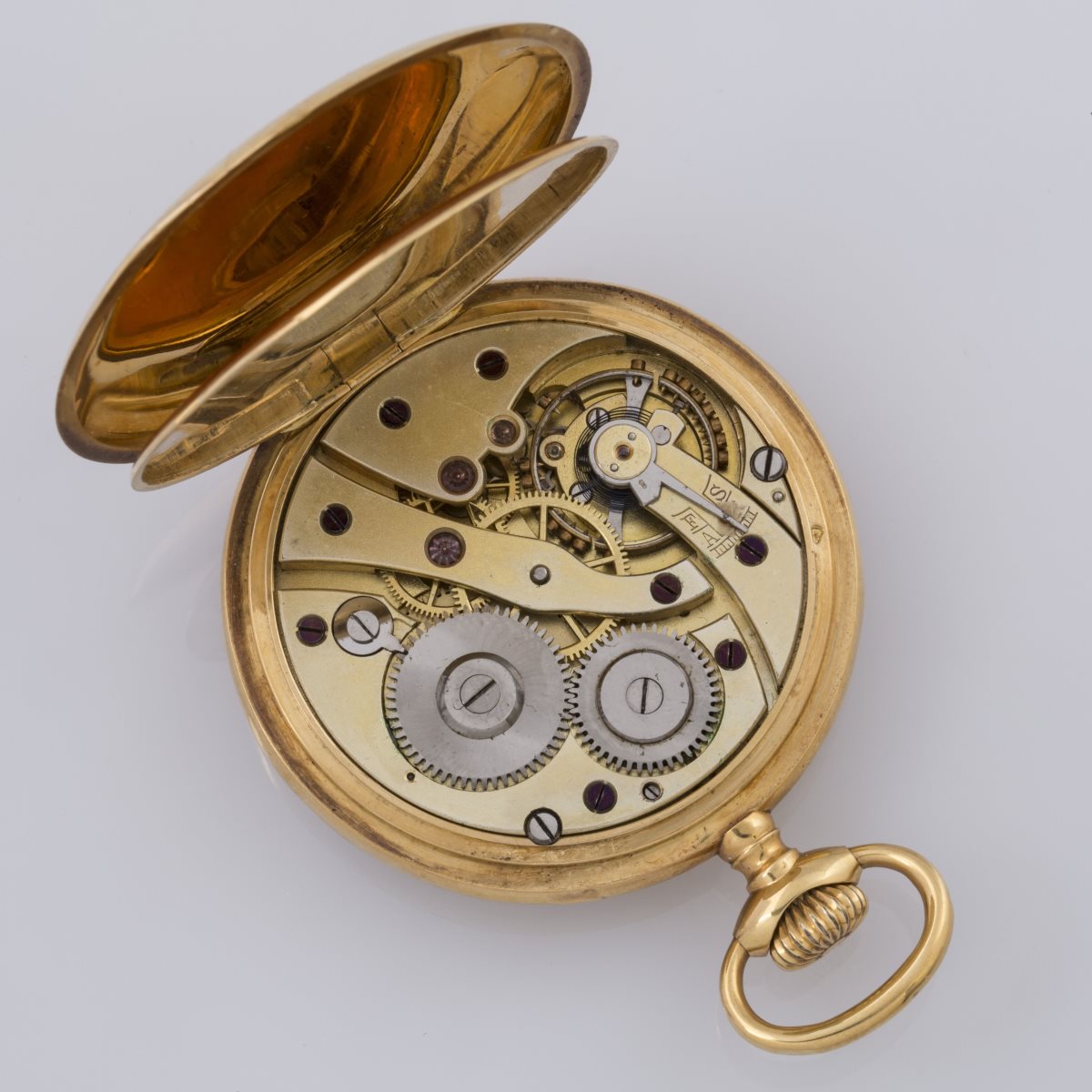

 Marine Clock and Chronometer: the Grail of 17th-Century Inventors
