Driven by illustrious watchmakers as well as prestigious brands, Swiss watchmaking benefited very early on from exceptional expertise in the design and manufacture of timepieces. It continues today to dominate the watch industry sector, despite some major crises, some of which almost put an end to this long-standing hegemony.
Birth of Swiss Watchmaking
Swiss watchmaking originated on the French border, in the French-speaking part of the country, around Geneva, Neuchâtel, Le Locle, La Chaux-de-Fonds, the Vallée de Joux, or Fleurier. It is there that illustrious houses, watch manufacturers that would become among the most famous in the world (Audemars Piguet, Jaeger-LeCoultre, Breguet, Vacheron Constantin…), came to life.
Driven towards watchmaking by Calvinist doctrine, which forbade wearing jewelry (on the pretext that it was superfluous accessories), goldsmiths and jewelers contributed to establishing the Swiss watch industry. An industry that leaned towards luxury, with its timepieces encrusted with precious stones, formerly intended for jewelry.
After the revocation of the Edict of Nantes by Louis XIV, many watchmakers established in France, Protestants by faith (the Huguenots), fled the country to join neighboring nations. Thus, they arrived en masse, particularly in Switzerland, where they contributed to the development of the national watchmaking industry, at the expense of their original territory. This was not a new phenomenon – a century earlier, Thomas Bayard had already used the St. Bartholomew’s Day Massacre as a pretext to take refuge in Geneva – but it was the scale of the exodus that was astonishing, with a real brain drain of watchmaking talents living in France. In Geneva, as throughout the Jura Arc, artisans settled in a peaceful environment where they benefited from a workforce as patient as it was meticulous – precious assets for the manufacture of such precise mechanisms. Swiss watchmaking was born.
From Craftsmanship to Industrialization
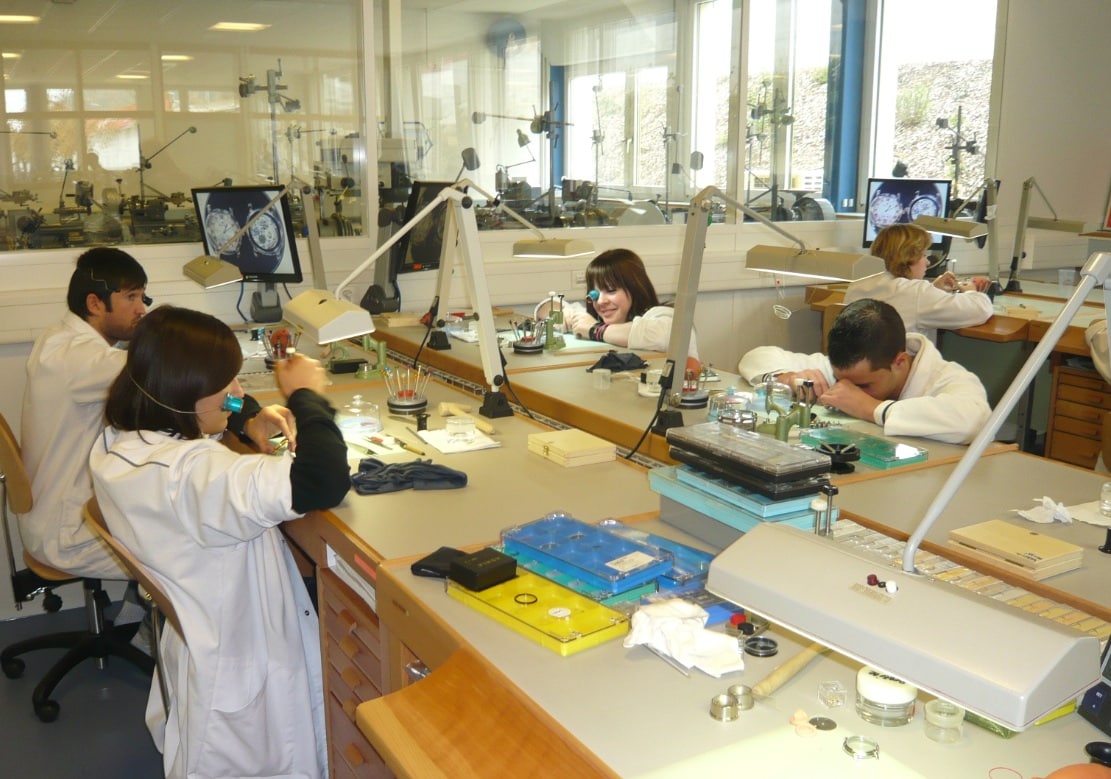
Renowned for its craftsmanship, Swiss watchmaking relies on numerous talents working in tiny, highly specialized workshops: it sometimes takes a hundred pairs of hands to make a clock or a watch, each deploying specific expertise. Training is deeply artisanal: the master watchmaker traditionally receives his certificate after presenting a meticulously crafted piece made by himself. Then, gradually, a pre-industrial production method called « établissage » developed, particularly in the Jura, which fostered the specialization of artisans in their own specific fields, while the entrepreneur managed production from above. By the end of the 18th century, Swiss watchmaking reached its peak: 20,000 employees worked in this industry in Geneva, and some 85,000 watches were produced annually.
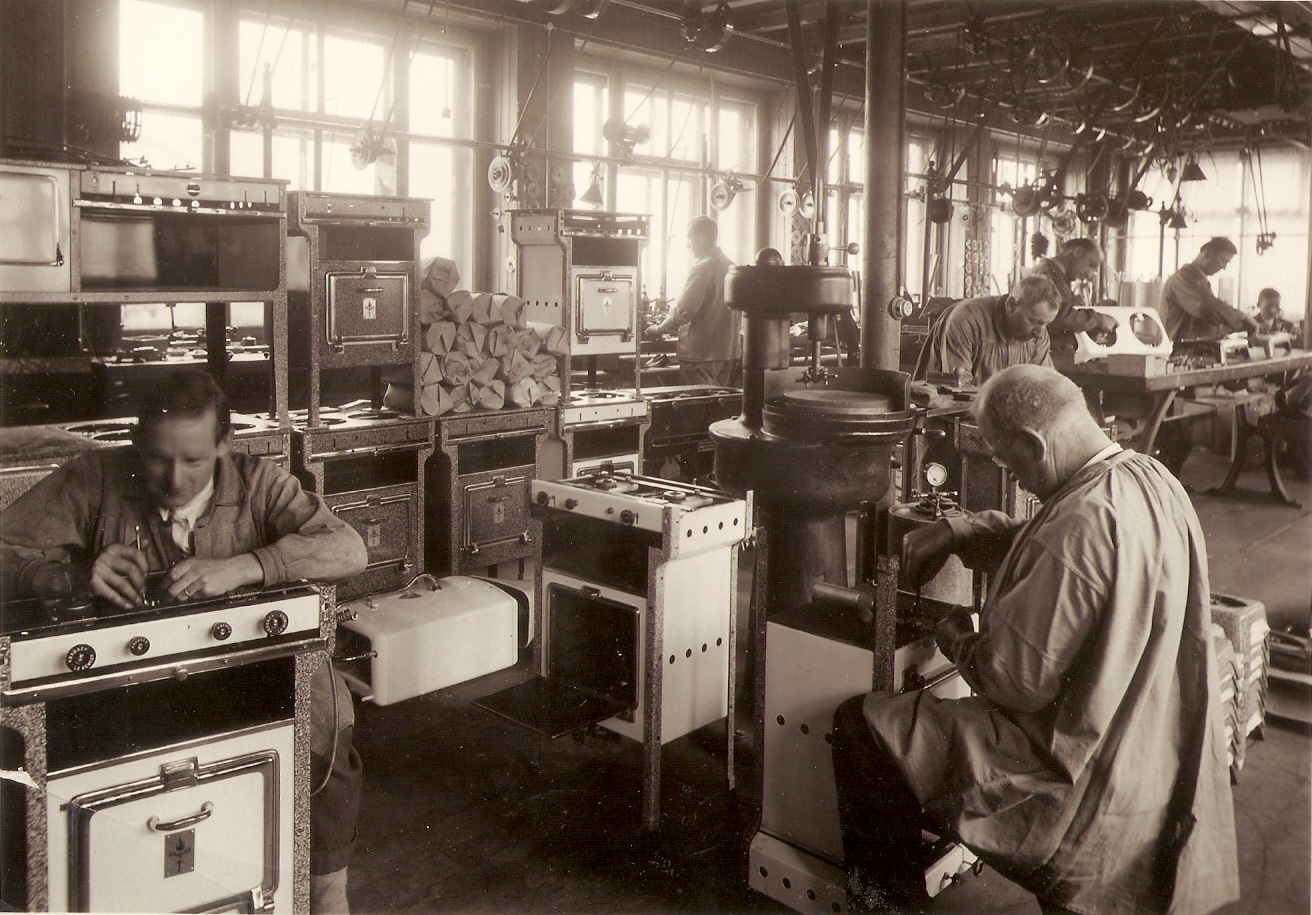
However, from the mid-19th century onwards, the sector, driven by the industrial revolution, was forced to adapt quickly. The well-established établissage system was disrupted by American-style industrialization, which is characterized by highly efficient task division.
This was the first warning shot for Swiss watchmaking, originating from North America. Under the aegis of a visionary industrialist, Aaron Lufkin Dennison, American companies (foremost among them the Waltham Watch Company) developed mechanisms with interchangeable parts, which were faster to produce. The first automatic screw-making machine and Waltham’s assembly line, presented at the Philadelphia Universal Exposition in 1876, caused a sensation. And they kicked off the industrialization of the sector, which severely impacted traditional Swiss craftsmanship, forcing it to catch up and – following a damning report by Jacques David, sent by Longines to the said Exposition, titled « Swiss Watchmakers, Wake Up! » – to adapt its production methods. With great success, nonetheless.
Crises of the 20th Century
Forced industrialization was merely a warning: in the 20th century, Swiss watchmaking was buffeted by several major crises. A land of innovation and watchmaking prestige, yet dominated by scattered small structures, Switzerland bore the full brunt of the Great Depression affecting the United States. The Swiss Confederation was urged to react: it pushed banks to create a holding company to bring together watch component manufacturers.
This first serious upheaval gave no indication of what the earthquake of the 1970s would be. The electronic, quartz watch swept over Europe, coming from Japan. Electronic components and low-cost labor allowed these timepieces to be sold at prices defying all competition – and precisely, Switzerland could no longer withstand the shock, especially since these watches, in addition to being much cheaper, were also more accurate. Gradually, the Swiss watch industry saw its exports drastically reduce, workshops disappear, and the number of employees melt away like snow in the sun. But Japanese competition was not the only cause. Among other things, the watchmaking statute (a set of legal measures taken to save the industry), established in 1931, contributed to isolating Swiss watchmaking, explaining its unpreparedness for the arrival of rivals on the market.
In 1981, Swiss watchmaking was at a standstill. The market share of national watches fell from 83% in 1970 to 22% in 1981 (it would drop to 15% in 1983). What would have become of it without the help of Nicolas Hayek? The Lebanese-born businessman conducted an audit of the sector, from which he drew all the lessons. In 1983, under his impetus, a new holding company was created, bringing together the two main Swiss watchmaking groups: the Société de microélectronique et d’horlogerie (SMH), the future Swatch Group. In the process, Hayek transformed the local production method by launching the Swatch: a watch stamped « Swiss quality » but distributed at a competitive price. This small plastic timepiece allowed the national watchmaking industry to recover.
High technology, selective brand marketing: the transformation of Swiss watchmaking saved the industry from ruin. Since then, the sector has renewed itself across two segments: the Swatch type, watches sold at very accessible prices; and the very high-end, through brands favoring the manufacture of mechanical timepieces allowing for complications (synonymous, in watchmaking, with great prestige). Today, the quantity of watches produced in Switzerland is extremely reduced, but the value of these watches is unparalleled.
Swiss Watchmakers and Inventors
The great names of Swiss watchmaking, artisans and inventors, have given the sector dominance over the global watch industry throughout history, from the 16th century to the present day. Here are some of the most renowned (in alphabetical order):




 From Craftsmanship to Industrialization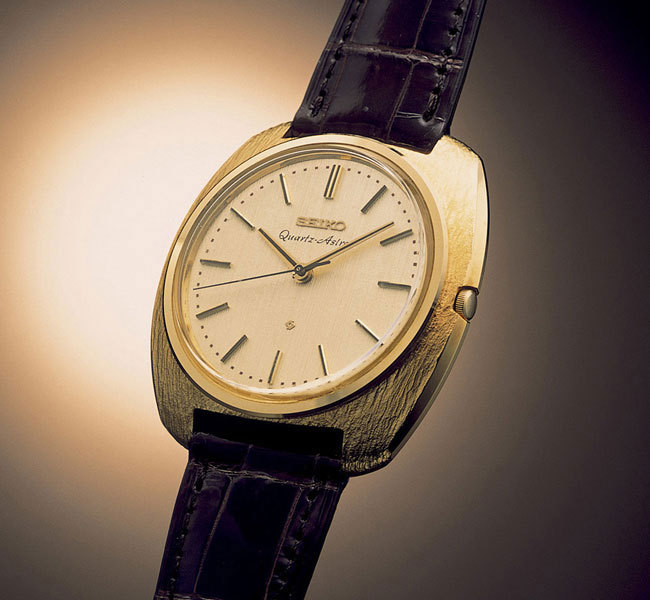

 Swiss Watchmakers and Inventors