
Key takeaway: to give a watch box as a gift, first count how many watches the person has and add two to four extra slots for future additions. Then choose the material based on the room where it will sit, a glass lid if they like looking at their collection, a solid lid if they want to protect it from light, and check the cushion size against their largest watch.
A watch box is a safe gift for an enthusiast: it is used every day, it protects watches that are often valuable, and it stays on the dresser for years. It still needs to be the right size. A box that is too small becomes useless as soon as the next watch is bought, and a model that is too large sits half-empty for years.
This guide reviews the four criteria that set models apart: number of slots, material, lid, and interior layout. The examples come from the Kronokeeper, Scatola del Tempo, and Anatole Baker boxes we sell, with their real dimensions, so you can compare before ordering.
How many slots to plan for
This is the first question—and the one most often asked the wrong way. A collector rarely buys just one watch: the simplest rule is to count the watches they own today and add two to four slots. If you do not know the exact number, a discreet look at their bedside table or a question to someone close to them is often enough.
Common formats break down as follows. Four slots suit a small rotation of watches worn alternately, as with Scatola del Tempo’s Valigetta 4, a leather box inspired by 19th-century trunks. Six slots are the most common gift format: it covers most starter collections, with Clipperton, Ashwood, Anatole Baker, or blue lacquered oak boxes. Eight and ten slots are for an established collection, and twelve slots for an enthusiast who buys regularly.
Several lines come in two sizes, so you can upgrade without changing style: the Kronokeeper 10-watch blue lacquered oak box, for example, uses the same design as the 6-watch version, with the same white piping and the same beige velvet interior.
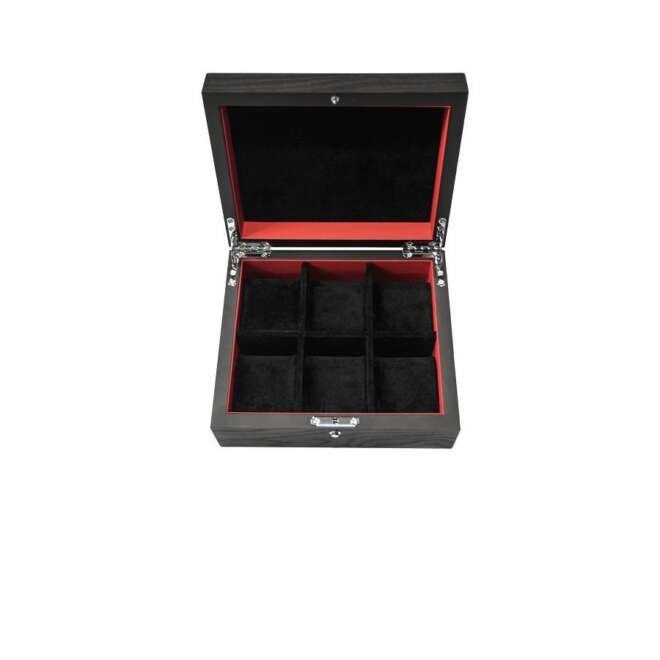
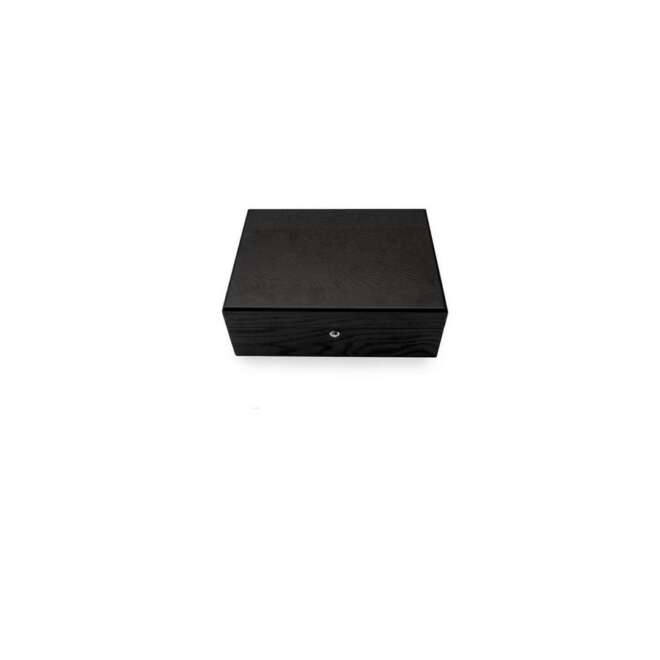
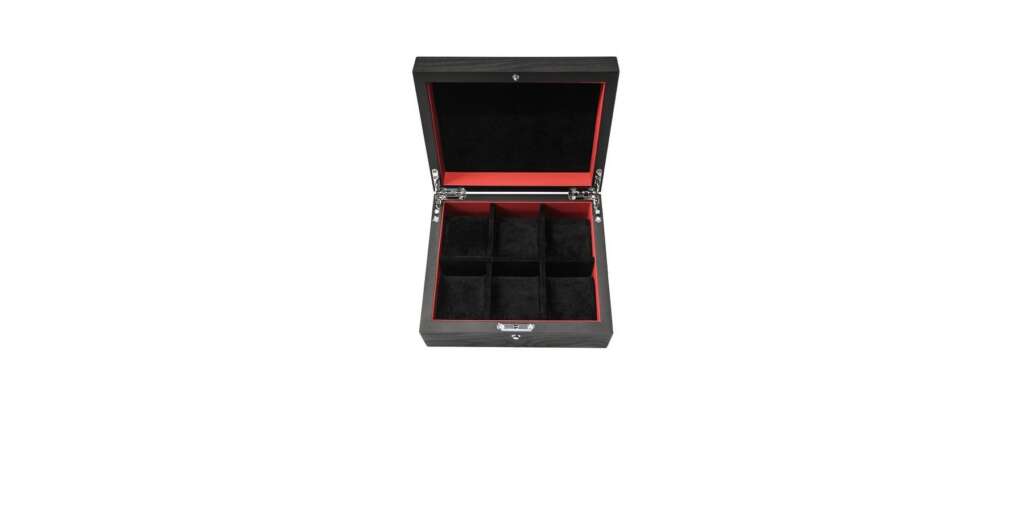
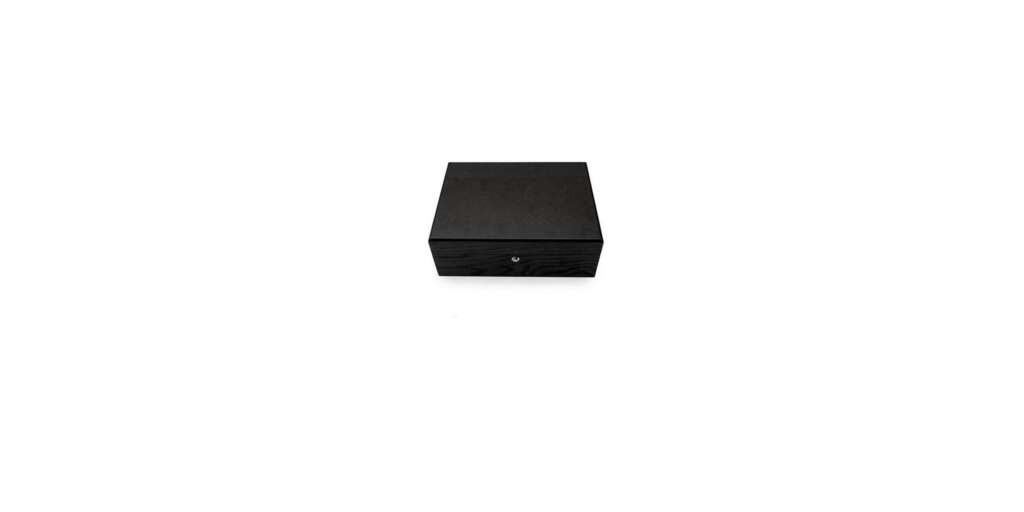
Coffret 6 montres Ashwood Kronokeeper
Élégant et raffiné, le coffret Kronokeeper Ashwood accueille jusqu’à six montres dans un écrin en bois de frêne noir au design minimaliste. Son intérieur rouge contrastant, associé à des coussins en velours noir, assure une présentation soignée et une protection optimale pour chaque pièce de collection.
Expédition sous 6 à 12 jours
Wood, lacquered oak, leather, or marquetry
The material determines how the box looks in the room, but it also has practical implications. Stained wood or black ash creates a understated piece that blends into an office or bedroom; it is the easiest choice when you do not know the person’s tastes well. Blue lacquered oak adds a bold colour designed to be seen.
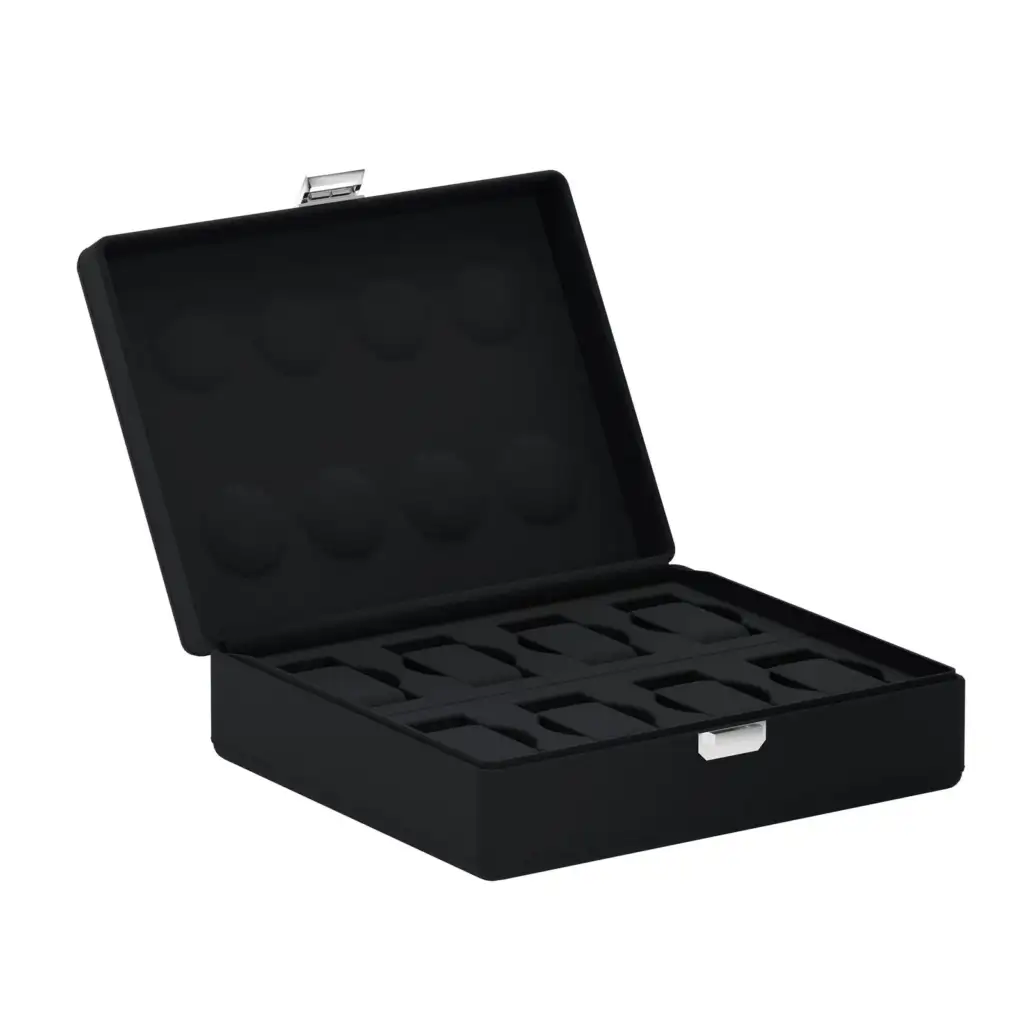
Leather changes the game. Kronokeeper’s Maudez box, in Saffiano leather with reinforced stainless-steel corners, has a removable tray secured with snap buttons: you can take it out to slip it into a safe or take it with you. It is a good choice for someone who travels with their watches or already keeps valuables locked away. Scatola del Tempo’s Toledo leather boxes, made in Italy, lean more toward the heirloom-object feel.
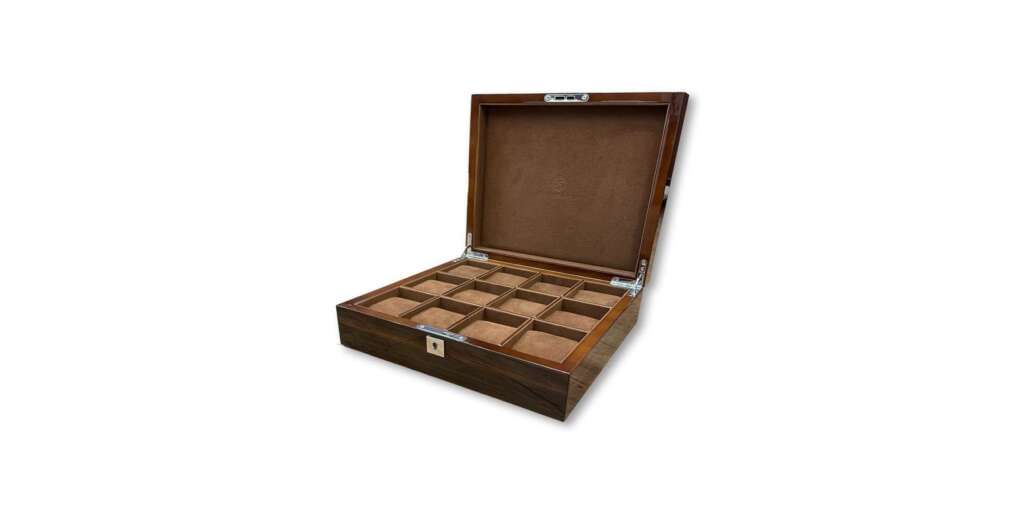
Marquetry is the most decorative. The Marquetry 12-watch box in walnut and Macassar combines lacquered Macassar ebony veneers with dark, glossy grain. This type of lacquered finish requires a soft cloth to remove fingerprints—something to keep in mind if the box sits in a high-traffic area.
Glass lid or solid lid
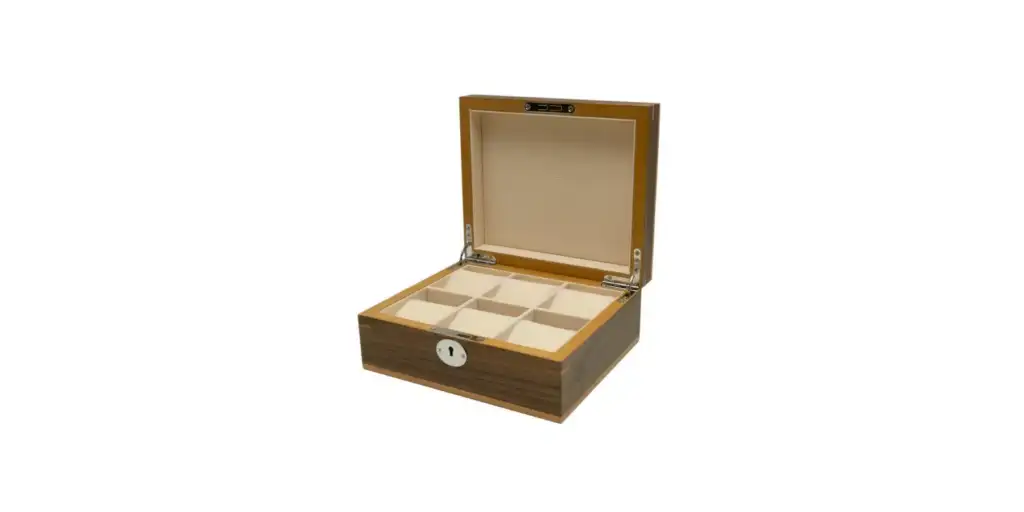
A glass lid turns the box into a small display case: you can choose your watch for the day without opening it, and the collection stays visible. This is the case with the Kronokeeper Clipperton 6-watch box with glass lid, in matte grey wood edged with light wood, with a cream microfibre interior and a chrome-plated brass key lock. It is also available in brown wood.
A solid lid offers better protection from light. Placed near a window, a glass-lid box lets the sun reach dials and leather straps, which eventually fade. If the box must stay in a bright room, or if the person prefers discretion, a solid lid is the more sensible choice. In both cases, a lock will not stop a burglar, but it prevents a child or a curious visitor from handling the watches.
Products by Category
Cushions, lining, and compatibility with large watches
In a box, each watch is stored with the strap closed around a cushion. Two measurements matter: the cushion width, which must allow the case to pass, and its circumference, which must match the length of the closed strap. A metal strap adjusted for a small wrist does not close well around a cushion that is too thick.
Here are the reference points taken from the product pages for the boxes we sell:
- Clipperton 6 with glass lid: 53 mm-wide cushions.
- Blue lacquered oak, Ashwood: 56 × 72 mm cushions, suitable for most wristwatches, on leather as well as steel.
- Marquetry 12: cases up to 57 mm wide, cushions with 17 and 19.5 cm circumference.
- Tiboulen 8, a leather travel box: 50 mm cushions, watches up to 55 mm in diameter.
The lining protects the case and crystal from micro-scratches. Velvet, suede-effect fabric, microfibre, or suede flannel are equivalent in this respect; the difference is mainly the colour, which makes light dials stand out against a dark background and vice versa. For very large dive watches or thick chronographs, also check the interior height under the lid.
Where to place the box and how to maintain it
A watch box does best in a temperate, dry room, away from a south-facing window, a radiator, or a bathroom. Heat and humidity wear out leather straps and watch gaskets, and direct sun fades linings as well as dials. A bedroom dresser, an office shelf, or inside a wardrobe is ideal. If the person already stores their watches in a safe, measure the interior before choosing: a compact box or a removable tray will fit, a large 12-slot model probably will not.
Maintenance comes down to a few simple steps. A dry microfibre cloth is enough for wood, lacquer, and glass; avoid household cleaners, which dull varnishes and leave marks on the pane. A soft brush removes dust from velvet cushions. On a leather box, a lightly damp cloth followed by air-drying is sufficient. Finally, always store a dry watch: after a summer day or getting caught in the rain, leave it out for a few minutes before putting it back on its cushion, so you do not trap moisture under the lid.
Depending on the person’s profile
For someone starting a collection and wearing two or three watches in rotation, a simple 6-slot wooden box leaves room to grow without looking empty. For an enthusiast who likes to show their watches, the Clipperton’s glass lid or the 1960 line’s blue lacquer will make more of an impression. For an established collector, a 10- or 12-slot format—possibly in marquetry—marks the occasion. And for someone who travels, a leather box with a removable tray or a Tiboulen travel box will be more useful than a beautiful object that never leaves the dresser.
Finally, think about straps: an enthusiast who often changes straps will appreciate dedicated storage such as Kronokeeper’s Strap Book, which holds 20 straps up to 24 mm wide. All our models, from the 4-slot box to the 12-watch box, can be compared in our watch boxes and cases category.
FAQ
Count the watches the person owns and add two to four slots. A collection grows quickly: a 6-slot box suits someone with three or four, and a 10- or 12-slot box suits an established collector. A few empty slots are better than a box that is already full on the day you give it.
No, as long as it is not exposed to sunlight. The glass protects from dust just like a solid lid. However, placed near a window, it lets light reach dials and leather straps, which can fade over time. In a bright room, choose a solid lid.
Yes, in most cases. The usable cushion width is the figure to compare: 53 mm on the Clipperton 6 with glass lid, up to 57 mm on the Marquetry 12 box. For a very thick watch, also check that the lid closes without touching the crystal.
A lock is not essential, but it is useful in a home with children or visitors. It does not replace a safe against theft. The Clipperton and Kronokeeper’s Maudez come with their key, and the Maudez’s removable tray can go into a safe.
The watch box stays at home and displays several watches on cushions, often under a rigid lid. The travel case is more compact and lighter, designed to fit in luggage and protect watches from impacts during transport, like Kronokeeper’s Karoni or Tiboulen cases.