

Artisan ébéniste et horloger autodidacte, l’Anglais John Harrison a marqué le XVIIIe siècle – et, au-delà, toute l’histoire de l’horlogerie – grâce à deux inventions majeures : le pendule et le chronomètre de marine. Autrefois regardé avec circonspection par ses pairs, il a, au fil du temps, intégré le panthéon des grands noms de l’horlogerie.
La particularité des grands inventeurs est de pouvoir défier le temps. John Harrison est de ceux-là. En avril 2015, le National Maritime Museum de Londres a accueilli la présentation d’une distinction remise par le Livre Guinness des records à la « montre mécanique à pendule la plus précise », une montre connue sous le nom de « Clock B », conçue par Harrison… 250 ans plus tôt ! Ce garde-temps a prouvé, en effet, qu’il pouvait être précis à une seconde près sur une période de 100 jours. Un projet qui à l’époque avait été considéré comme « tellement incohérent et absurde » qu’il se rapprochait « des symptômes de la folie » (à lire dans cet article en anglais).
Cette anecdote, à elle seule, résume parfaitement bien qui était John Harrison : un génie de son temps, ignoré de ses pairs, dont le travail innovant et minutieux ne sera reconnu que beaucoup plus tard.
L’homme a, toute sa vie, incarné une sorte de logique de précision. Tant et si bien qu’il est décédé l’exact jour anniversaire de sa naissance, le 24 mars 1776, à Londres, à l’âge de 83 ans. Venu au monde dans le comté du Yorkshire, le jeune John Harrison s’intéresse très tôt à l’horlogerie. Et pour cause : à 6 ans, le garçon, atteint de la varicelle, est condamné à passer de longues journées au lit, enfermé dans sa chambre. Pour le distraire, ses parents lui offrent une montre, dont le petit John explore le fonctionnement des heures durant. C’est le début d’une passion qu’il accommodera parfaitement avec son autre talent : l’ébénisterie.
Adulte, Harrison se distingue par la fabrication d’horloges en bois, qui sont autant d’occasions de produire des mécanismes innovants. Vers 1720, il honore une commande passée par la ville de Brocklesby Park pour une nouvelle horloge : sa création, tout en bois de chêne et de gaïac, est affublée d’une invention maison, l’ « échappement sauterelle », un mouvement dénué de friction qui ne nécessite aucune lubrification. Puis, entre 1725 et 1728, avec l’aide de son frère James, ébéniste également, il conçoit trois horloges à pendule – une autre invention de son cru. Le pendule à balancier bimétallique, résistant aux changements de température, deviendra une création majeure de l’histoire de l’horlogerie.
Mais l’autre invention qui rendra Harrison célèbre, à laquelle il consacrera littéralement une majeure partie du reste de sa vie, c’est la fabrication du chronomètres de marine. Un objet qui a changé en profondeur la façon de naviguer.
Voici une sélection des inventions horlogères que l’on doit à Harrison :
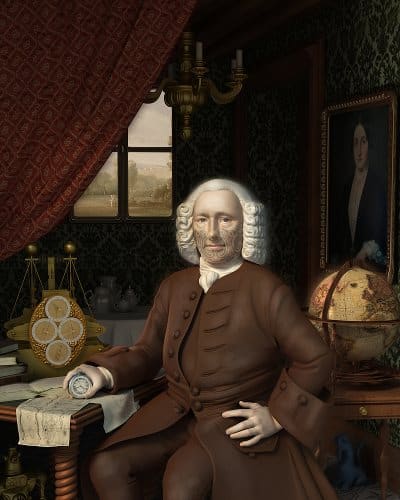 John Harrison, ou l’art de concevoir des garde-temps faits de bois
La particularité des grands inventeurs est de pouvoir défier le temps. John Harrison est de ceux-là. En avril 2015, le National Maritime Museum de Londres a accueilli la présentation d’une distinction remise par le Livre Guinness des records à la « montre mécanique à pendule la plus précise », une montre connue sous le nom de « Clock B », conçue par Harrison… 250 ans plus tôt ! Ce garde-temps a prouvé, en effet, qu’il pouvait être précis à une seconde près sur une période de 100 jours. Un projet qui à l’époque avait été considéré comme « tellement incohérent et absurde » qu’il se rapprochait « des symptômes de la folie » (à lire dans cet article en anglais).
Cette anecdote, à elle seule, résume parfaitement bien qui était John Harrison : un génie de son temps, ignoré de ses pairs, dont le travail innovant et minutieux ne sera reconnu que beaucoup plus tard.
L’homme a, toute sa vie, incarné une sorte de logique de précision. Tant et si bien qu’il est décédé l’exact jour anniversaire de sa naissance, le 24 mars 1776, à Londres, à l’âge de 83 ans. Venu au monde dans le comté du Yorkshire, le jeune John Harrison s’intéresse très tôt à l’horlogerie. Et pour cause : à 6 ans, le garçon, atteint de la varicelle, est condamné à passer de longues journées au lit, enfermé dans sa chambre. Pour le distraire, ses parents lui offrent une montre, dont le petit John explore le fonctionnement des heures durant. C’est le début d’une passion qu’il accommodera parfaitement avec son autre talent : l’ébénisterie.
Adulte, Harrison se distingue par la fabrication d’horloges en bois, qui sont autant d’occasions de produire des mécanismes innovants. Vers 1720, il honore une commande passée par la ville de Brocklesby Park pour une nouvelle horloge : sa création, tout en bois de chêne et de gaïac, est affublée d’une invention maison, l’ « échappement sauterelle », un mouvement dénué de friction qui ne nécessite aucune lubrification. Puis, entre 1725 et 1728, avec l’aide de son frère James, ébéniste également, il conçoit trois horloges à pendule – une autre invention de son cru. Le pendule à balancier bimétallique, résistant aux changements de température, deviendra une création majeure de l’histoire de l’horlogerie.
Mais l’autre invention qui rendra Harrison célèbre, à laquelle il consacrera littéralement une majeure partie du reste de sa vie, c’est la fabrication du chronomètres de marine. Un objet qui a changé en profondeur la façon de naviguer.
Voici une sélection des inventions horlogères que l’on doit à Harrison :
- Le pendule bimétallique à gril, en acier et laiton – une alternative au pendule à mercure de George Graham.
- L’ « échappement sauterelle », échappement à recul pour pendules – mais tellement difficile à régler qu’il sera utilisé essentiellement par Harrison lui-même.
- Le roulement à bouleaux.