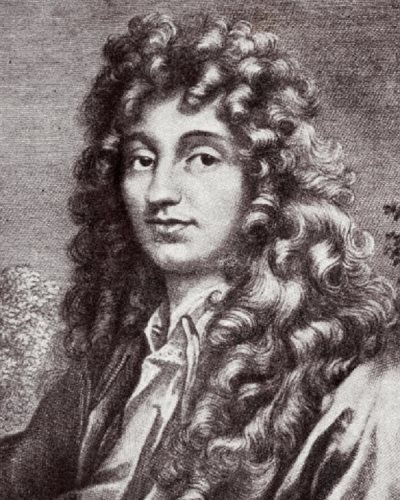
Divided between mathematics, physics, and astronomy, both a theoretician and an experimentalist, Christiaan Huygens was one of the precursors of the modern scientific spirit, in the lineage of Copernicus and Galileo. A worthy representative of the intellectual ferment that made the Netherlands an oasis amidst the European obscurantism of the 17th century, Huygens conceived, among other things, the principle of the pendulum clock, paving the way for the development of horological precision.
So even if he was not solely a watchmaker, he was among the great inventors who revolutionized this field.
Christiaan Huygens and His Century
Christiaan Huygens was born on April 14, 1629, into a family of dignitaries of the House of Orange, in The Hague. His father, Constantijn, a poet and diplomat, ensured he received an exemplary education until the age of 16, and allowed him to benefit from his circle of friends, including René Descartes. The young Christiaan was thus in good hands. Perhaps for this reason, he developed, very early on, a particular fascination for the functioning of machines and the mysteries of nature. While conducting his first childhood experiments with mills, he was captivated by the ripples a simple stone cast into water produced on its surface.
After studying law and mathematics in Leiden and then Breda, he turned his attention to physical sciences and astronomy, two disciplines into which he integrated the mathematics he loved so much. Christiaan was fortunate to have grown up in a country that, in the 17th century, embodied an oasis of free thought and scientific prospects, made possible by complete freedom of worship, at the heart of a Europe dazed by religious obscurantism. This period is known as the “Golden Age,” which saw many European thinkers take refuge in Holland to work in peace, like Descartes.
It was in this context that the young Christiaan conducted his first scientific works: the elucidation of the rules of collision in 1652; the publication, in 1657, of his first work (and the very first of its kind) on the calculation of probabilities; the calculation of centrifugal force; as well as his work on the theory of the oscillating pendulum, with the aim of making time measurement more precise. Discoveries and publications followed one another in astronomy, physics, and mathematics alike.
In 1666, he moved to Paris, under the protection of Colbert. Thanks to Colbert’s intervention, Christiaan received a substantial pension from King Louis XIV – financial security that allowed him to dedicate himself entirely to his work. During the fourteen years he spent in France, he was elected to the Academy of Sciences (in 1666), after having been admitted to the English Royal Society, and participated in the construction of the Paris Observatory, completed in 1672.
Christiaan Huygens eventually returned to his home country in 1680, fleeing the escalating persecutions against Protestants in France. Seriously ill, he passed away in The Hague, his birthplace, on July 8, 1695.
A Man of Science
In his bestseller Cosmos, astrophysicist Carl Sagan pays tribute to Christiaan Huygens while highlighting the grandeur of the Dutch “Golden Age” that allowed such men to develop their thought. In a few lines, he describes some of Huygens’ impressive discoveries, who was the first to:
Calculate the size of a planet other than Earth;
Speculate on the presence of a cloud layer all around Venus;
Spot dark patches on the surface of Mars and use them to estimate the length of the Martian day;
Discover Saturn’s rings and observe that they are composed of rocks;
Discover Saturn’s largest moon, Titan.
And all this, Carl Sagan points out, before leaving for France, between the ages of 20 and 30! (See Cosmos, American edition by Ballantine Books, New York, 1958, p. 118).
And that is far from all. In the three disciplines he mastered, Huygens was also the discoverer or continuator of numerous theories that had an impact far beyond his death: the observation of the Orion Nebula (the brightest part of which is named the “Huygens Region”), the calculation of centrifugal force, the wave theory of light (explained in his Treatise on Light in 1690), and the demonstration, in 1673, of the principle of the internal combustion engine (a metal cylinder emptied of air and filled with gunpowder which, under the effect of heating, displaces a piston), which would lead to the invention of the automobile… two centuries later!
For Sagan, as for a major part of the astrophysical community, Huygens is also the man who reinforced the Copernican hypothesis of an Earth revolving around the Sun, who clarified the idea that the stars in the celestial vault are as many suns close to our own, and who decreed that other planets similar to Earth, with their inhabitants, must revolve around these suns.
Christiaan Huygens and Horology
It is, however, in the discipline of physics that Huygens made his most remarkable discoveries. These innovations primarily concerned the field of clocks and watches, and allowed for the perfection of these devices.
In 1656, Huygens invented the pendulum clock. For this, he based his work on that of Galileo and Bürgi, entrusting its construction to the Dutch watchmaker Samuel Coster. He adopted Galileo’s formula on the isochronism of the pendulum, which he perfected to adapt it to clocks and make them more precise, by replacing the verge escapement with a pendulum as the movement’s regulator.
In 1659, he further perfected the isochronism of the pendulum by producing the cycloidal pendulum. He placed two cycloidal cheeks near the pendulum’s suspension point, which forced the semi-rigid rod to describe a cycloid; thus, the oscillation period remained constant, regardless of the amplitude (correcting, incidentally, Galileo’s demonstrations).
In 1673, he published Horologium Oscillatorum, a volume in which he explained the operation and assembly of a pendulum clock. This work followed an earlier opus, Horologium, published in 1658, which described the innovative pendulum model and its escapement system, without yet venturing into horological applications.
In 1675, he developed the balance spring, and presented a first model of a balance-spring watch to the Royal Society the same year, manufactured by the French watchmaker Isaac Thuret. He was the first to successfully apply this invention, but he was unable to compensate for errors due to temperature variations.
Christiaan Huygens’ impact was therefore significant, both on horology and on other scientific disciplines. The world of astronomy, in particular, was keen to pay tribute to him by repeatedly attributing his name – to an asteroid, to a part of the Orion Nebula, to the module carried by the Cassini probe to land on Titan. But without his existence, clocks and watches would not be what they are today.
To view the list of his publications, you may consult his record at the National Library of France.