
Key takeaways: a Rolex compatible strap or Omega strap is chosen first based on the lug width of your exact reference, measured in millimeters between the lugs: 20 mm on many models, but 21 mm on the 41 mm Submariner, for example. Then check the spring bars, and choose the material: NATO for security and style, perlon for lightness and fine adjustment.
A Rolex or an Omega is most often worn on its original metal bracelet. However, a textile strap completely changes the character of a sports watch: a Submariner on a striped NATO, a Speedmaster on a gray perlon, a Seamaster on a blue nylon. It is also a way to spare the Oyster bracelet or the steel bracelet during holidays, sports, or manual work.
You still need to choose the right size. For these two brands, the width between the lugs varies from one reference to another, sometimes within the same collection. This guide explains how to find it, what distinguishes a compatible strap from an original strap, and how to choose between NATO and perlon in our selections of Rolex compatible straps and Omega compatible straps.
OMEGA or Rolex compatible straps
-
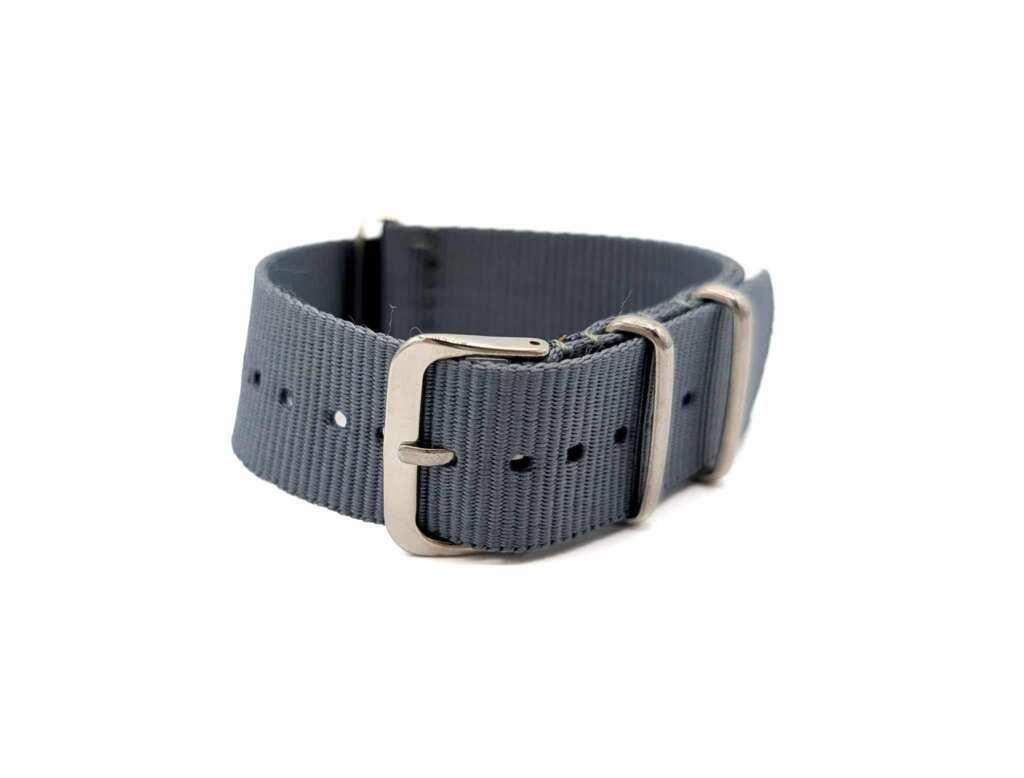
Grey Classic NATO Strap
13,93€ -
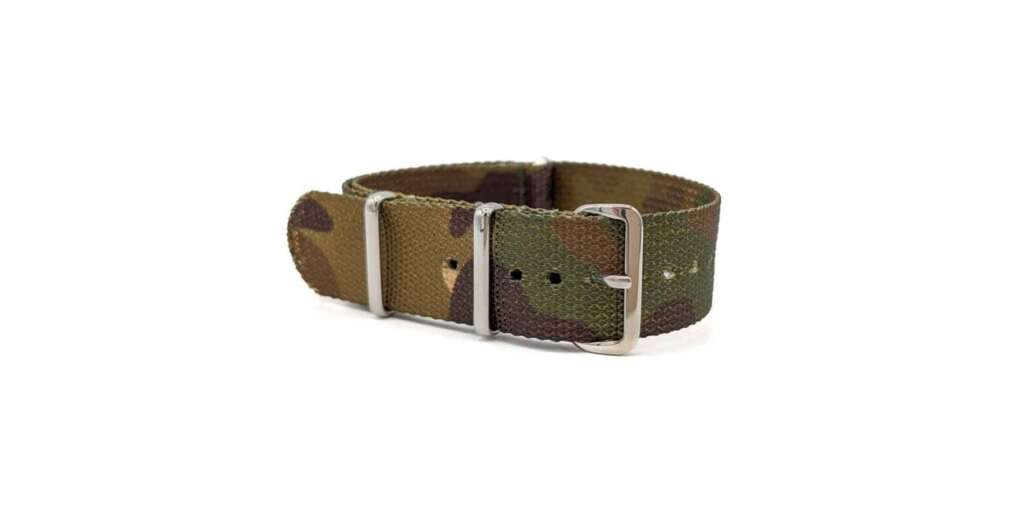
Military Camouflage NATO Strap
13,93€ -
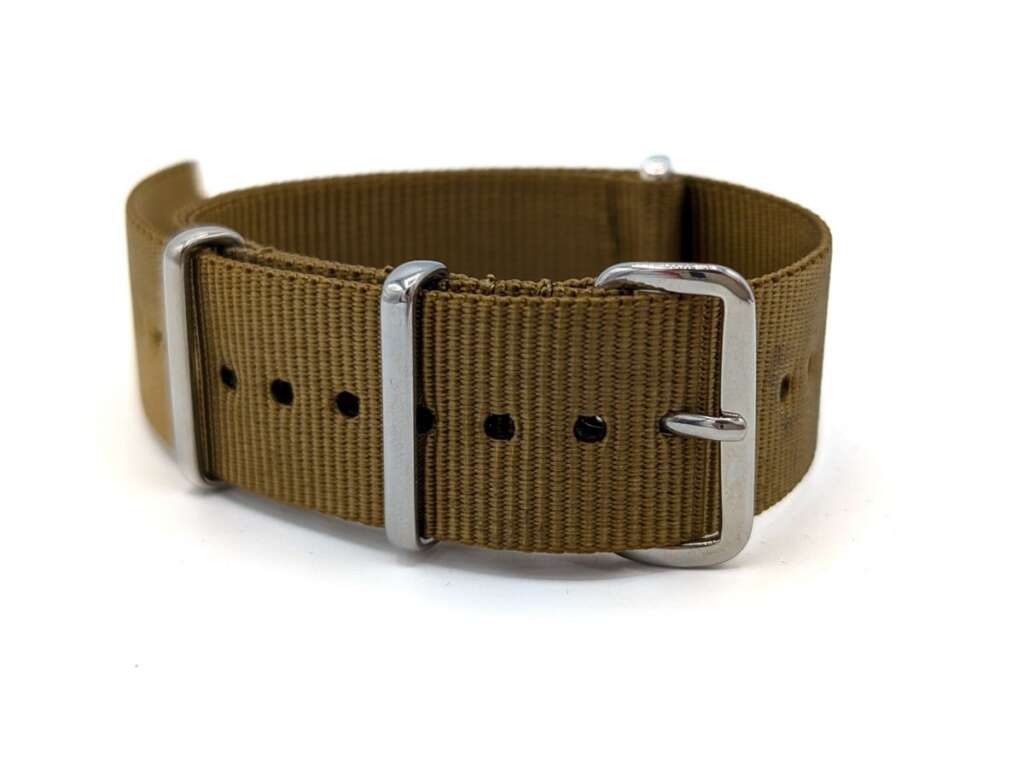
Military Khaki Brown NATO Strap
13,93€ -
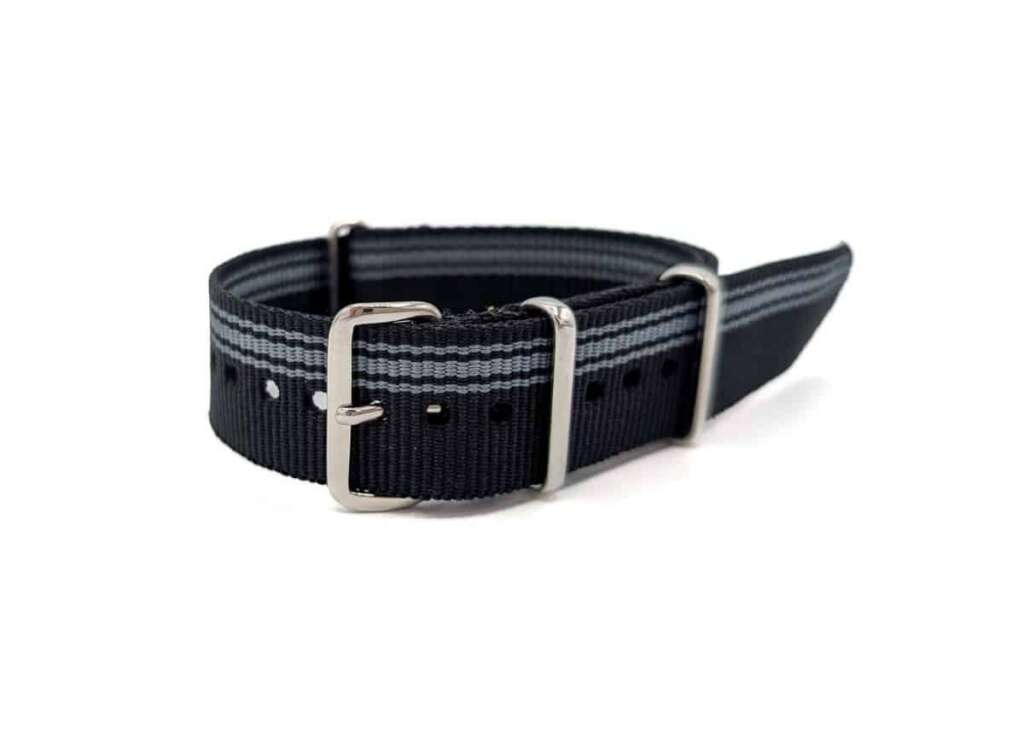
NATO Classic Black and Grey Strap
13,93€ -
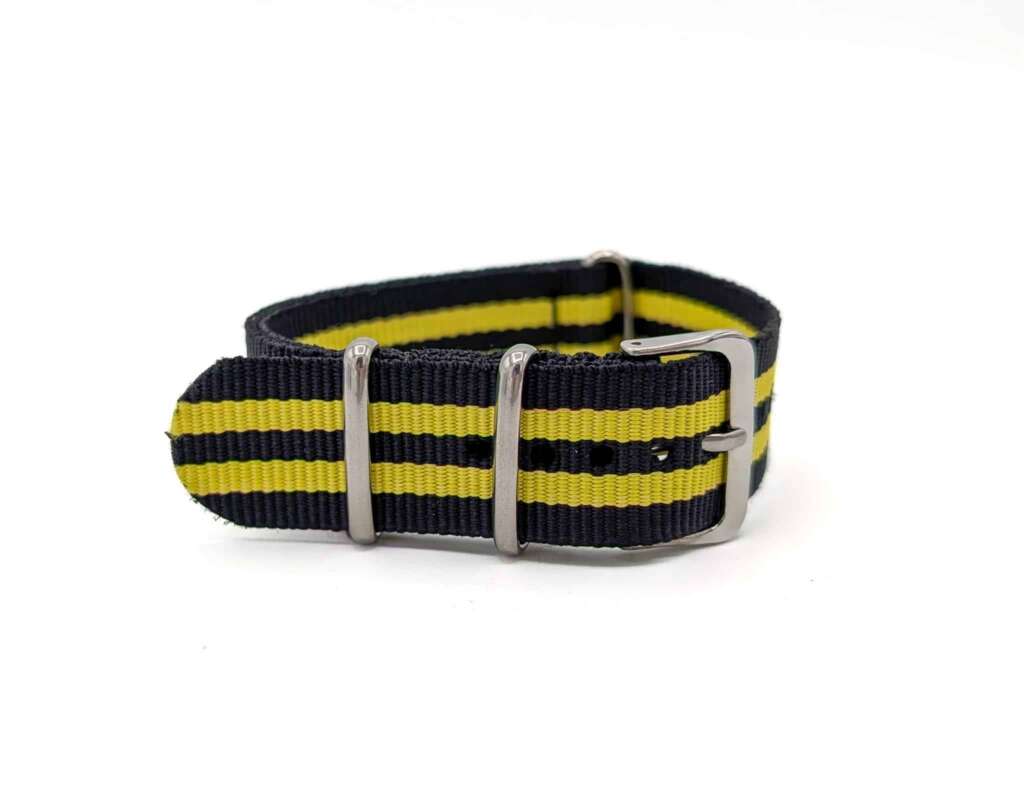
NATO Colors Black and Yellow Strap
13,93€ -
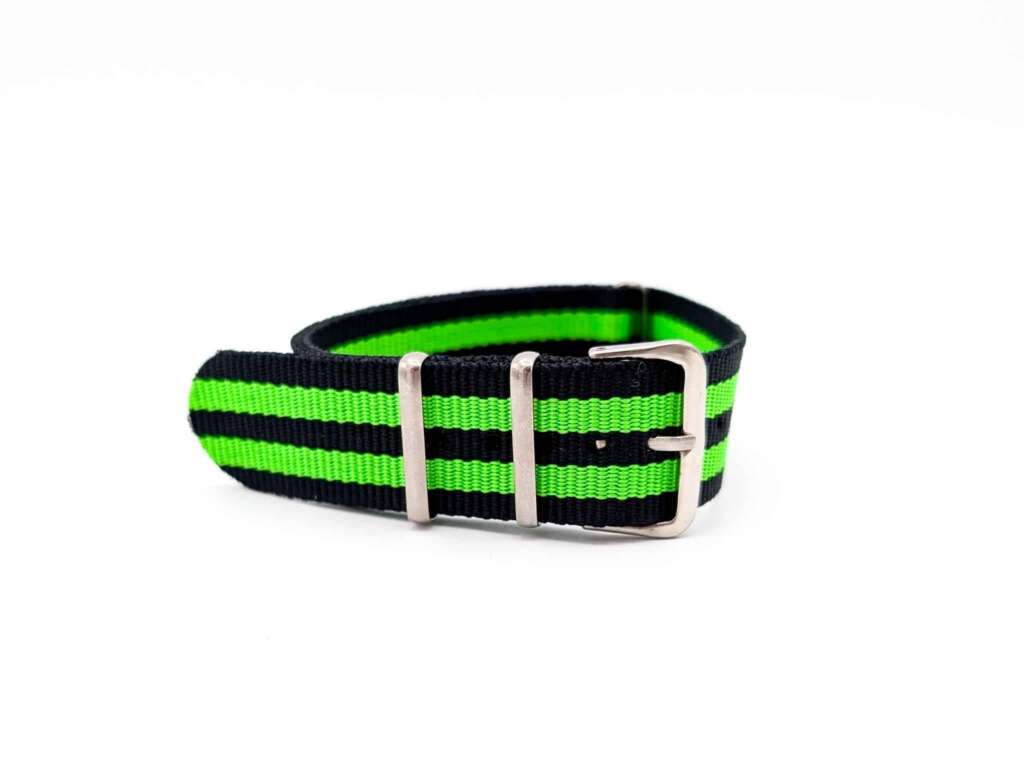
NATO Colors Watch Strap Black and Green
13,93€ -
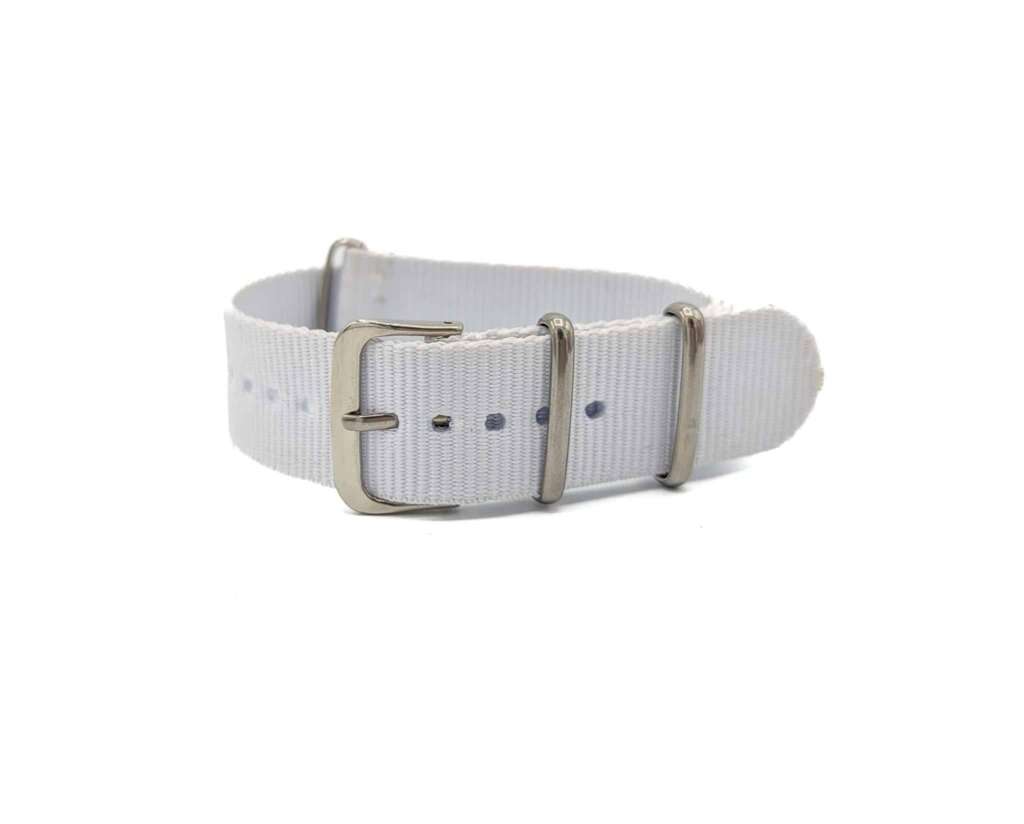
NATO Colors White Strap
13,93€ -
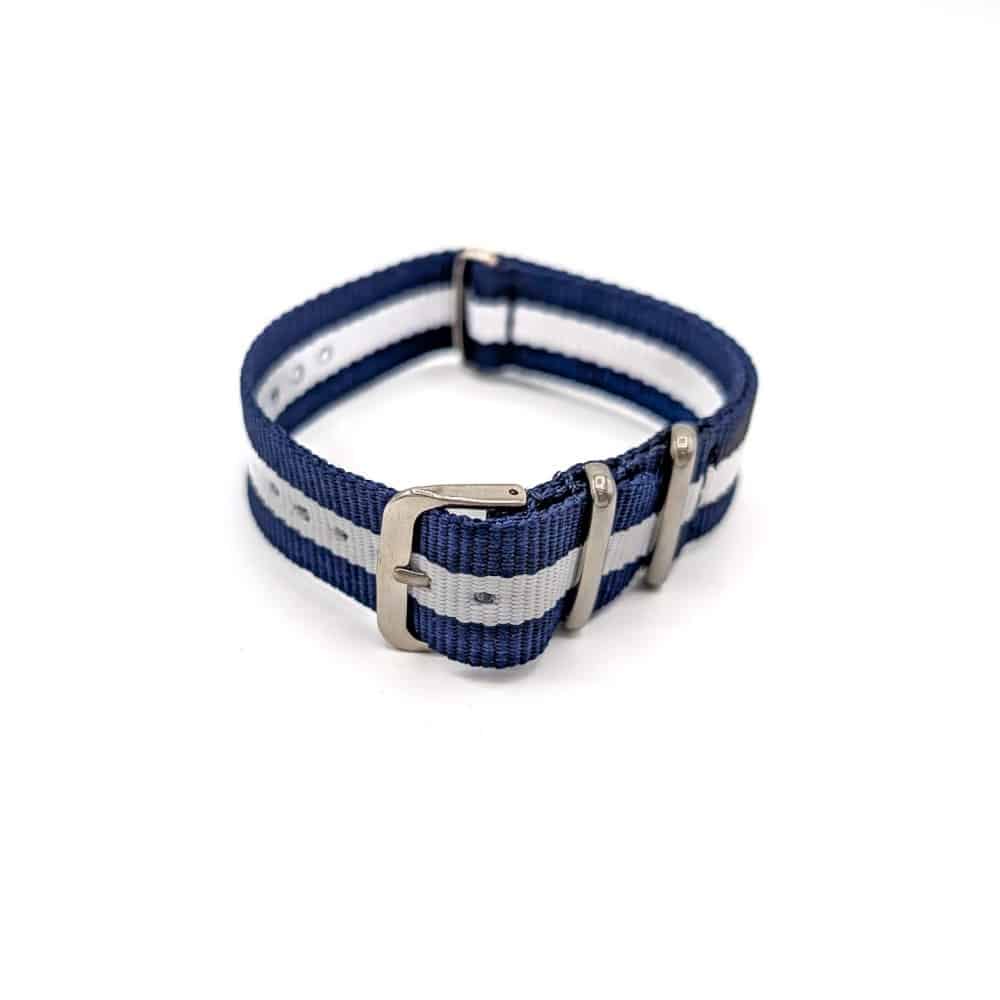
Navy Blue and White NATO Strap
13,93€ -
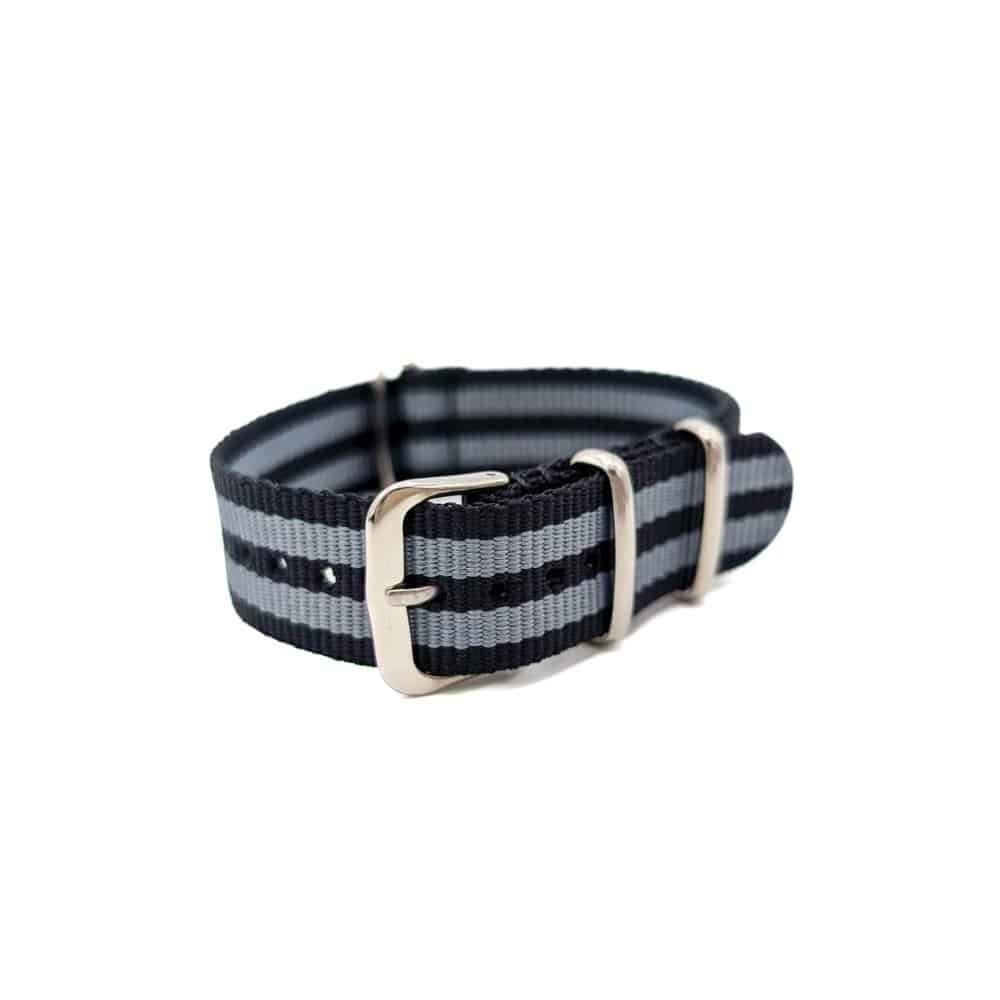
Navy James Bond NATO Strap
13,93€
Lug width, the only measurement that matters
The lug width is the internal gap between the two lugs of the case, where the strap is attached. It is expressed in millimeters and determines the strap width to order: a watch with a 20 mm lug width takes a 20 mm strap. A narrower strap leaves an unsightly gap on each side and moves; a wider strap will not fit between the lugs or will bunch up.
The most common mistake is to deduce the lug width from the case diameter. The two are related, but not in a fixed way: two 40 mm watches can have different lug widths, and a larger watch does not necessarily have a wider strap. Only the exact reference of the watch or a direct measurement provides the correct value.
How to measure your watch’s lug width
The most reliable method is measuring with a caliper. Remove the strap if you can, place the watch on a soft cloth, then place the measuring tips against the inner faces of the two lugs, at the level of the spring bar holes. Read the value in millimeters. If you do not have a caliper, a graduated ruler gives a rough idea, but it does not always allow you to distinguish 20 from 21 mm, which is precisely the trap on certain recent Rolex models.
You can also read the width on the back of the original strap, when it is engraved there, or in the technical specifications of your reference on the brand’s website. The reference number is found on the warranty card or the watch papers. Our guide on choosing the right strap size also details the length to plan for according to your wrist circumference.

Rolex and Omega: some lug width benchmarks
The values below are benchmarks for common references. They do not replace verification on your own watch, as successive generations of the same model have sometimes changed width.
- Rolex: 20 mm on many Oyster models from 36 to 40 mm, such as the Datejust 36, the GMT-Master II, or the 40 mm Submariner; 21 mm on the 41 mm Submariner (reference 124060 and its date variants).
- Omega: 20 mm on the 42 mm Speedmaster Moonwatch and on the 42 mm Seamaster Diver 300M; smaller widths on 34 to 38 mm models, to be checked reference by reference.
Our textile straps are available in 18, 20, 22, and 24 mm depending on the model. They are therefore suitable for the many 20 mm references of both brands. On the other hand, none of our widths exactly match a 21 mm lug width: on a 41 mm Submariner, a 20 mm strap would leave visible play and we do not recommend it.
Compatible strap or original strap: what changes
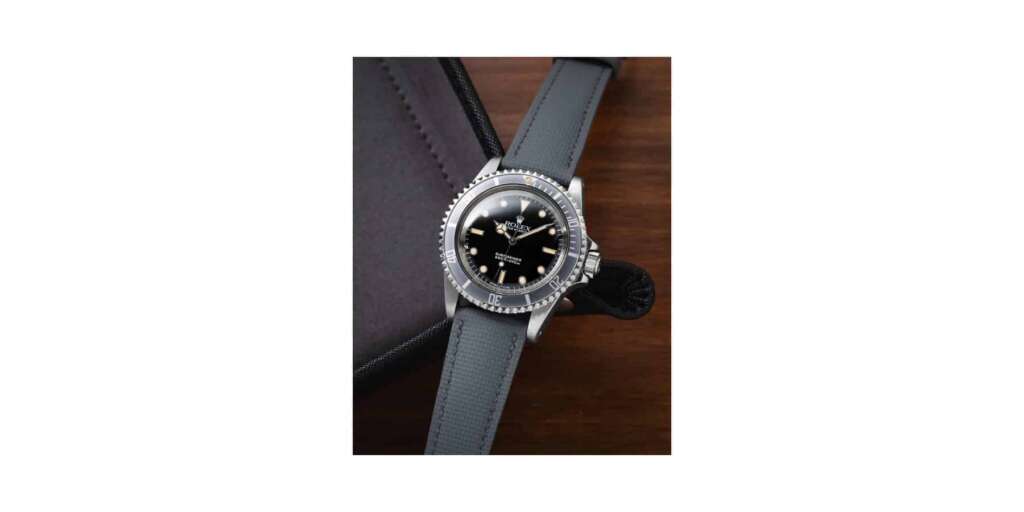
A compatible strap is a strap manufactured by a brand other than the watch brand, in dimensions that suit it. Our straps for Rolex and Omega are of this type: they are not official straps, they do not bear the logo of these brands, and they do not replace an Oyster, Jubilee, Oysterflex, or Omega steel bracelet. They attach to the watch’s spring bars, like any strap with bars.
This choice has two concrete advantages. You can change style without touching the original strap, which you store safely, and you protect it from scratches or shocks during an activity. The day you resell the watch, the original strap is intact.

NATO or perlon: which material for which watch
The NATO strap
The NATO is a single-piece nylon strip that passes between the spring bars, then under the case back. If one spring bar were to fail, the watch would remain held by the second one and by the strip itself. It is fitted without removing the spring bars, making it the easiest strap to change. The only downside: the double thickness of nylon under the watch raises it slightly on the wrist.
Style-wise, the NATO naturally suits diving watches and sports chronographs. The James Bond Navy NATO strap, with its black and gray stripes, is a classic on a Submariner or a Seamaster; our Classic and Colors ranges offer more sober solid shades, and the Military range offers khaki tones for a field watch.
The perlon strap
Perlon is a braided nylon, more flexible and breathable than NATO. It has no holes: the buckle tongue is inserted into the weave at the exact spot that fits your wrist. It is a light strap, pleasant in summer, which gives a relaxed look to a Speedmaster or a Datejust. It is attached with classic spring bars, like a leather strap.
Rolex or Omega compatible strap: mistakes to avoid
The first mistake is ordering based on the model name rather than the reference: “Submariner” or “Seamaster” cover several generations and several widths. The second is rounding a 21 mm measurement to 20 or 22 mm: the strap will float or be forced between the lugs, and the effect is visible at first glance. The third is forgetting the thickness: a NATO adds a double layer of nylon under the case back, which can be bothersome on a watch that is already tall or worn under a tight cuff.
Finally, do not remove the original metal bracelet without the proper tool. The spring bars of an Oyster bracelet or a steel bracelet are compressed with a fine fork, pressing on their shoulder, and an improvised screwdriver quickly scratches the polished lugs. If you are not comfortable, a watchmaker will do the exchange in a few minutes.
Check the spring bars before fitting the strap
The spring bar is the small rod that connects the strap to the case. On a NATO, the watch’s spring bars are reused: they just need to be in good condition. On a perlon, the spring bar passes through the end of the strap; its length must be equal to the lug width and its diameter must suit the lug holes. Before fitting a new strap, check that the ends snap firmly back into place: a worn spring bar is the primary cause of a lost watch.
FAQ
It depends on the generation. The 40 mm Submariner has a 20 mm lug width, while the 41 mm Submariner introduced in 2020 moved to 21 mm. Check the reference written on your watch papers or measure the gap between the lugs with a caliper before ordering.
Yes. The 42 mm Speedmaster Moonwatch has a 20 mm lug width, which corresponds to our 20 mm NATO straps. The NATO slides under the watch’s spring bars, without tools, once the original bracelet is removed. It raises the watch slightly on the wrist due to the double thickness of nylon.
No. A compatible strap is manufactured by another brand to the watch’s dimensions. It does not bear the Rolex or Omega logo and does not replace an original strap. It attaches to the watch’s spring bars and allows you to change style without touching the original strap.
Look at the back of the original strap, where the width is sometimes engraved, or search for the technical specifications of your reference on the brand’s website. A graduated ruler gives a rough idea, but it distinguishes poorly between 20 and 21 mm, which can be enough to choose the wrong size.