

Key takeaways
For a perfect strap, measure the lug width (common sizes: 18mm, 20mm, 22mm), your wrist circumference (170-210mm = size M), and check the buckle (often 2mm narrower than the strap). Forget the old, deformed strap! A caliper and these simple steps guarantee a perfect, hassle-free fit. Perfect comfort and style are within your grasp!
Choosing the right watch strap size is often a headache: what if I told you that 90% of errors come from an incorrect lug width measurement, often miscalculated? Have you ever ordered a perfect model online, only to be disappointed by a strap that’s too loose or too tight?
Rest assured, with our ultra-practical guide, we reveal the key steps for a perfect fit, using suitable tools and a conversion chart. Width, length, buckle: follow the guide! No more unpleasant surprises: your watch will adapt to your wrist with elegance and comfort.
Choosing a watch strap, a hassle? Not anymore!
Wrong strap size? 3 measurements are all it takes to avoid it! Follow this 3-step guide for a perfect fit.
Measuring the lug width: avoid costly mistakes
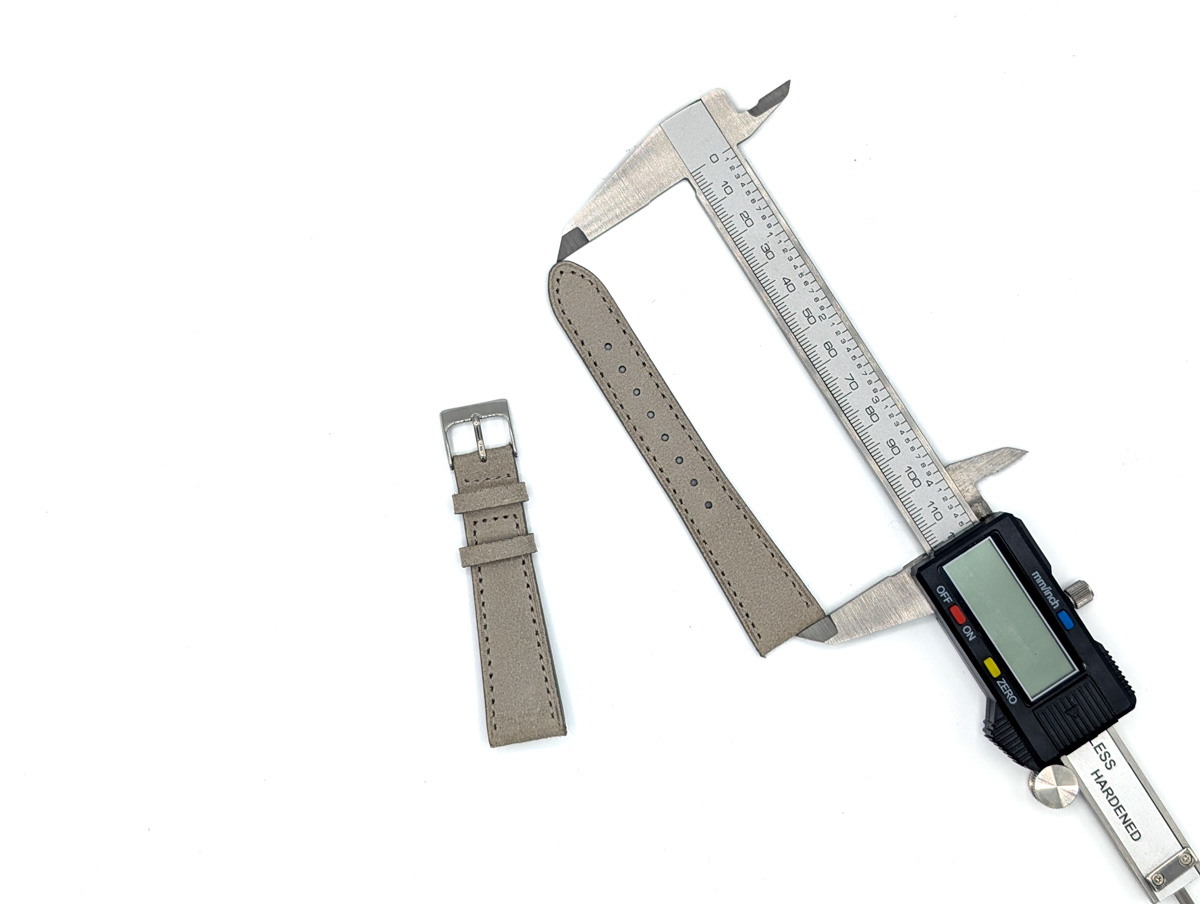
Measure the distance between the watch lugs (the “lug width”) with a caliper. Common sizes: 16-24mm. Don’t rely on the old strap: it might be deformed.
Buckle width: why it’s critical
The buckle is often 2mm narrower than the strap. Example: 20mm strap = 18mm buckle. Opt for a model sold with its original buckle if you’re unsure.
Wrist circumference: the #1 mistake not to repeat
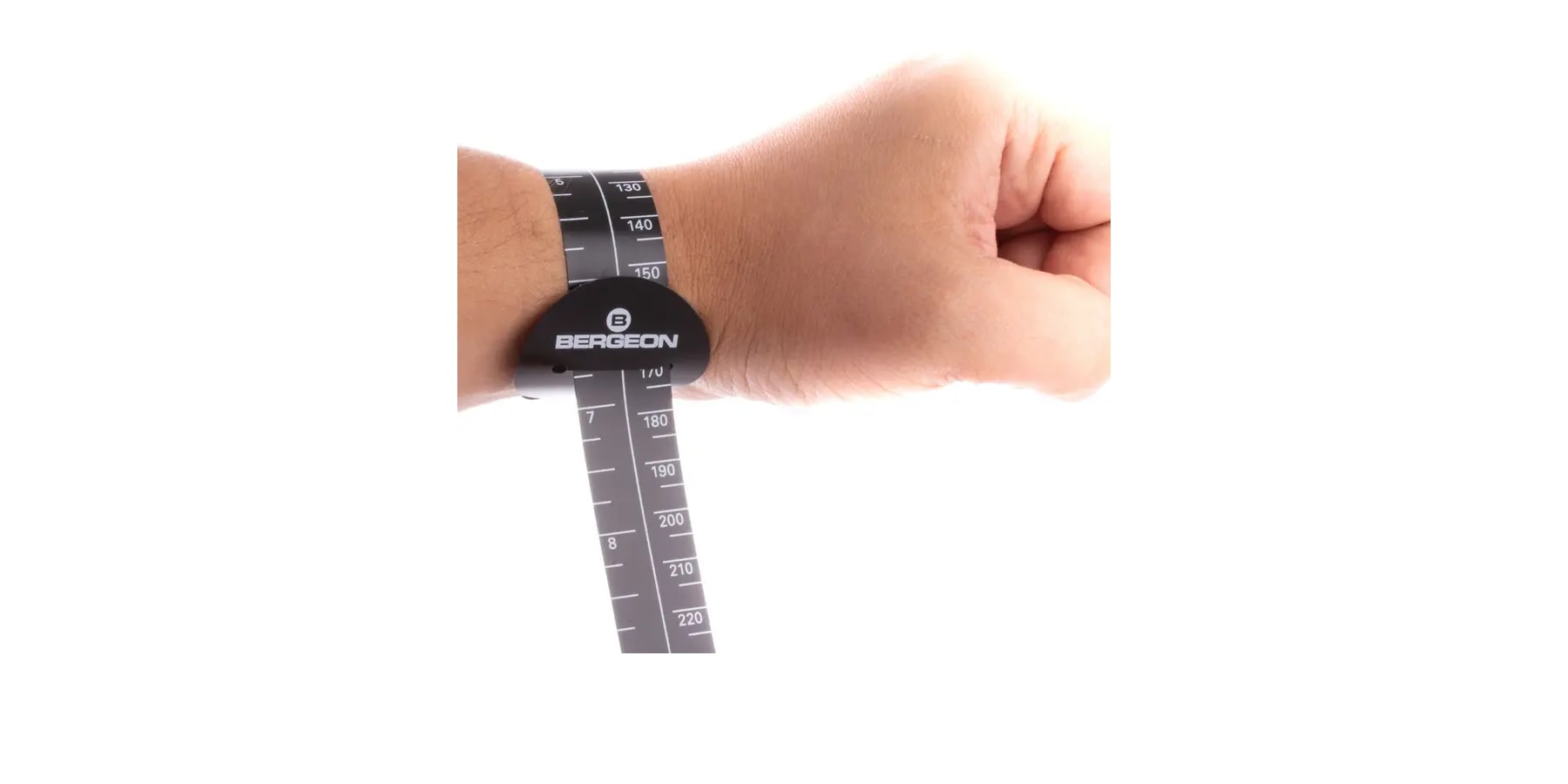
Wrap a measuring tape around your wrist. Size M for wrists between 170 and 210 mm. Finger test: slide a finger between the strap and your skin. No tape measure? A string and a ruler will do!
There you have it: 3 steps to avoid mistakes. You’ll be the expert next time!
The crucial measurement: your strap’s width (the lug width)
What is lug width and why is it so important?
The lug width corresponds to the distance between the case lugs of your watch where the strap attaches. This measurement, known as the lug width, is essential for a successful replacement. It’s not the apparent size of the watch that matters, but this specific dimension. A strap that’s too wide won’t fit, and a strap that’s too narrow will create an unsightly gap and risk detaching. Imagine a luxury watch with a poorly fitted strap: the effect is immediately noticeable! Manufacturers design their watches around precise sizes for optimal aesthetics and comfort.
How to measure lug width like a pro
For a reliable measurement, use a digital caliper. If you don’t have one, a metal ruler or tailor’s tape measure can help, but pay attention to alignment. The ideal is to place the instrument flat, pressing the inner ends of the lugs without forcing.
- Remove the strap to directly access the lugs. This avoids interference from the existing strap’s curves or thickness.
- Position the tool perfectly straight between the case lugs. Incorrect perpendicularity instantly skews the measurement.
- Read the value in millimeters. Standard sizes are 16mm, 18mm, 20mm, 22mm, 24mm. 19mm and 21mm exist but are rarer. For vintage watches, be prepared for sizes like 17mm or 23mm.
Sometimes check under your current strap: the size is occasionally discreetly engraved. If in doubt, consult the manufacturer’s specifications online.
The beginner’s mistake never to make
Never measure your old strap! Leather can compress, metal can widen with wear. A 20mm strap might measure 19.5mm after years of use. This half-millimeter difference will make the new strap impossible to attach. The only reliable reference is your watch case. That’s where it all matters!
When you force a poorly fitted strap, you damage the lugs. For stainless steel watches, the error is irreversible. In the case of quick release, accuracy is even more crucial: no margin for error!
Finding the perfect length for your wrist comfort
The simplest method: measure your wrist circumference
Who hasn’t struggled with a poorly adjusted strap? Fortunately, it’s easy! Take a flexible tape measure or a string, wrap it around your wrist below the bone without tightening. Mark the meeting point and measure flat. For a precise result, round up to the nearest half-centimeter. Need comfort? Add 1 to 2 cm to your measurement.
To avoid unpleasant surprises, first choose the right watch size according to your body type. Watches from 38 to 42mm suit most wrists (15 to 18cm).
Understanding strap sizes: short strap piece and long strap piece
A standard strap is divided into two: the short strap piece (buckle side) and the long strap piece (holes side). Example: 80mm + 120mm = 200mm total. Sizes vary: S (180mm), M (200mm), L (210mm) or XL (220mm). Custom models (105/70mm) adapt to slender wrists.
NATO straps, on the other hand, are 27cm long and adapt to all wrists thanks to their folding system. Practical for avoiding repeated adjustments!
The magic chart for a custom fit
| Wrist Circumference (in cm/mm) | Recommended Strap Size | Strap Length (Short Strap Piece + Long Strap Piece) |
|---|---|---|
| 17 cm ( 170 mm) | Size S (Small) | 70mm + 110mm (180mm) |
| 17 cm – 19 cm (170-190 mm) | Size M (Medium/Standard) | 80mm + 120mm (200mm) |
| 19 cm – 21 cm (190-210 mm) | Size L (Large) | 85mm + 125mm (210mm) |
| > 21 cm (> 210 mm) | Size XL (Extra Large) | 90mm + 130mm (220mm) |
*Note: This guide is indicative. A 42mm watch fits a 17cm+ wrist well. Test visually: a metal bracelet will appear more imposing than a leather or nylon one.
The detail that changes everything: don’t forget the buckle!
Why is buckle width important?
You’ve found the perfect strap, but an unpleasant surprise awaits: it doesn’t fit your favorite buckle! A common mistake when this crucial measurement is overlooked. If your buckle features your favorite brand’s logo, preserving its authenticity makes sense. The result? Your watch loses its character… and its value. Imagine: a 20mm strap at the lugs, but an 18mm buckle. Without this information, your personalized look is gone! A poor fit also leads to inconveniences: uneven tension or a strap that loosens. A hassle that can be avoided in 2 minutes flat!
Measuring the buckle and deciphering the nomenclature
Don’t panic, here’s the foolproof method: measure the inside of the buckle with a ruler or caliper. You’ll find references like 20/18. The first number (20mm) corresponds to the lug width, the second (18mm) to the buckle width. Most straps taper towards the buckle for an elegant design. A tip? Check if “20/18” is engraved on your current strap. Save time and avoid unpleasant surprises! Be aware of specific systems: some brands use unique deployant clasps. A compatible strap ensures a perfect fit without risk of error. Check your watch’s manual to confirm compatibility.