Have you ever felt that frustration of seeing your watch go from a “love at first sight” to a “tired of it” (almost) because of the strap? Choosing a watch strap that’s compatible with your watch is the ideal way to refresh your style without breaking the bank. In this guide, learn how to master the technical measurements (lug width, length), explore on-trend materials (nylon, leather, rubber) like NATO or aged leather, and dare to mix and match to suit your mood. No more doubts: we’ll guide you step by step to bring your watch back to life—100% you!
Changing straps: the best way to rediscover your watch!
If you feel like your watch is stuck in one style, try transforming it with watch straps. Did you know a discreet accessory can reinvent your watch? In just a few minutes, match it to your outfits, activities, or mood—elegant, sporty, or vintage, the options are endless!
Choosing a strap can feel intimidating, especially with terms like “lug width” or “spring bars.” But a few basics are all you need. First, check compatibility: accurately measure the lug width. A poor fit will ruin both comfort and looks. Don’t worry—online tools make this step easy in just a few clicks.
Materials matter, too. Leather elevates an elegant look, steel delivers sporty toughness, silicone or rubber stands up to water, while a colorful NATO adds a bold touch. Every choice reflects your personality, without sacrificing comfort. Need ideas? Explore options suited to your watch in an instant!
Ready to bring your watch back to life? Follow our guide for practical tips and a successful swap. A strap is much more than an accessory: it’s a style signature!
The 3 technical points for a perfectly fitted strap
The crucial step: measuring your watch’s lug width
Want to change your strap, but not sure where to start? Lug width—the distance between the two lugs on your watch—should be your top priority! It’s the key measurement to avoid nasty surprises. Get it wrong, and your strap may not fit… or worse, it could slide around on your wrist!
Grab a ruler or a caliper and measure the space between the two lugs. Tip: check the back of your old strap—the measurement (in mm) is often printed there! For maximum accuracy, go for a digital caliper: it avoids guesswork.
What length for your wrist?
A strap that’s too short is uncomfortable. Too long, and you risk losing it! Here’s a table to guide you:
| Wrist size | Recommended size | Approx. total strap length |
|---|---|---|
| < 170 mm | Size S | 160 mm |
| 170-190 mm | Size M (Standard) | 180 mm |
| 190-210 mm | Size L | 200 mm |
| > 210 mm | Size XL | 220 mm |
These sizes are indicative! Measure your wrist with a flexible tape measure for more accuracy. If you’re keeping your old strap, adding parts A (between the buckle and the case) and B (between the case and the tip) gives the ideal length. A well-fitted strap means guaranteed comfort, whether you’re at the office or hiking.

The attachment system: quick-release or traditional spring bars?
You have two options. Quick-release spring bars are ideal for switching up your look: one click and the strap changes—no tools needed! Did you know 80% of users prefer them? Perfect for watch collectors or anyone who likes a different style every day.
Not into tech? Traditional spring bars are still a reliable choice. A spring bar tool is all you need to adjust them. Nothing complicated—as long as you push the bars fully into place. For vintage lovers, it’s even an elegant signature.
So, ready to find the ideal strap? With these tips, your watch will never have looked so much like you! Remember: the right technique is the key to a great look for any occasion.
Which material for your strap? The guide for every lifestyle
For adventurers: nylon, rubber, and other technical materials
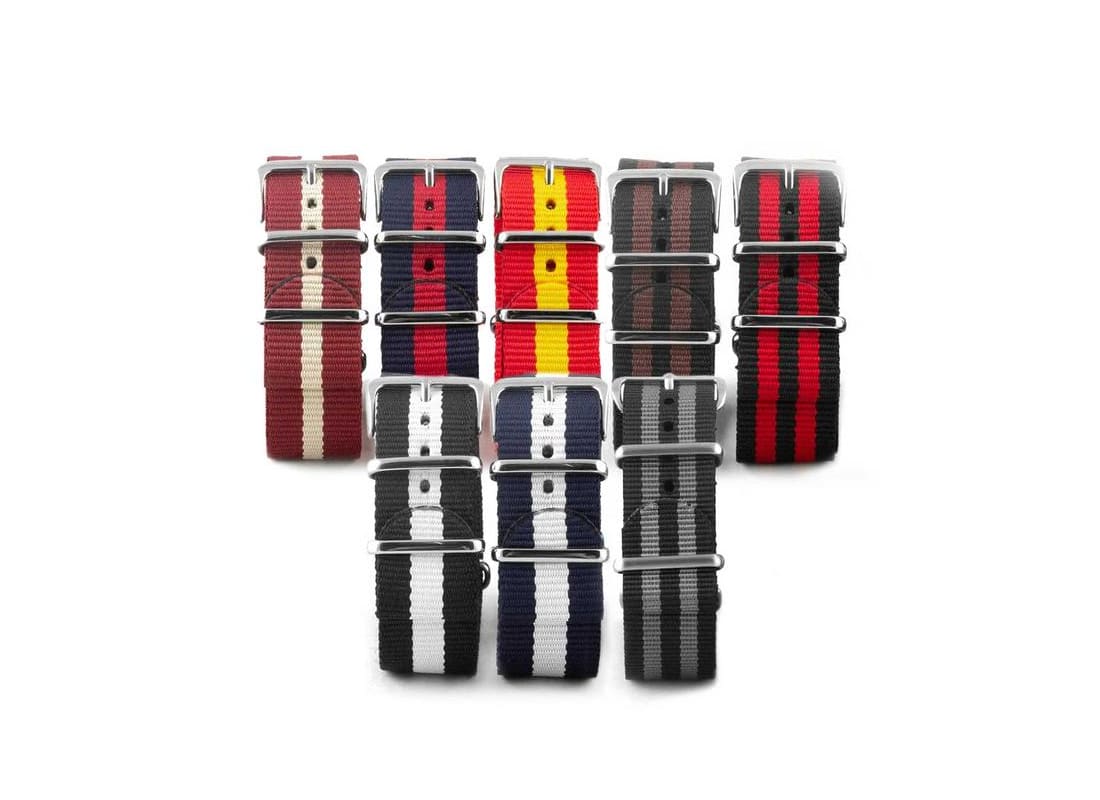
If you’re on the move, traveling, and looking for comfort, go for technical materials! Nylon, a timeless classic, suits every style. NATO or Perlon models add color and a laid-back vibe. Strong and affordable, it resists moisture and is easy to maintain. Did you know the NATO—originally designed for the British military—has become a must-have accessory? A must-have to reinvent your watch on a budget!
Rubber, a favorite for water lovers, shines for diving or the beach. Watch the quality: natural and synthetic aren’t equally durable. Perforated versions, in summer, help prevent sweating. Suitable for all wrist sizes, it’s a versatile partner. For adventurers, synthetic rubber is often the better choice for durability. Tip: choose thicker models for intensive use.
Silicone, soft and comfortable, works well for everyday wear. The only downside: it attracts dust due to its electrostatic nature. Choose matte models to reduce this effect. Sailcloth, innovative and modern, delivers a tool-watch look. Durable, it may require lining for a softer feel on the wrist. Perfect for a functional look, it pairs beautifully with “tool watch” style watches.
Timeless elegance: leather, Milanese mesh
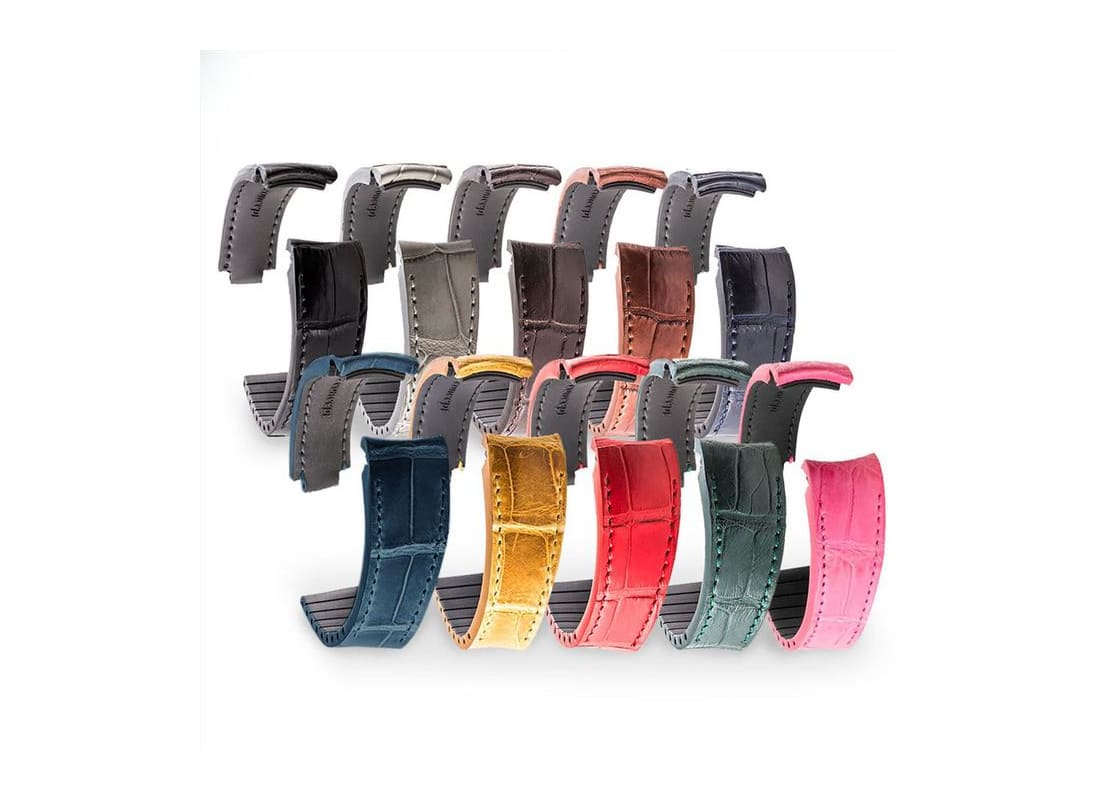
For a sophisticated look, leather remains a must. It gets better with time, telling the story of your watch. From calfskin to alligator, there are plenty of options. Choose smooth for a classic style or textured for a rugged-chic look. Black and brown are always safe choices. If you’re unsure, patinated leather adds a vintage touch that pairs well with mechanical watches.
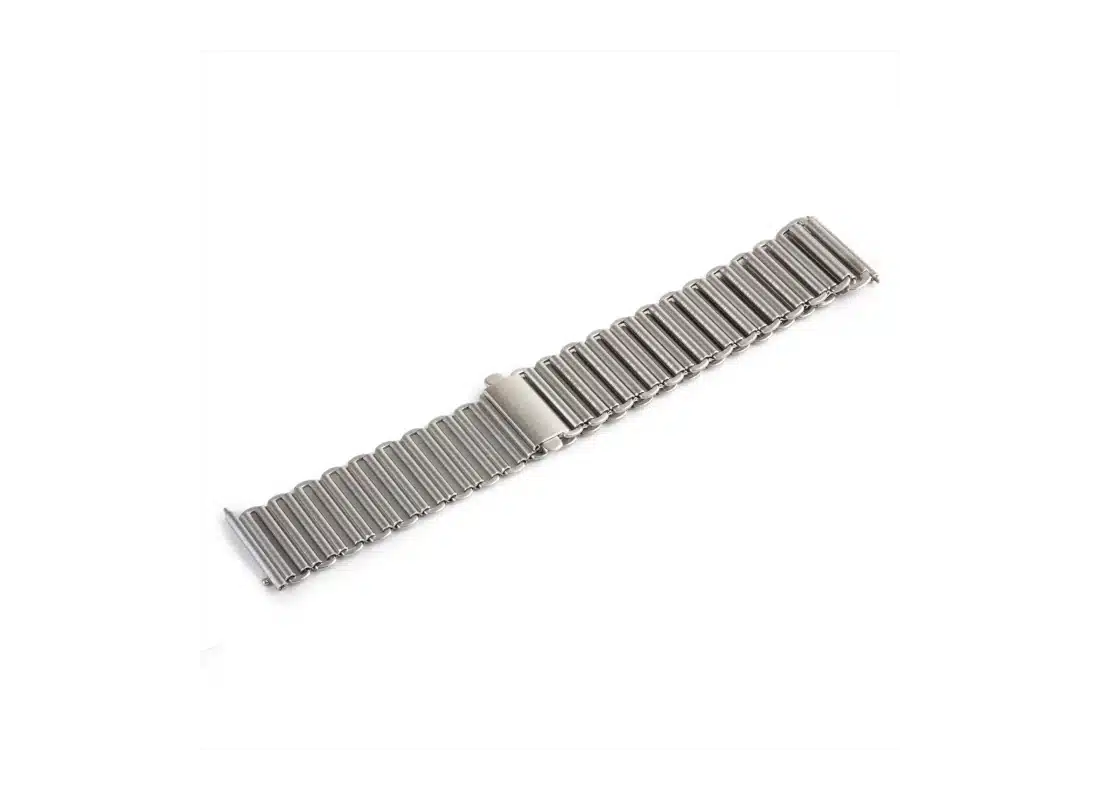
Milanese mesh reinvents the classic. Fine and elegant, it hugs the wrist perfectly. Breathable, it works in every season. Its precise adjustment, thanks to the Milanese clasp, ensures ideal comfort. A historical detail: this design is inspired by medieval chainmail. Available in stainless steel or titanium, it’s often tool-free adjustable thanks to its modular links.
Other metal bracelets for a sporty, robust style
Metal—often the original choice on high-end watches—embodies toughness. A stainless-steel bracelet is an investment, but the look changes completely depending on the material. For a discreet watch, satin-finished steel is the way to go. For a lighter feel, titanium is ideal. Always check your watch case style for harmony. Brushed steel pairs better with a metal case, while brown leather softens a gold dial.
Beyond technique: the art of matching your strap with style
A strap for every type of watch
Wondering why your dive watch is losing its charm? The strap could change everything! For a dive watch, go for rubber or a NATO: tough, water-resistant, and perfect for a sporty look. Vintage lovers will fall for the Tropic, with its iconic holes that recall the 1960s.
Want to add an elegant touch to your dress watch? Thin leather (alligator or smooth calfskin) or Milanese mesh are must-haves. Leather offers timeless elegance, while Milanese—woven steel—combines modernity and comfort thanks to its sliding clasp.
For chronographs, perforated racing leather or solid steel enhances your watch’s dynamic side. And for a pilot’s watch, a colorful NATO or sailcloth brings a breath of adventure. A tip? Metal bracelets work for almost any occasion!
Match your watch to the occasion
What if your watch adapted to your schedule? For an important meeting, understated leather or discreet Milanese mesh is the obvious choice. Needless to say, these choices never go unnoticed in a professional setting! At the gym, rubber or silicone are your allies: lightweight, durable, and easy to clean.
- At the office: understated leather or discreet Milanese mesh.
- For sports: rubber, silicone, or nylon are your best allies.
- For an evening out: exotic leather or a polished metal bracelet always makes an impact.
- For vacation: dare to try colorful watch straps in nylon or Perlon!
And if you’re torn between several looks? The secret? Style your watch the same way you style your wardrobe! A weekend by the sea? A sky-blue NATO or a turquoise Perlon adds a summery twist. For an evening out, polished steel or burgundy leather elevates your outfit. A real success, right?
Don’t overlook the buckle: the finishing touch for perfect comfort
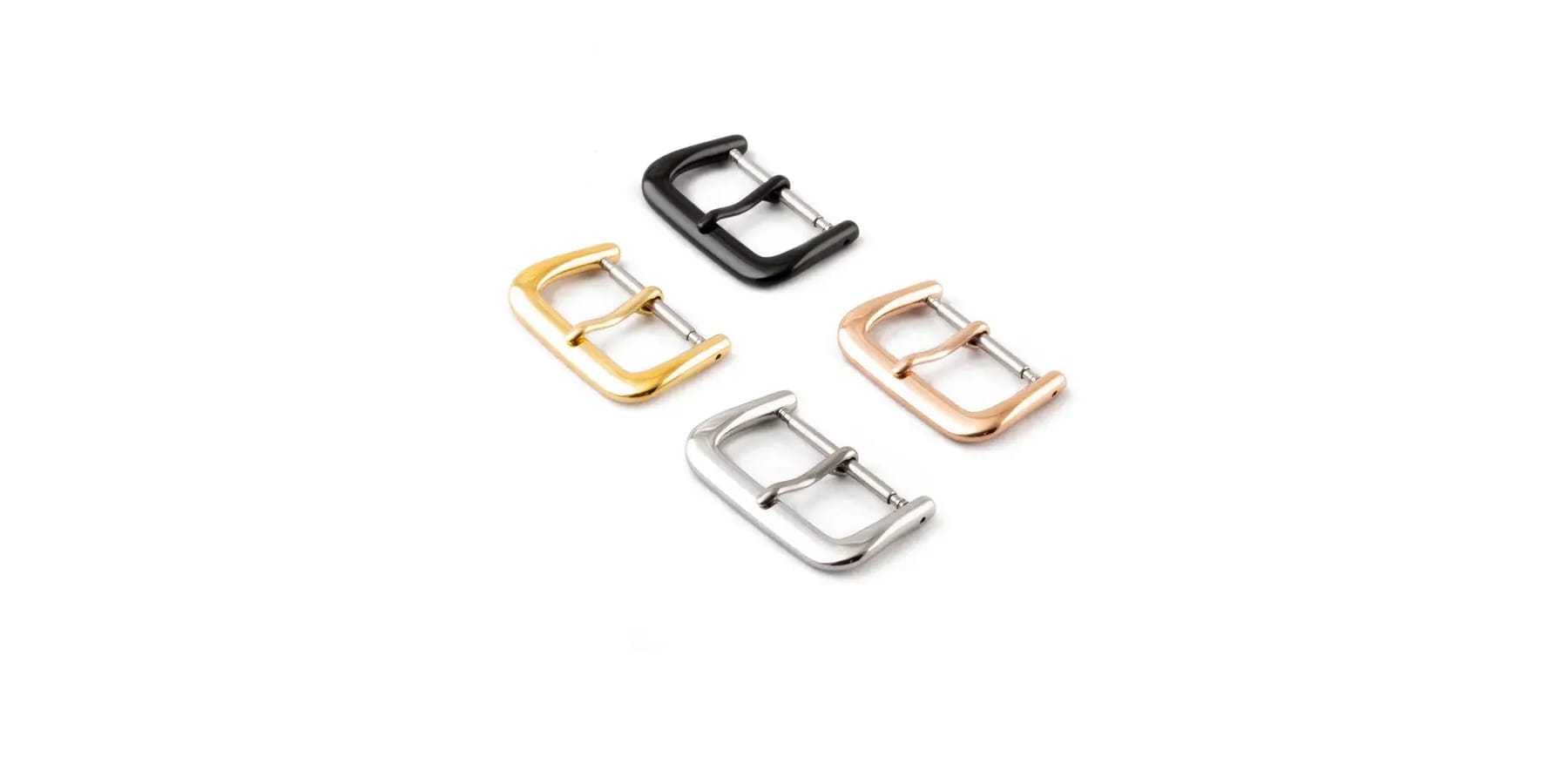
Did you know your strap buckle can change everything? It ensures security, comfort, and style. Reusing an original buckle—often stamped—preserves a unique design element. But be careful: it’s often narrower than the lug width. One measuring mistake, and it’s a headache!
Measuring buckle width
The “taper” effect is key: if your watch has a 20mm lug width, the buckle may measure 18mm. For example, a 20/16 strap (20mm at the watch, 16mm at the buckle). Measure the inside of the old buckle to the nearest millimeter. A caliper is enough. Watch out for odd sizes, rare on luxury models (except at Hermès or François Paul Journe).
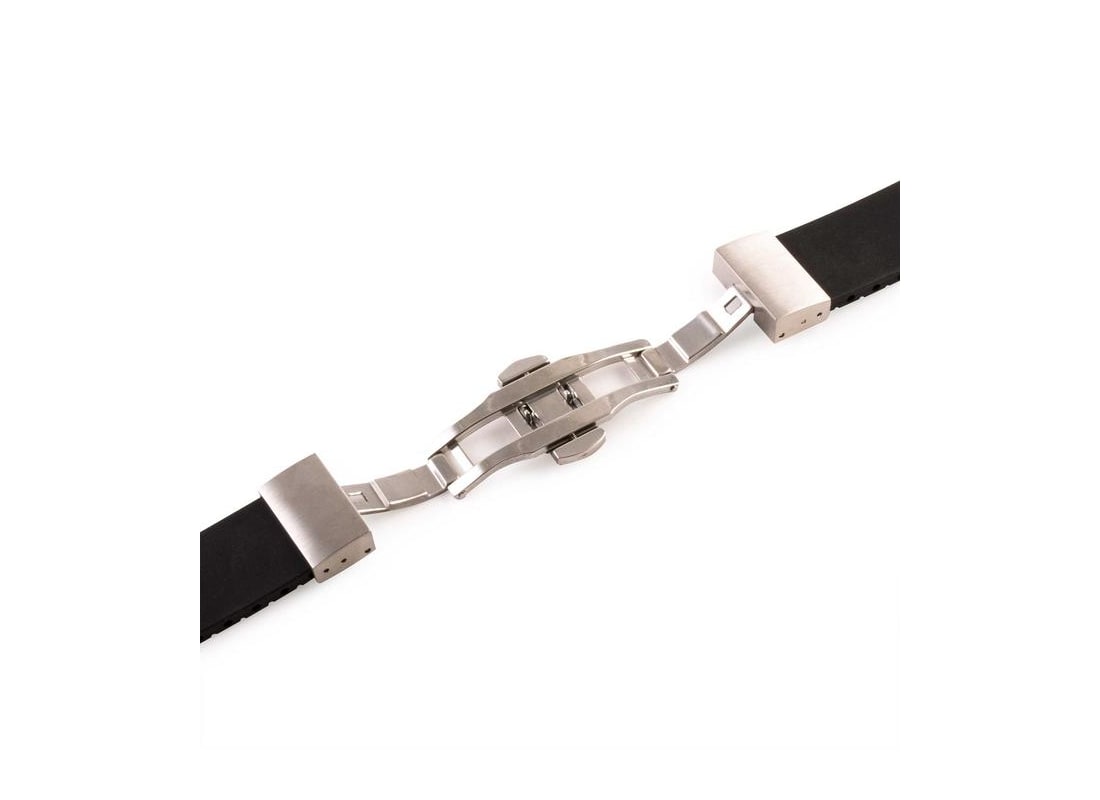
Pin buckle, single deployant, or butterfly?
Which buckle type should you choose? Here are the essentials:
- Pin buckle: The classic must-have! Simple, reliable, perfect for leather or nylon, but not recommended for steel.
- Single deployant clasp: Optimal security, prevents drops, protects leather straps. Ideal for everyday wear.
- Butterfly deployant clasp: Top comfort, symmetrical opening, easy to put on. Ideal for slim wrists, despite a slight thickness.