



For watch enthusiasts, the choice of materials is often crucial when it comes to watch straps. Among the most popular options for this accessory, you will, of course, find leather, metal, but also silicone and rubber. But what are the differences between these two synthetic materials? And most importantly, how do you choose the one that will best suit your needs? Here, you will discover everything you need to know about the mechanical properties, comfort, durability, and other essential factors of silicone and rubber watch straps.
What is a Silicone Watch Strap?
Silicone is a synthetic material widely used in various industries. For watches, it offers an excellent compromise between comfort and flexibility. Thanks to its chemical composition, silicone can be molded into various shapes while maintaining a pleasant texture to the touch. It is therefore a popular choice for those seeking an adaptable and flexible strap.
The main advantage of the silicone watch strap is its flexibility. It easily conforms to the shape of the wrist, allowing for comfortable use over long periods. Furthermore, the material is hypoallergenic, thus preventing skin irritations common with other materials.
Silicone watch straps are also renowned for their exceptional water resistance. This makes them ideal for athletes or those who spend a lot of time in aquatic environments. Unlike leather or certain metals, silicone does not degrade upon contact with water and dries quickly after immersion.
In terms of mechanical properties, silicone exhibits great durability. It resists shocks and extreme weather conditions well without losing its flexibility or appearance. However, it can be prone to scratches and stains, requiring regular maintenance to preserve its appearance.
Genuine Rubber for Watches
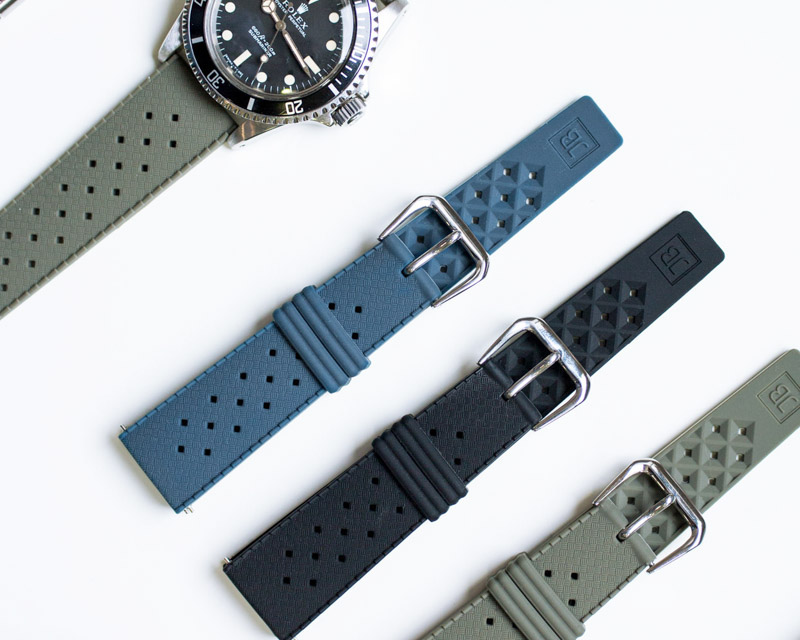
Rubber watch straps are known for their robustness and long lifespan. Like silicone, rubber offers good water resistance, making it an ideal candidate for divers and other athletes. However, its mechanical properties are slightly different.
Unlike silicone, rubber has a firmer and denser texture. This characteristic gives it additional durability, but it can be less flexible. Users may find these straps a bit more rigid, especially during initial use. That said, rubber will eventually adapt to the shape of the wrist over time.
Despite its firmness, genuine rubber remains comfortable to wear, particularly due to its ability to absorb vibrations and shocks. This material is also hypoallergenic, reducing the risk of skin irritation. Aesthetically, rubber straps can offer a variety of appearances, ranging from matte to glossy, depending on the surface treatments applied.
Regarding maintenance, rubber is relatively easy to clean. A simple damp cloth is usually sufficient to remove superficial dirt. However, like any material, it requires regular attention to prevent the accumulation of deposits or unpleasant odors.
Detailed Comparison between Silicone and Rubber
| Criteria | Silicone | Rubber |
|---|---|---|
| Flexibility | Very flexible | Less flexible |
| Comfort | High | Medium |
| Durability | Good | Excellent |
| Water resistance | Very good | Excellent |
| Maintenance | Easily stainable | More stain-resistant |
| Affordable price | Yes | Varies |
Choosing the Right Strap for your Watch
Practical Considerations
To choose between a silicone strap or a rubber strap for your watch, several factors must be considered. If you are primarily looking for comfort and flexibility, silicone will probably be your best option. Conversely, if durability and increased resistance to the elements are your priorities, rubber might be more suitable.
Do not forget to consider the type of activities you regularly engage in. Water sports enthusiasts will benefit from the exceptional water resistance offered by both materials, but the robustness of rubber could provide additional security for certain intense activities.
Aesthetic Factors and Personal Preferences
Beyond practical considerations, aesthetics also play an important role. The look of the strap can greatly influence the overall appearance of the watch. Silicone straps are often available in a wide range of colors and textures, offering aesthetic versatility. Rubber, on the other hand, often presents a more classic look but can also come in different styles and finishes.
Finally, price can be a decisive factor. In general, silicone straps tend to be more affordable than their genuine rubber counterparts. However, investing in a quality strap is always worthwhile to ensure both comfort and long-term durability.
In summary, choosing between a watch strap in silicone and rubber will largely depend on your individual needs and personal preferences. Whether you prioritize the flexibility and comfort of silicone or the robustness and durability of genuine rubber, each option has its own advantages.
It is important to consider all the mentioned criteria to make the best possible choice for your watch. Therefore, carefully analyze your needs, and equip yourself with the strap that will fully meet your expectations.
