
Key takeaways: To store your watches, choose based on use: the watch roll for travel, the case to protect a single piece, the presentation box for display, and the watch box to store a collection. Opt for a soft, non-abrasive interior, strong stitching, and a format suited to the size of your watches, including dive models.
If you own several watches, you’re probably wondering how to protect and showcase them when they’re not adorning your wrist. This is where watch rolls, cases, presentation boxes, and storage boxes come into play. This guide is here to orient and advise you in the world of watch storage solutions.
The different types of watch storage
There are many options for storing and protecting your watches, so discover the different options with their specific features and advantages.
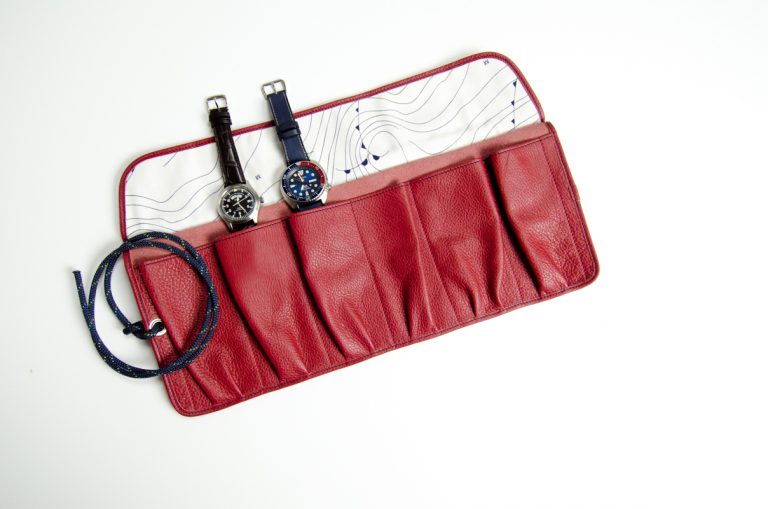
The watch roll originates from the world of jewelry. It’s a small, rolled case, usually made of leather or fabric, that can hold one or more watches. Perfect for travel, it offers optimal protection while remaining compact.
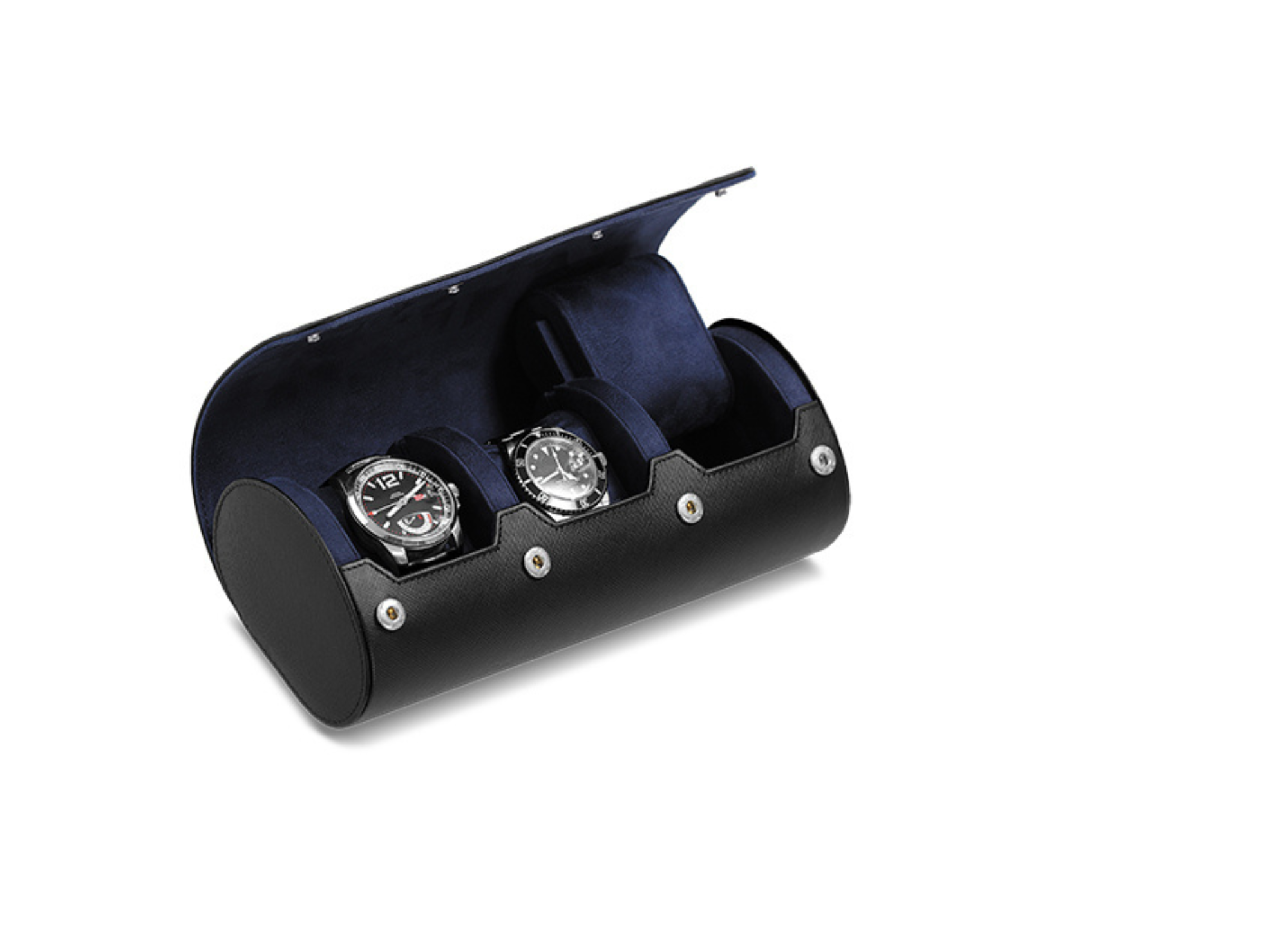
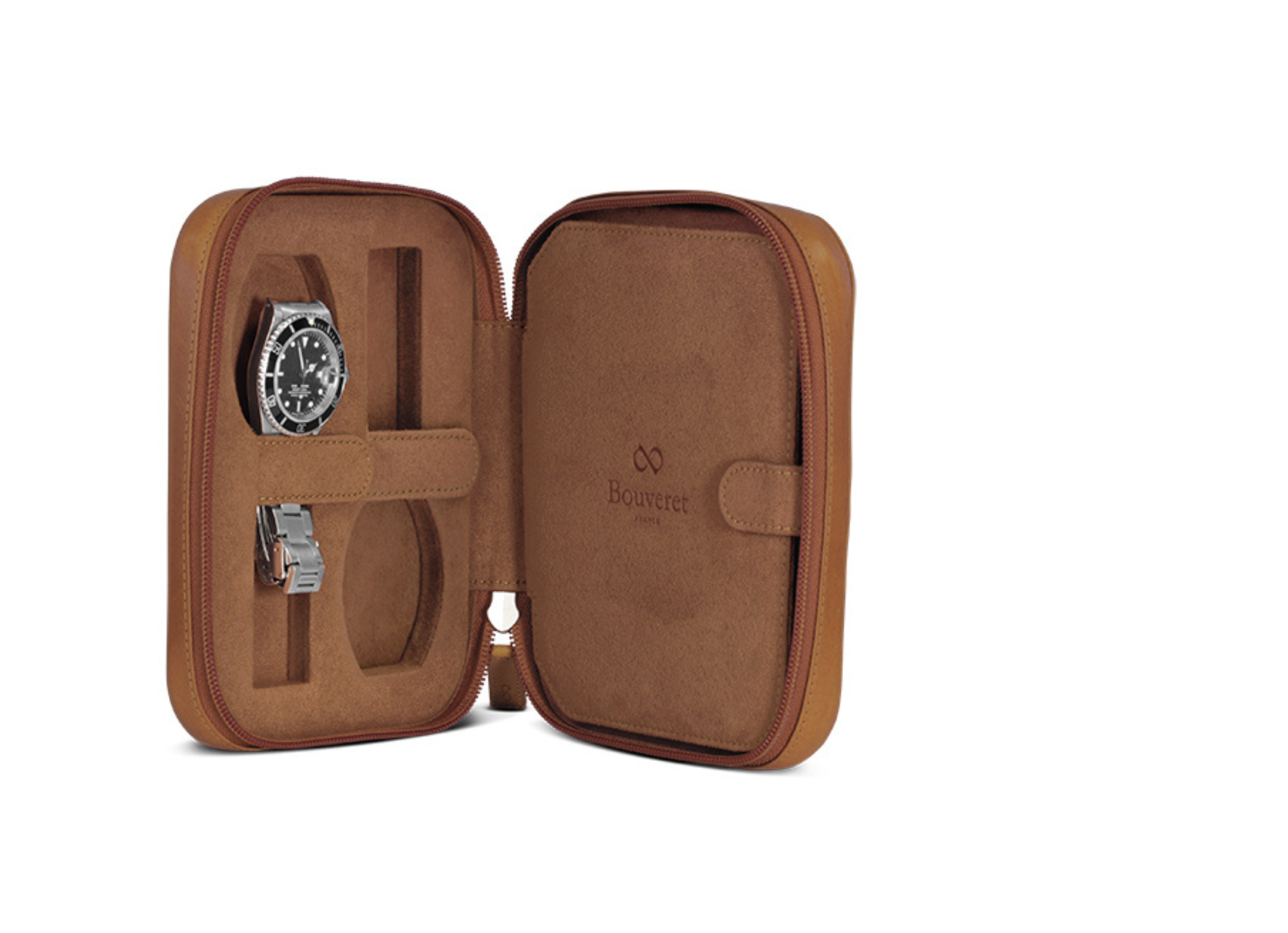
The case, on the other hand, is often rigid and designed for a single watch. It protects it from shocks and dust, ideal for daily transport or short-term storage.
The presentation box is the ultimate in display. Often supplied with luxury watches, it showcases your timepiece while protecting it.
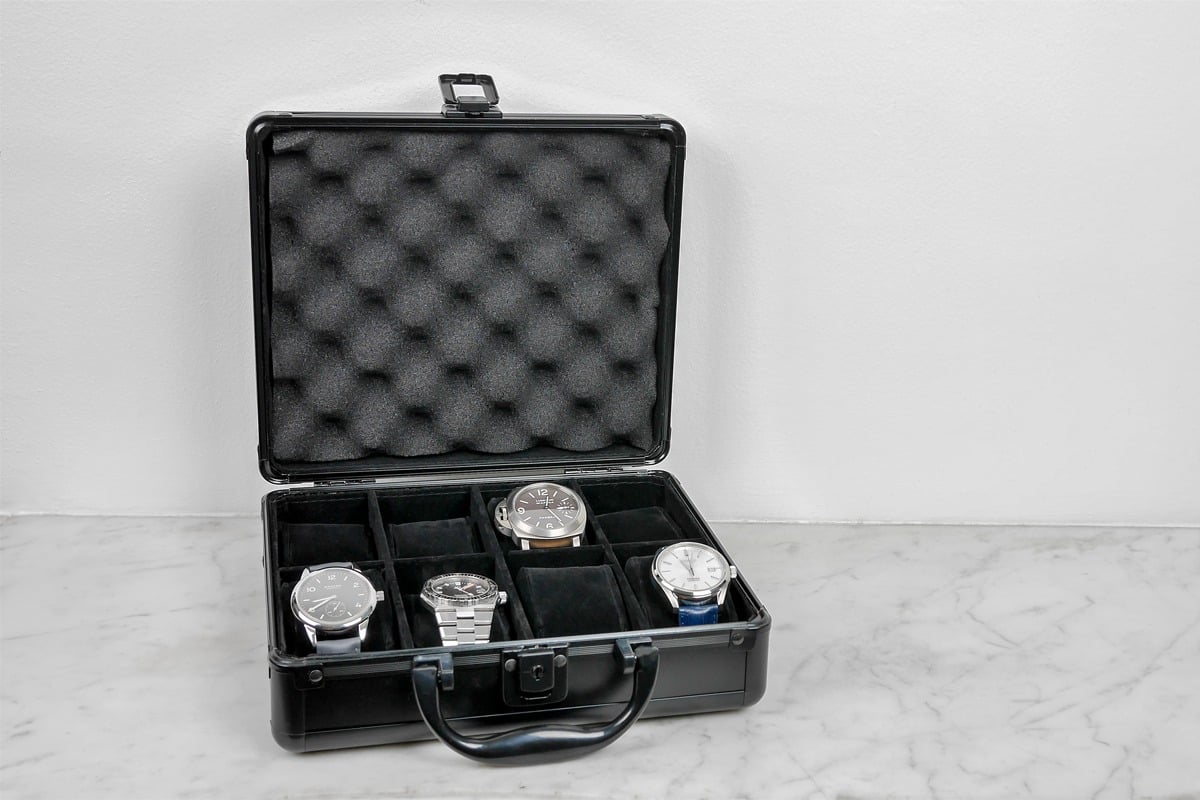
Finally, the watch box is the perfect solution for collectors. It can hold several pieces, protecting them while displaying them.
Choosing the right storage for your needs
It’s important to remember that each type of storage has its advantages and specific features, which can be summarized here:
- The watch roll: Compact and practical for travel
- The case: Ideal for individual protection
- The presentation box: Elegant and perfect for display
- The box: Versatile for storing multiple watches
To choose, ask yourself the right questions. How many watches do you have? Do you travel often? Do you want to display them or simply store them? For example, if you’re a globetrotter, a watch roll will be your best ally.
Don’t forget to consider the size of your watches. An imposing dive watch won’t fit into a case designed for a slimmer dress watch.
Materials and quality: essential criteria
The choice of materials is crucial to ensure optimal protection for your watches. Leather, wood, velvet, metal… each has its properties. Leather, for example, offers excellent shock protection while adding a touch of elegance.
Manufacturing quality is just as important. A poorly designed storage solution can cause more damage than it prevents. Always check the interior finish: it must be soft and non-abrasive to avoid scratches. Seams must be strong and regular. If you opt for low-end storage, you risk quality or durability issues over time, which could damage your timepieces.
Tips for optimizing your watch storage
If you’re storing your watches, there are still a few small points to remember:
- Regular rotation: Rotate your watches in their storage to prevent leather straps from deforming.
- Cleaning: A quick wipe with a soft cloth before storing your watch will prevent dust accumulation.
- Organization: Classify your watches by type (sport, dress, etc.) to make your daily choice easier.
- Maintenance: Regularly check the condition of your storage, especially hinges and clasps.
Finally, don’t forget that how you store your watches contributes to your enjoyment as a watch enthusiast. Choose solutions that allow you to admire your pieces, even when you’re not wearing them.
FAQ
The watch roll is a compact, rolled case for traveling with one or more watches. The case, often rigid, protects a single watch. The presentation box is mainly used to present and showcase the piece. The watch box holds several pieces and suits collectors who want to both store and display them.
The watch roll is the most practical solution for travel: it’s compact, protects well against scratches, and holds one or more watches. A rigid case is suitable for carrying a single piece. In all cases, check that each watch has its own slot to avoid rubbing during the trip.
Leather offers good shock protection and a touch of elegance, wood suits collection boxes, and velvet stays soft for interiors. Whatever the outer material, the inner lining should be soft and non-abrasive, with strong, even stitching to last over time.
Choose storage with a soft interior finish, as a poor lining can scratch cases. Wipe the watch with a soft cloth before storing it, regularly check hinges and closures, and avoid overly low-end models, whose build quality can deteriorate and damage your pieces.
Alternating the watches you wear prevents leather straps from staying in the same position for too long, which can deform them. This rotation also helps avoid leaving a watch inactive for long periods. Sorting your pieces by type—sport or dress—then makes everyday choosing easier.