

When you discover the fascinating world of watchmaking, you quickly face a crucial question: which tools should you choose to start with? Between delicate tweezers, precision screwdrivers, and magnifying loupes, watchmaking equipment can seem intimidating at first glance. However, with the right advice and a judicious selection, you can set up your first workshop without breaking the bank. Let me guide you through this adventure where every tool tells a story of precision and craftsmanship.
Key points to remember before starting
- Start with the basic tools: tweezers, screwdrivers, a loupe, and a casing cushion are enough to get started
- Prioritize quality: it’s better to have fewer tools of better quality, especially from OH Selection
- Invest gradually: your toolkit will evolve with your expertise
- Think about organization: a tidy workspace prevents many headaches
- Patience is your best ally: watchmaking requires time and delicacy
Tweezers: your new precision hands
Ah, tweezers! If I had to choose just one watchmaking tool to start with, it would be this one without hesitation. These small precision pliers literally become an extension of your fingers when you handle the delicate components of a watch movement.
To get started, I highly recommend getting at least three types of tweezers. First, a pair with fine, straight tips for gripping small parts like screws or springs. Next, curved-tip tweezers, perfect for reaching difficult areas inside a case. Finally, anti-static tweezers will save you a lot of trouble with the electronic components of quartz watches.
At OH Selection, you will find professional-quality Bergeon tweezers that will stay with you for years, for example in the expert tool kit. These Swiss tools are renowned for their precision and durability. A friendly tip: take care of your tweezers by storing them in a protective case. A damaged tip can irreparably harm a movement part.
Watchmaker’s screwdrivers: precision at your fingertips
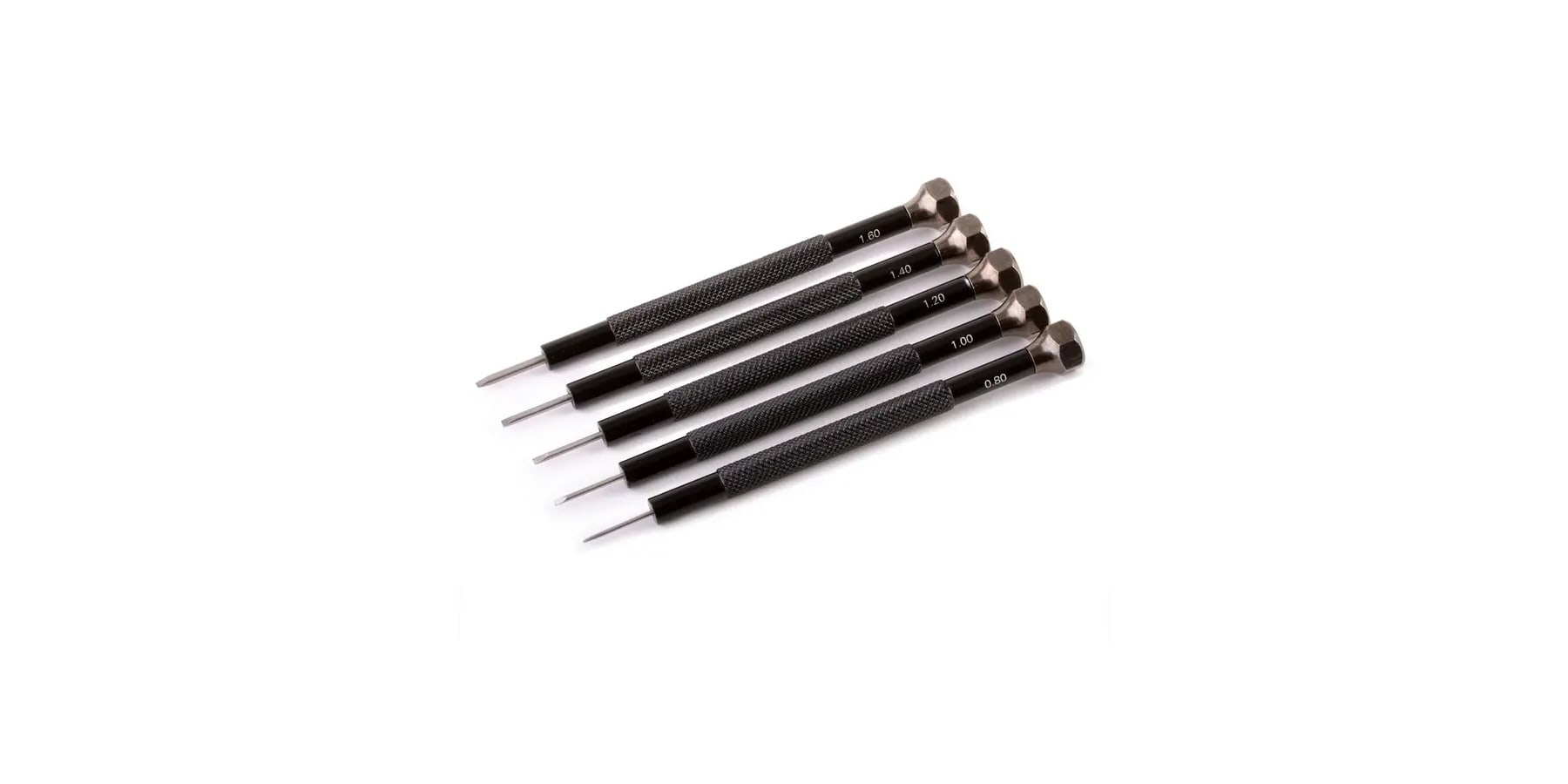
Now let’s talk about screwdrivers, tools that seem so simple but hide a fascinating complexity. A watchmaker’s screwdriver is nothing like the one in your usual toolbox. We are talking about precision to the hundredth of a millimeter!
A good watchmaking screwdriver set generally includes blades from 0.6 mm to 2.5 mm in diameter. Every watch screw has its specific size, and using an unsuitable screwdriver risks damaging the slot or causing the tool to slip. Professionals often use Bergeon or Horotec screwdrivers, available in the OH Selection range.
What makes the difference compared to a classic screwdriver? First, the shape of the blade. It is perfectly adjusted to fit watch screw slots. Then, the handle is designed to offer optimal control of the applied force. Too much pressure and you risk breaking a screw; not enough and it won’t budge.
The loupe: seeing the invisible
It’s impossible to talk about watchmaking tools without mentioning the loupe! This iconic watchmaker’s accessory isn’t just a gadget: it’s your window into the microscopic world of mechanisms.
For beginners, a 10x magnification loupe is an excellent compromise. It offers enough detail to observe components without creating excessive eye strain. Head-mounted loupes, which you fix to your head, free up your hands for work. Others prefer stand loupes, which are more stable but less mobile.
Speaking of visual comfort, watchmaking is very demanding on the eyes, and a good loupe can make the difference between an enjoyable work session and a splitting headache. Models with integrated LED lighting, like those offered by OH Selection, literally transform your work experience.
The casing cushion: protecting to work better
Here is a tool often overlooked by beginners, but absolutely essential: the casing cushion. This little marvel allows you to firmly hold the watch case while you work on the movement.
The principle is simple but brilliant: the cushion conforms to the shape of the case thanks to its soft material, usually leather or synthetic. This prevents scratches on the case while providing a stable grip for your manipulations. Some models are height-adjustable, which is very practical for adapting to different watch sizes.
In fact, did you know that professional watchmakers often own several cushions of different sizes? A small one for ladies’ watches, a medium one for classic watches, and a large one for imposing chronographs. That shows the importance of this seemingly trivial tool!
Specialized tools: when passion grows
Once you master the basics, the desire to improve will naturally push you toward more specialized tools. That’s when the adventure becomes truly exciting!
The pin punch, for example, becomes indispensable as soon as you want to change a metal bracelet. This tool allows you to remove the small pins that hold the links together. Simple in appearance, but it requires delicacy not to damage the bracelet.
The dust blower also deserves a place in your arsenal. It allows you to eliminate dust and particles that inevitably accumulate in movements. A clean movement works better and longer—that’s a proven fact.
For the more ambitious, demagnetization tools become valuable. Mechanical watches are sensitive to the magnetic fields of our electronic devices. A demagnetizer allows you to magnetically “clean” a movement that might be running fast due to this invisible pollution.
Organizing your workspace: the key to success
Allow me to share a secret I learned the hard way: the organization of your workspace matters as much as the quality of your tools. A well-thought-out workbench transforms a watchmaking session into a moment of pure pleasure.
Start by choosing a quiet spot, well-lit naturally if possible. Artificial lighting should be white and powerful, without creating annoying shadows. An articulated lamp with LEDs will give you that flexibility.
Next, think about storage. Every tool must have its designated place. Small compartmented boxes are perfect for organizing screws, springs, and other tiny components. Believe me, losing a 2 mm screw in a carpet is a guarantee for a bad evening!
The anti-static work mat also deserves your attention. It protects components from electrostatic discharge while providing a pleasant work surface. Some models include built-in compartments, very practical for sorting parts during disassembly.
Where to find your tools: quality above all
The question of budget often comes up when starting in watchmaking. Should you invest in professional equipment from the start or begin with entry-level tools? My advice is nuanced: always prioritize quality, but adapt your purchases to your level.
OH Selection offers a range of watchmaking tools that covers all needs, from the passionate beginner to the demanding professional. Their selection of Bergeon, Horotec, and other recognized brands guarantees a lasting investment. It’s better to buy fewer tools of better quality than to multiply purchases of low-end equipment.
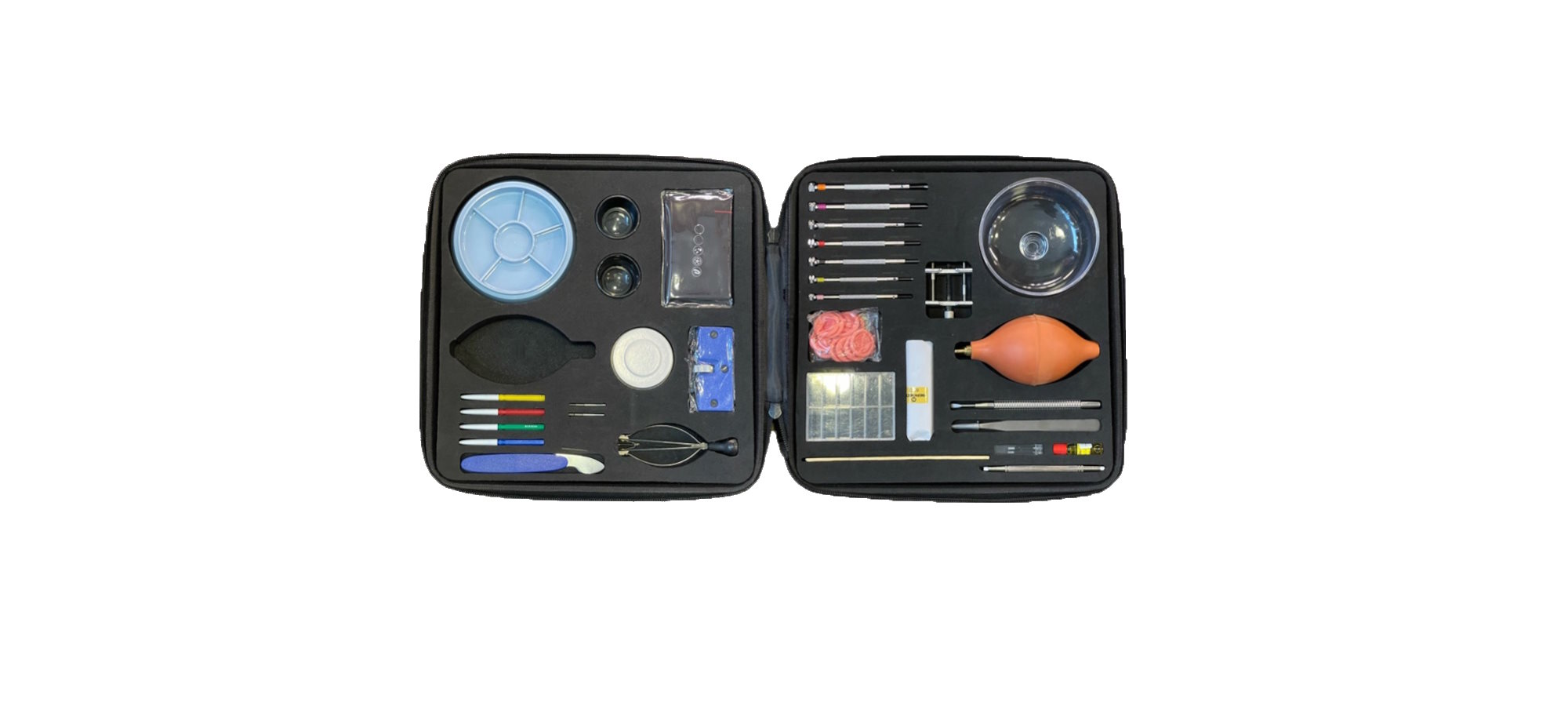
Starter kits often represent a good compromise for beginning. They group essential tools in a practical case, generally at a better price than buying separately. Just check that the kit contains the basic elements: tweezers, screwdrivers, a loupe, and a casing cushion.
Mistakes to avoid when starting out
After years of accompanying enthusiasts in their first steps, I have identified a few classic pitfalls that are better to know so you can avoid them.
First mistake: wanting to buy everything at once. Watchmaking is learned gradually, and your tool needs evolve with your expertise. Start with the essentials and add more as you go.
Second trap: neglecting tool maintenance. Poorly maintained tweezers lose their precision, and blunt screwdrivers damage screws. Regular cleaning and careful storage considerably extend the life of your equipment.
Third common mistake: underestimating the importance of lighting. Working in poor visual conditions tires the eyes and increases the risk of error. Invest in good lighting; your eyes will thank you.
Ready to start the adventure?
Watchmaking is an art that requires patience, precision, and passion. With the right tools and a methodical approach, you will discover a fascinating universe where every gesture counts and where the slightest improvement brings immense satisfaction.
Remember that even the greatest watchmakers started with simple tools and a lot of curiosity. Your first movement disassembly might be clumsy, but it will mark the beginning of an extraordinary adventure. The important thing is to start, learn from your mistakes, and progress at your own pace.
So, ready to take the plunge? Your first watchmaking tool is waiting for you, and with it, entry into a world where time takes on a very special dimension. Happy discovering!
Frequently asked questions about watchmaking tools
What budget should I plan for starting watchmaking?
Excellent question! To start comfortably, expect to spend between 150 and 300 euros for a quality basic kit. This includes essential tweezers, a set of screwdrivers, a decent loupe, and a casing cushion. At OH Selection, you will find beginner kits perfectly suited to this budget. The investment may seem significant, but quality tools will stay with you for years. It’s better to start with fewer tools of better quality than to multiply low-end purchases.
Can I use classic tools for watchmaking?
I understand the temptation, but it’s really not recommended! Watchmaking tools are designed specifically for the required precision and delicacy. A classic screwdriver risks damaging tiny screws, and ordinary pliers can scratch or break components. Tolerances in watchmaking are measured in hundredths of a millimeter. Investing in suitable equipment means avoiding many disappointments and protecting the watches you work on.
How to maintain your watchmaking tools?
Maintaining your tools is crucial for their longevity! Regularly clean your tweezers with a soft cloth and a little isopropyl alcohol. Check that the tips remain perfectly aligned. For screwdrivers, check the condition of the blades and replace them if they become blunt. Store everything in protective cases to avoid shocks. A loupe is cleaned with a special optical microfiber cloth. Finally, lightly oil the metal parts to prevent corrosion. Regular maintenance is the guarantee of high-performance tools for years.
Which loupe should I choose to start with?
To start, I recommend a 10x magnification loupe, which offers the best compromise between detail and visual comfort. Head-mounted loupes free up your hands, but some prefer stand models, which are more stable. Integrated LED lighting really makes a difference, especially for prolonged sessions. Avoid magnifications that are too high at the beginning (20x or more) as they quickly tire the eyes. OH Selection offers excellent Bergeon loupes that will be perfect for your first steps in watchmaking.
Is it possible to learn watchmaking as a self-taught hobbyist?
Absolutely! Many enthusiasts have learned on their own thanks to the resources available today. Start with simple and inexpensive watches to get some practice. Specialized forums, technical videos, and watchmaking books are excellent learning companions. The important thing is to progress step by step, without rushing. Every mistake is a lesson, and patience remains your best ally. With good tools and perseverance, you will be surprised by your progress!