

Born through technology transfers implemented by Swiss industrialists in the second half of the nineteenth century, Japanese watchmaking gradually freed itself from Swiss oversight to produce its own timepieces. Today it is divided between the two giants of the watchmaking industry—Seiko and Citizen on one side—and a whole archipelago of independent workshops on the other, less well known but capable of attracting the attention of watch enthusiasts across the globe.
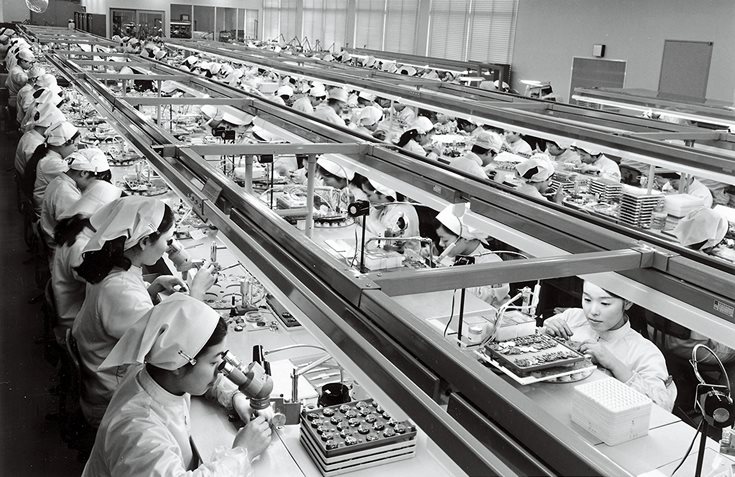 The potential was there, but it truly exploded during the 1970s with the quartz revolution… unleashing a tsunami that nearly drowned the competing industry entirely. By producing electronic watches based on quartz technology—far cheaper to manufacture than mechanical timepieces—Japan imposed its dominance across the globe and gave its watchmaking industry a leading position. An extraordinary success for a watchmaking sector that had not existed less than a century earlier. And one that literally reversed the tide: henceforth, it was the Swiss watchmaking industry that took its cue from its Japanese counterpart in the realm of electronic timepieces.
It must be noted, however, that well before the surge of quartz watches, the Japanese watchmaking industry had captured market share at the expense of the Swiss during the period between the end of the Second World War and the 1970s. Notably through mechanical watches—first manual-winding, then automatic shortly thereafter—of a quality equal to or even superior to Swiss production (for example in terms of water resistance), and at prices with which Swiss workshops could not hope to compete.
It is, moreover, toward a return to mechanical watchmaking that the Japanese industry is heading after its electronic breakthrough, following the example of the vast majority of Swiss manufacturers. The current market is divided between the general public, which leans toward quartz watches, and a community of collectors and connoisseurs, which favors high-end mechanical watches. The emblematic example has been—and remains—the Grand Seiko, flagship of the renowned brand since 1960. A shift toward luxury watchmaking that echoes, once again, the Swiss example, as if the history of relations between Switzerland and Japan possessed something of a perpetual motion.
The potential was there, but it truly exploded during the 1970s with the quartz revolution… unleashing a tsunami that nearly drowned the competing industry entirely. By producing electronic watches based on quartz technology—far cheaper to manufacture than mechanical timepieces—Japan imposed its dominance across the globe and gave its watchmaking industry a leading position. An extraordinary success for a watchmaking sector that had not existed less than a century earlier. And one that literally reversed the tide: henceforth, it was the Swiss watchmaking industry that took its cue from its Japanese counterpart in the realm of electronic timepieces.
It must be noted, however, that well before the surge of quartz watches, the Japanese watchmaking industry had captured market share at the expense of the Swiss during the period between the end of the Second World War and the 1970s. Notably through mechanical watches—first manual-winding, then automatic shortly thereafter—of a quality equal to or even superior to Swiss production (for example in terms of water resistance), and at prices with which Swiss workshops could not hope to compete.
It is, moreover, toward a return to mechanical watchmaking that the Japanese industry is heading after its electronic breakthrough, following the example of the vast majority of Swiss manufacturers. The current market is divided between the general public, which leans toward quartz watches, and a community of collectors and connoisseurs, which favors high-end mechanical watches. The emblematic example has been—and remains—the Grand Seiko, flagship of the renowned brand since 1960. A shift toward luxury watchmaking that echoes, once again, the Swiss example, as if the history of relations between Switzerland and Japan possessed something of a perpetual motion.
Japanese watchmakers remain little known to the general public. The names that stand out are most often those of the founders of the dominant brands. Among them:
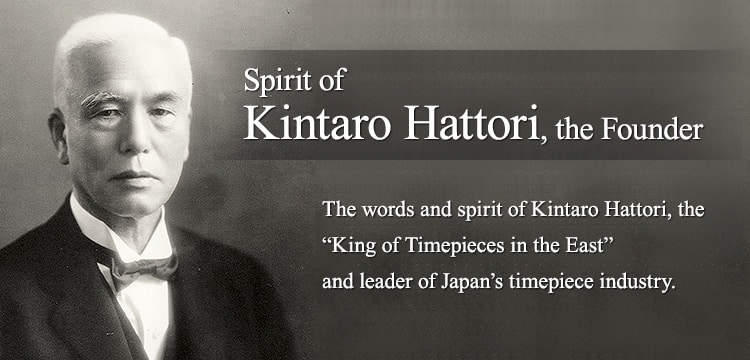
The two giants of Japanese watchmaking were born from the significant transfer of expertise that began in the late nineteenth century between Switzerland and the Land of the Rising Sun. At the time, local watchmakers were primarily importers of Swiss brands, which they helped establish in the territory: Omega, Tissot, Zenith. Then, gradually, watchmakers developed their own timepieces, as exemplified by Hattori Kintaro, future heavyweight of Japanese watchmaking with the Seiko brand. The same holds true for its principal competitor, the other dominant figure in the sector: Citizen Watch Co., founded in 1918.
The strength of Japanese brands lies in their ambition in research & development. Among the creations attributable to Seiko: the quartz watch in 1969 (the Astron), the LCD screen for watches in 1973, the first watch using a micro-alternator in 1988, the Spring Drive movement in 1999, the first watch incorporating GPS in 2012. Less innovative, rival Citizen can nonetheless claim the invention of the Eco-Drive, a system integrated into its timepieces that converts light into energy and stores it in a lithium-ion battery, allowing it to recharge itself.
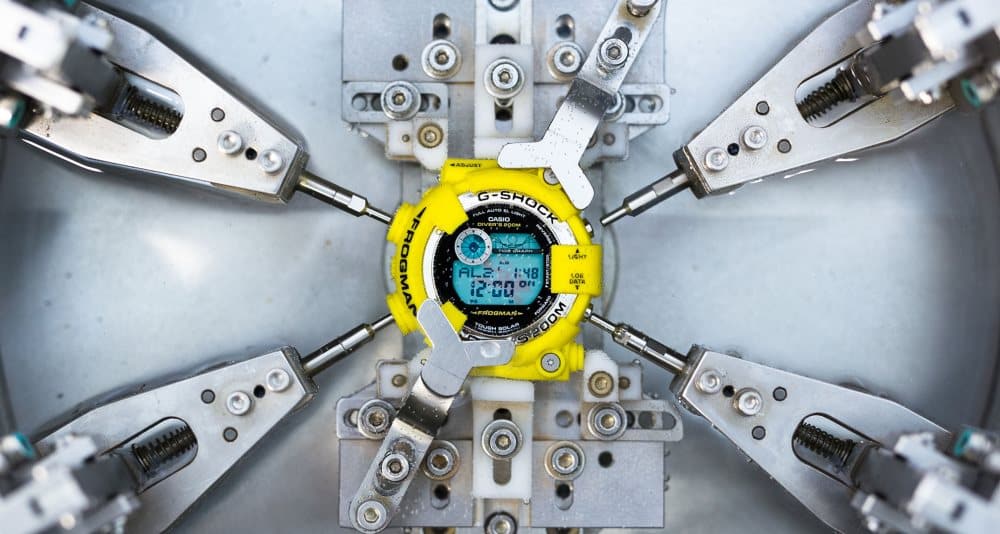
In 1971, a third major player joined the duo: that was the year when calculator manufacturer Casio launched its first electronic watch models, which met with great success. Today, Casio, like its competitors, is orchestrating its move upmarket toward more luxurious timepieces, while remaining in the electronic domain.
The other segment of Japanese watchmaking is occupied by independent creators who are increasingly attracting the attention of the Swiss, such as Hajime Asaoka (former student of Philippe Dufour) or Masahiro Kikuno (member of the Horological Academy of Independent Creators).
History of Japanese Watchmaking
As early as the late nineteenth century, Switzerland, through the Union Horlogère, organized a transfer of its expertise in clocks and watches to Japan, where a market was developing. And for good reason: after centuries of isolationism, the archipelago opened itself to international trade. The first trading post was established in Yokohama in 1863. Until the mid-twentieth century, Japanese watchmakers trained in Swiss workshops according to Swiss quality standards, then returned home to provide after-sales service for major Western brands that enjoyed significant success locally, although their products served primarily as ornamental jewelry. Japanese watchmaking thus began as a commercial partner to a Switzerland eager to secure for itself a market all the more vast because, from 1873 onward, Japan adopted the division of days into 24 hours and demand for watches grew rapidly. But the Japanese were not deceived; they understood that this technology transfer was primarily intended to establish the unilateral dominance of Swiss watchmaking. This is why local watchmakers, having themselves become experts, began to develop the national watchmaking industry. A first large-scale attempt was launched in 1891 with the founding of the Nippon Watch Manufacturing Co. manufactory, whose production ceased… four years later! This did not prevent independent makers from offering their own models produced in small quantities, such as those of Hattori Kintaro, who founded the Seikosha Clock Factory—future Seiko—in 1892. The Japanese partner gradually transformed into a formidable competitor, developing first-rate manufactories in the shadow of Switzerland. Local production supplanted imports, boosted by landmark innovations such as Seiko’s first wristwatch in 1913. The devastation of the Second World War brought this industrial evolution to a halt. But Japanese watchmaking was not dead; it had simply fallen asleep—and its awakening, in 1947, was symbolized by the creation of the Japan Watch Association, which led the country to launch a vast program for the worldwide export of its watches and clocks.The potential was there, but it truly exploded during the 1970s with the quartz revolution… unleashing a tsunami that nearly drowned the competing industry entirely. By producing electronic watches based on quartz technology—far cheaper to manufacture than mechanical timepieces—Japan imposed its dominance across the globe and gave its watchmaking industry a leading position. An extraordinary success for a watchmaking sector that had not existed less than a century earlier. And one that literally reversed the tide: henceforth, it was the Swiss watchmaking industry that took its cue from its Japanese counterpart in the realm of electronic timepieces.
It must be noted, however, that well before the surge of quartz watches, the Japanese watchmaking industry had captured market share at the expense of the Swiss during the period between the end of the Second World War and the 1970s. Notably through mechanical watches—first manual-winding, then automatic shortly thereafter—of a quality equal to or even superior to Swiss production (for example in terms of water resistance), and at prices with which Swiss workshops could not hope to compete.
It is, moreover, toward a return to mechanical watchmaking that the Japanese industry is heading after its electronic breakthrough, following the example of the vast majority of Swiss manufacturers. The current market is divided between the general public, which leans toward quartz watches, and a community of collectors and connoisseurs, which favors high-end mechanical watches. The emblematic example has been—and remains—the Grand Seiko, flagship of the renowned brand since 1960. A shift toward luxury watchmaking that echoes, once again, the Swiss example, as if the history of relations between Switzerland and Japan possessed something of a perpetual motion.
 Japanese Watchmakers
Japanese watchmakers remain little known to the general public. The names that stand out are most often those of the founders of the dominant brands. Among them:
- Hattori Kintaro
- Kono Shohei
- Yosaburo Nakajima
- Hajime Asaoka
- Masahiro Kikuno
 Major Japanese Brands
The two giants of Japanese watchmaking were born from the significant transfer of expertise that began in the late nineteenth century between Switzerland and the Land of the Rising Sun. At the time, local watchmakers were primarily importers of Swiss brands, which they helped establish in the territory: Omega, Tissot, Zenith. Then, gradually, watchmakers developed their own timepieces, as exemplified by Hattori Kintaro, future heavyweight of Japanese watchmaking with the Seiko brand. The same holds true for its principal competitor, the other dominant figure in the sector: Citizen Watch Co., founded in 1918.
The strength of Japanese brands lies in their ambition in research & development. Among the creations attributable to Seiko: the quartz watch in 1969 (the Astron), the LCD screen for watches in 1973, the first watch using a micro-alternator in 1988, the Spring Drive movement in 1999, the first watch incorporating GPS in 2012. Less innovative, rival Citizen can nonetheless claim the invention of the Eco-Drive, a system integrated into its timepieces that converts light into energy and stores it in a lithium-ion battery, allowing it to recharge itself.
In 1971, a third major player joined the duo: that was the year when calculator manufacturer Casio launched its first electronic watch models, which met with great success. Today, Casio, like its competitors, is orchestrating its move upmarket toward more luxurious timepieces, while remaining in the electronic domain.
The other segment of Japanese watchmaking is occupied by independent creators who are increasingly attracting the attention of the Swiss, such as Hajime Asaoka (former student of Philippe Dufour) or Masahiro Kikuno (member of the Horological Academy of Independent Creators).