

Until the early 20th century, the watchmaking industry consisted primarily of companies and manufactures that each worked independently, separately from one another. But the new century brought its share of economic crises, and these crises pushed watchmaking firms (particularly Swiss ones) to band together in order to better confront difficulties and face competition. These watchmaking groups are, today, the principal leaders of the timepiece sector.
However, watchmaking groups do not form only in response to crises and difficulties in the sector. The more recent trend is the acquisition of manufactures and brands by more powerful groups, generally positioned in the luxury segment. Since the 1990s, we have thus witnessed acquisitions of watch brands by conglomerates such as LVMH, Kering (formerly PPR), or Richemont. Watchmaking groups that are constituted no longer in periods of downturn, but on the contrary against a backdrop of economic health.
How can this trend be explained? To understand it, one must recognize that the watchmaking industry split in two around the 1990s/2000s, between mass consumption on one side and prestige production on the other. To survive in the era of inexpensive watches, high-end brands (particularly Swiss ones) repositioned themselves in order to resolutely occupy the luxury segment, offering models ranging from a few hundred to several hundred thousand euros.
Thus, the most prestigious brands in the sector became, in a few short years, strategic assets for the major luxury groups that wished to gain a foothold in the watchmaking sector. So much so that conglomerates such as LVMH or Richemont acquired important brands (De Beers, TAG Heuer, or Zenith for the former; Cartier, Jaeger-LeCoultre, or Vacheron Constantin for the latter) in order to enter this highly prized sector through the front door.
After all, producing high-end watches is good for brand image. This is why watchmaking groups, dedicated solely to this art, share the market with more heterogeneous entities that are nonetheless equally imposing in the watchmaking sector.
 Among the luxury groups possessing emblematic watch brands:
 After watchmaking groups, also discover watch manufactures, watch brands, and the watchmaking industry!
Watchmaking groups to better confront difficulties
In economic matters as elsewhere, unity is strength. From the first decades of the 20th century onward, watchmaking companies understood this well. Especially when the 1929 crisis, which started in the United States, transformed into a Great Depression that flooded the global economy, reaching even the charming and calm valleys of the Jura where the watchmaking industry had established itself. Watch manufacturers were too small, too weak, too dispersed. The crisis struck them head-on, seriously threatening their survival; they responded with painful social dumping, their sole weapon to fight against the invisible enemy. In the turmoil, the Confederation and the principal banking establishments created ASUAG in 1931, or the General Society of the Swiss Watchmaking Industry: a holding company that brought together several component and movement manufacturers, as well as emblematic brands (including Hamilton, Longines, Mido, and Rado). ASUAG was not exactly the first example of a watchmaking group. In 1925, the Omega brand was still suffering the economic consequences of the world conflict and became mired in a series of internal labor disputes that weighed down the manufacture’s accounts. To rebound, Omega partnered with Tissot and thus relaunched the machine. The two brands would create together, a few years later, the SSIH holding company (Swiss Society for the Watchmaking Industry), destined to expand. ASUAG would come only after this trial run, but by establishing a watchmaking group of an entirely different scale. This model served as the basis for the great consolidation of the 1980s. Confronted with a new crisis (the so-called “quartz crisis”) and threatened with extinction by the flood of electronic watches from Japan, ASUAG and SSIH joined forces to form a vast entity: SMH (Society for Microelectronics and Watchmaking) in 1983, thanks to efforts made by the banks. This watchmaking group would take in 1998 the name—better known today—of Swatch Group. Powerful conglomerates in the luxury sector
However, watchmaking groups do not form only in response to crises and difficulties in the sector. The more recent trend is the acquisition of manufactures and brands by more powerful groups, generally positioned in the luxury segment. Since the 1990s, we have thus witnessed acquisitions of watch brands by conglomerates such as LVMH, Kering (formerly PPR), or Richemont. Watchmaking groups that are constituted no longer in periods of downturn, but on the contrary against a backdrop of economic health.
How can this trend be explained? To understand it, one must recognize that the watchmaking industry split in two around the 1990s/2000s, between mass consumption on one side and prestige production on the other. To survive in the era of inexpensive watches, high-end brands (particularly Swiss ones) repositioned themselves in order to resolutely occupy the luxury segment, offering models ranging from a few hundred to several hundred thousand euros.
Thus, the most prestigious brands in the sector became, in a few short years, strategic assets for the major luxury groups that wished to gain a foothold in the watchmaking sector. So much so that conglomerates such as LVMH or Richemont acquired important brands (De Beers, TAG Heuer, or Zenith for the former; Cartier, Jaeger-LeCoultre, or Vacheron Constantin for the latter) in order to enter this highly prized sector through the front door.
After all, producing high-end watches is good for brand image. This is why watchmaking groups, dedicated solely to this art, share the market with more heterogeneous entities that are nonetheless equally imposing in the watchmaking sector.
The most emblematic watchmaking groups and their watch brands
Among the most renowned watchmaking groups, we may cite:- Festina Lotus S.A. – a group specializing in entry-level watches, which brings together the brands Calypso, Candino, Festina, Jaguar, and Lotus Watches.
- Rolex – the most famous watch brand, launched by Hans Wilsdorf, forms a mini watchmaking group with Tudor.
- Swatch Group – founded in 1983 from ASUAG and SSIH by Nicolas Hayek, under the name SMH. Its emblematic brand is none other than Swatch, the affordable Swiss watch that revolutionized the watchmaking industry. Other brands: Blancpain, Breguet, Hamilton, Jaquet Droz, Longines, Mido, Omega, Pierre Balmain, Tiffany, Tissot…
Among the luxury groups possessing emblematic watch brands:
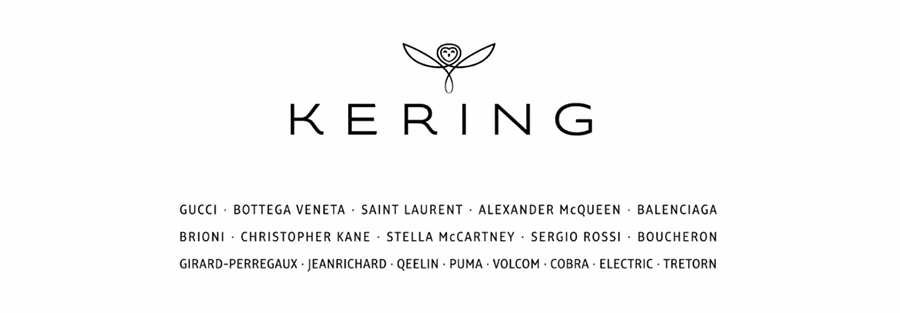
- Kering – the former PPR owns the brands Boucheron, Gucci, Yves Saint-Laurent, Girard Perregaux, and JeanRichard.
- LVMH – this is the world’s leading luxury group and it is French. LVMH brings together, in the watchmaking domain, the brands Chaumet, De Beers, Dior, Fred, Louis Vuitton, TAG Heuer, and Zenith.
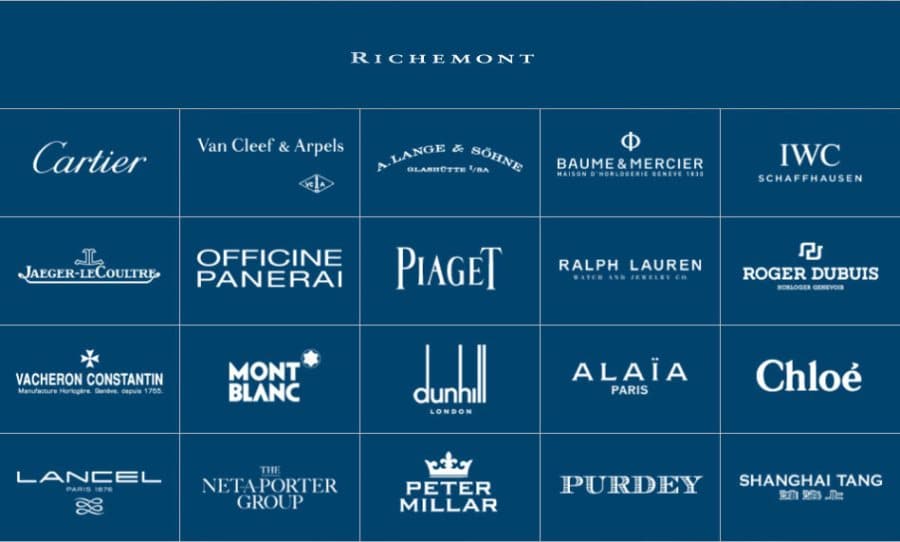
- Richemont – founded in 1988 by Johann Rupert. Among the group’s most important watch brands, we may cite Baume & Mercier, Cartier, Jaeger-LeCoultre, Montblanc, Piaget, and Vacheron Constantin.
After watchmaking groups, also discover watch manufactures, watch brands, and the watchmaking industry!