
Key takeaways: a watch strap spring bar is chosen based on three criteria. Its length is equal to the lug width, the distance between the watch lugs. Its diameter, most often 1.5 or 1.8 mm, must fit into the lug holes and the strap’s opening. Its type, classic or quick-release, depends on how often you change your strap.
The spring bar is the smallest part of a watch strap, yet it is what holds the watch to the wrist. When it is too short, too thin, or worn out, the strap becomes loose and eventually detaches. When it is too thick, it simply will not fit into the lugs. Choosing the right one requires two measurements and one decision, nothing more.
This guide follows these steps in order: what a spring bar is, how to find its length based on the lug width, how to choose between 1.5 and 1.8 mm diameters, when to prefer a quick-release spring bar over a classic one, and how to install the new spring bar without scratching the case. All mentioned spring bars can be found in our watchmaking tools category.
What is a watch strap spring bar?
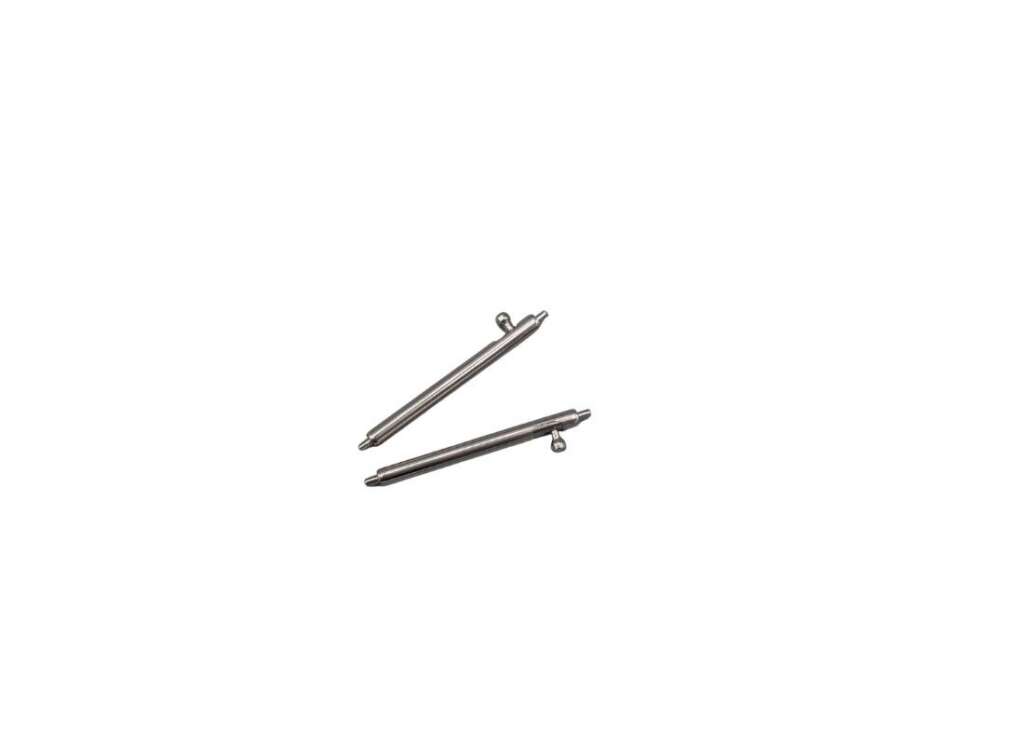
The spring bar, also known as a spring pin, is a small metal tube that passes through the end of the strap. Inside, a spring pushes two thinner tips outward. These tips fit into the holes drilled inside the lugs, the two protrusions of the case between which the strap is fixed. To remove the spring bar, you compress one tip: it retracts into the tube, clears the hole, and the strap is released.
On a leather, rubber, or fabric strap, the spring bar passes through a stitched or molded sleeve at the end of the strap. On a metal bracelet, it passes through the last link or the end link that fits against the case. The principle remains the same: the spring bar only works if it is long enough to engage properly on both sides and thick enough not to rattle within the strap.
Length: measuring the lug width
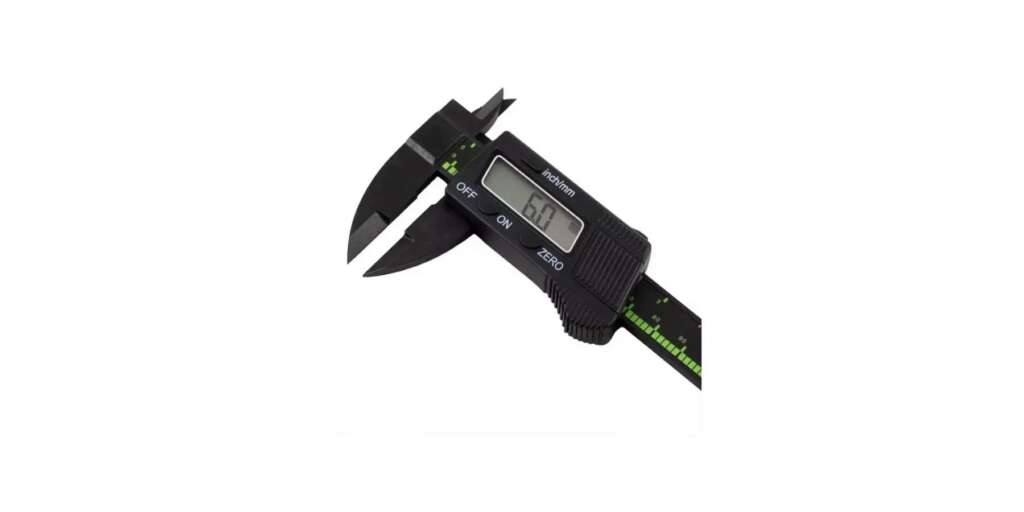
The length of a spring bar corresponds to the lug width, which is the internal distance between the two lugs, measured in millimeters where the spring bar passes. A watch with a 20 mm lug width requires a 20 mm spring bar and a 20 mm strap. The most common values range from 18 to 22 mm on men’s watches, with smaller sizes on women’s watches and up to 24 mm on certain diving or pilot watches.
To measure, remove the old strap if possible and take the measurement with a caliper between the inner faces of the lugs. If the old spring bar is still there, its total length with the tips extended also provides a good indication. Do not rely on the case diameter: a 42 mm watch can easily have a 20 mm lug width. And do not choose a shorter spring bar “to make it fit”: its tips would barely engage in the holes, which is the leading cause of lost straps.
Our 1.5 mm Beco Technic spring bars and their 1.8 mm equivalents are available in lengths from 8 to 24 mm, covering almost all watches.
Diameter: 1.5 mm or 1.8 mm?
The diameter is the thickness of the spring bar tube. This is the measurement most often overlooked, yet it determines two things: the spring bar must pass through the strap sleeve, and its tips must match the lug holes. A spring bar that is too thin allows the strap to move and wears out faster; a spring bar that is too thick will not fit into a thin strap or will strain its stitching.
1.5 mm is the most common diameter: it is suitable for most thin leather straps, dress watch straps, and many medium-sized watches. 1.8 mm is found on thicker straps, padded leathers, rubber straps, and many sports or diving watches, which have wider drilled lugs. Even thicker spring bars exist for certain diving watches, but they remain a minority.
The safest way is to measure the old spring bar with a caliper on the tube, not the tips. Otherwise, look at the strap opening: if it is wide and the watch is sporty, go for 1.8 mm spring bars; for a thin strap, stick with 1.5 mm.
Classic spring bar or quick-release spring bar?
The classic spring bar has no protrusions: to compress it, you need a strap-changing tool, the fork of which pushes against the shoulder of the tip. This is the most discreet and common system, suitable for a strap that is kept for a long time.
The interchangeable spring bar, known as quick-release or presto, has a small lever on the side. By sliding this lever with your fingernail, you retract the tip and the strap can be removed without tools in seconds. It is intended for those who change straps often, depending on their outfit or the season. The lever must remain accessible: the strap must have a notch or a sleeve short enough to reach it. Our quick-release spring bars are available in 18, 20, and 22 mm, sold in pairs.
To choose, ask yourself a simple question:
- you change your strap several times a month: the quick-release spring bar saves you from taking out the tool every time;
- you keep the same strap for months: the classic spring bar is sufficient and more discreet;
- your strap does not leave the lever accessible: stick with the classic spring bar, regardless of your usage.
When should a spring bar be replaced?
There is no fixed schedule: a spring bar is replaced based on its condition. A good habit is to check it every time you change your strap. A tip that no longer snaps back firmly, a weak spring, a bent tube, or signs of corrosion are all reasons to change it. Spring bars sold with cheap straps are also often the first to wear out.
A strap that develops play between the lugs is another signal. First, check that the length matches the lug width and that both tips are engaged; if so and the play persists, the spring bar is worn. Since a spring bar costs very little compared to the watch it holds, it is better to change it at the slightest doubt and keep a small stock on hand: our classic spring bars are sold in packs of two or ten.
Installing a spring bar without scratching the watch
Place the watch face down on a soft cloth in a well-lit area. Slide the spring bar into the strap sleeve, engage the first tip into a lug hole, then compress the other tip with the fork of the tool. Bring it in front of the opposite hole and release gently: a light click indicates the tip is in place. Then pull firmly on the strap to verify it does not come loose.
The fork must press on the shoulder of the tip, never slip against the lug: this is how scratches are made. A tool with forks of several widths, such as the one in the Bergeon strap-changing kit, allows for a good grip regardless of the space available between the strap and the lug. With a quick-release spring bar, the operation is done by hand: retract the lever, align the tip with the hole, then release.
FAQ
A 20 mm strap is fixed with a 20 mm long spring bar, as the spring bar length equals the lug width. You then need to choose the diameter: 1.5 mm for most thin straps and dress watches, 1.8 mm for a thick strap or a sports watch.
Only if the strap sleeve and the lug holes allow it. A 1.8 mm spring bar is more robust, but it may not fit into a thin strap or may strain its stitching. Measure the old spring bar with a caliper and stick to the same diameter if in doubt.
On the watch itself, yes, provided the length matches the lug width and the diameter fits the lug holes. The limitation comes from the strap: the spring bar lever must remain accessible, which requires a notch or a sufficiently short sleeve at the end of the strap.
A spring bar is worn when its tip no longer snaps back firmly, the spring feels weak, the tube is bent, or it shows corrosion. A strap that develops play even though the length is correct is also a sign. In all these cases, replace it without delay.
For a classic spring bar, yes: a forked strap-changing tool allows you to compress the tip without scratching the lugs. A quick-release spring bar is removed by hand using its small side lever. In both cases, work on a soft cloth and check the fit by pulling on the strap.