

The art of watchmaking is, above all, an art of precision. And no one embodies this quest for exactness and technical perfection better than the renowned watchmaker Abraham-Louis Breguet. He elevated timekeeping to a level never before achieved and, in doing so, enabled watches and clocks to fully enter the modern era.
Aside from the Tourbillon, which he invented in 1801, Abraham-Louis Breguet was never a watchmaker of grand flourishes. He was not as flamboyant as Ferdinand Berthoud, whose successor he became as official watchmaker to the Royal Navy, nor as stubborn as John Harrison, with whom he shared the achievement of designing marine chronometers. Breguet was a man of discreet inventions and quiet breakthroughs. Yet, little by little, his muted steps helped profoundly transform the very conception of watchmaking, ultimately paving the way for modern developments in timepiece mechanisms.
Abraham-Louis Breguet was born Swiss, in Neuchâtel, on January 10, 1747, into a watchmaking family. His vocation was therefore almost self-evident. But he soon left his family to join France—specifically the king’s court at Versailles—where he refined his training under the guidance of Jean-Antoine Lépine and, above all, Berthoud, who at the time illuminated the Parisian watchmaking scene with his talents as a teacher and educator.
It was on the Quai de l’Horlogerie in Paris that Breguet set up to open his workshop. It was 1775, and the young man was only 28. In less than ten years, he would launch his first inventions (such as the gong spring for repeating watches), attain the rank of master watchmaker (in 1784), and be noticed by Louis XVI and Marie-Antoinette for his truly remarkable creations. In 1786, the government sought his advice on a royal watchmaking manufactory the king planned to build.
The Revolution forced him to take refuge in Switzerland, but he returned to Paris in 1792 and obtained French citizenship. His reputation continued to grow as he applied to the Académie des sciences in the mechanical arts section (though he would not be admitted until 1816), before winning a gold medal at the Exposition nationale des produits de l’industrie in 1798. Appreciated by Bonaparte, who purchased three pieces from him, Breguet alternated between designing new mechanisms—such as the Tourbillon regulator, for which he filed a patent on June 26, 1801—and producing one-of-a-kind pieces commissioned by wealthy and powerful patrons, notably a now-famous wristwatch made for the Queen of Naples.
Also passionate about marine chronometers—creating in 1815 a double-barrel model—Abraham-Louis Breguet became official watchmaker to the Royal Navy following the death of his former teacher, Berthoud. He wrote an instruction booklet on the use of marine watches and also took an interest in astronomy, designing an eyepiece for an observation telescope. At the same time, his importance at court continued to grow: this was the period when he was appointed a member of the Bureau des Longitudes, admitted to the Académie des sciences, and awarded the Legion of Honour by Louis XVIII.
Having reached the pinnacle of his craft and renown, Breguet died on September 17, 1823, in Paris, leaving the succession of his business to his son Louis-Antoine.
Less flamboyant than some of his peers, Abraham-Louis Breguet first built his reputation on an extraordinary ability to improve existing mechanisms, as though they were merely waiting for his genius to elevate them. His work on the self-winding watch, in particular, earned him considerable recognition in the world of watchmaking.
When he turned to his own inventions, it was in mechanical precision that he worked wonders. Notably:
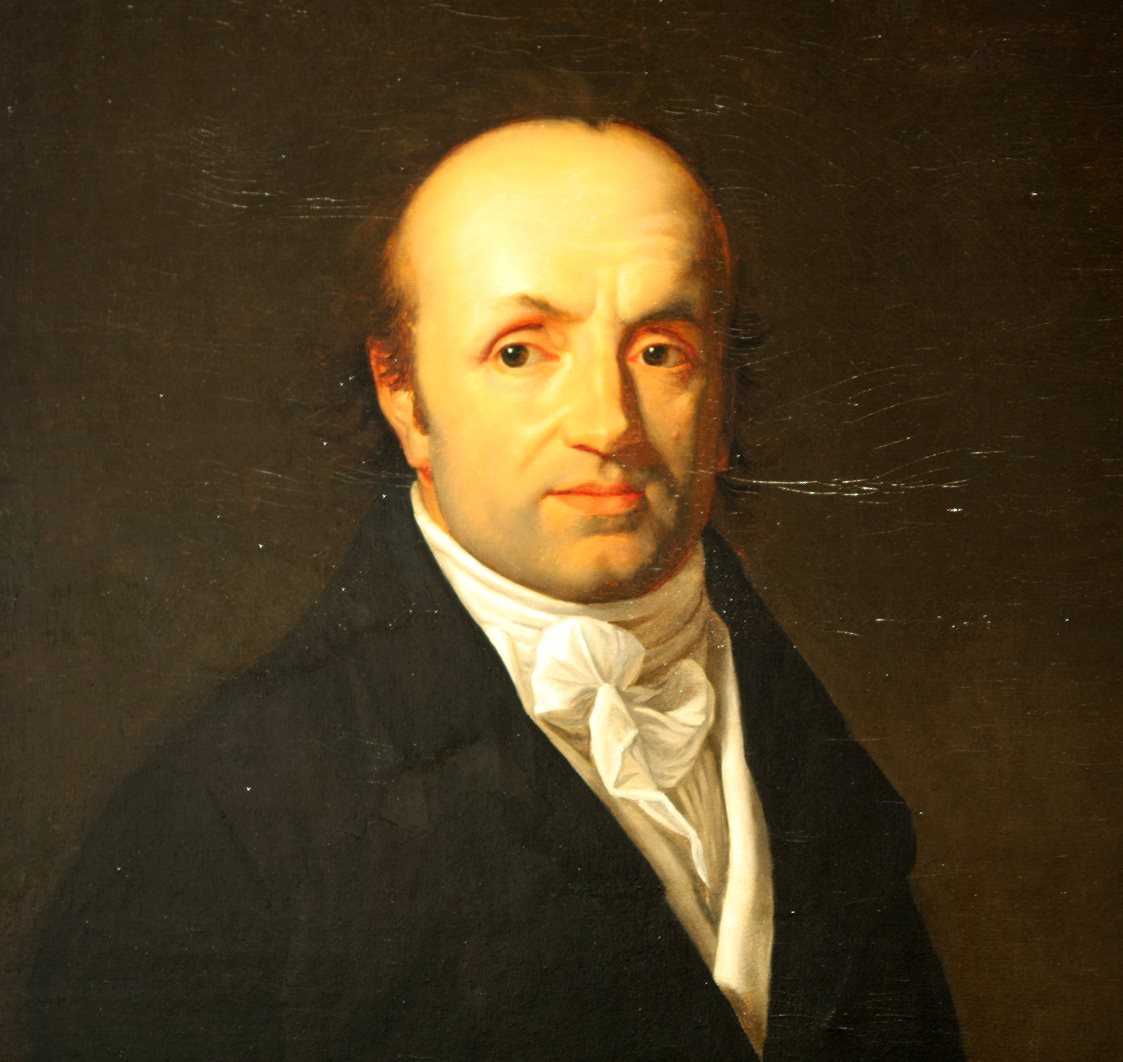 Abraham-Louis Breguet, the man who elevated watches
Aside from the Tourbillon, which he invented in 1801, Abraham-Louis Breguet was never a watchmaker of grand flourishes. He was not as flamboyant as Ferdinand Berthoud, whose successor he became as official watchmaker to the Royal Navy, nor as stubborn as John Harrison, with whom he shared the achievement of designing marine chronometers. Breguet was a man of discreet inventions and quiet breakthroughs. Yet, little by little, his muted steps helped profoundly transform the very conception of watchmaking, ultimately paving the way for modern developments in timepiece mechanisms.
Abraham-Louis Breguet was born Swiss, in Neuchâtel, on January 10, 1747, into a watchmaking family. His vocation was therefore almost self-evident. But he soon left his family to join France—specifically the king’s court at Versailles—where he refined his training under the guidance of Jean-Antoine Lépine and, above all, Berthoud, who at the time illuminated the Parisian watchmaking scene with his talents as a teacher and educator.
It was on the Quai de l’Horlogerie in Paris that Breguet set up to open his workshop. It was 1775, and the young man was only 28. In less than ten years, he would launch his first inventions (such as the gong spring for repeating watches), attain the rank of master watchmaker (in 1784), and be noticed by Louis XVI and Marie-Antoinette for his truly remarkable creations. In 1786, the government sought his advice on a royal watchmaking manufactory the king planned to build.
The Revolution forced him to take refuge in Switzerland, but he returned to Paris in 1792 and obtained French citizenship. His reputation continued to grow as he applied to the Académie des sciences in the mechanical arts section (though he would not be admitted until 1816), before winning a gold medal at the Exposition nationale des produits de l’industrie in 1798. Appreciated by Bonaparte, who purchased three pieces from him, Breguet alternated between designing new mechanisms—such as the Tourbillon regulator, for which he filed a patent on June 26, 1801—and producing one-of-a-kind pieces commissioned by wealthy and powerful patrons, notably a now-famous wristwatch made for the Queen of Naples.
Also passionate about marine chronometers—creating in 1815 a double-barrel model—Abraham-Louis Breguet became official watchmaker to the Royal Navy following the death of his former teacher, Berthoud. He wrote an instruction booklet on the use of marine watches and also took an interest in astronomy, designing an eyepiece for an observation telescope. At the same time, his importance at court continued to grow: this was the period when he was appointed a member of the Bureau des Longitudes, admitted to the Académie des sciences, and awarded the Legion of Honour by Louis XVIII.
Having reached the pinnacle of his craft and renown, Breguet died on September 17, 1823, in Paris, leaving the succession of his business to his son Louis-Antoine.
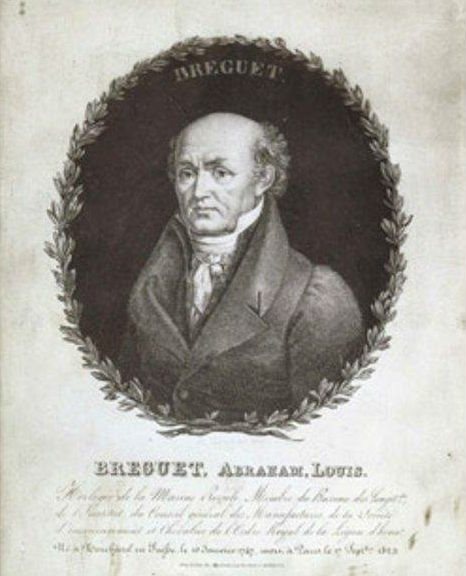 Precise and precious inventions
Less flamboyant than some of his peers, Abraham-Louis Breguet first built his reputation on an extraordinary ability to improve existing mechanisms, as though they were merely waiting for his genius to elevate them. His work on the self-winding watch, in particular, earned him considerable recognition in the world of watchmaking.
When he turned to his own inventions, it was in mechanical precision that he worked wonders. Notably:
- In 1783, the gong spring for repeating watches
- In 1790, the Pare-chute, which—as its name suggests—was designed to absorb the shocks to which timepieces are subjected
- In 1795, the Breguet overcoil
- In 1799, the tact watch
- In 1801, the Tourbillon
- In 1810, the wristwatch
- As well as numerous particularly precise escapements