

A skilled builder, audacious and tenacious inventor, Ferdinand Berthoud was one of the pillars of horological progress in the 18th century. Beyond his career, marked by an accumulation of titles, testimonials of recognition, and privileges at the court of the King of France—a success notably earned for his marine chronometers—the watchmaker Berthoud was above all a man eager for knowledge, and keen to share it with as many people as possible.
Ferdinand Berthoud was one of those men who aspired as much to develop their knowledge as to transmit it to the greatest number; this is why publications and teaching were part of his work, just like his horological inventions. The man, who wrote several articles on horology for Diderot and d’Alembert’s Encyclopédie, and who published a first popular science work in 1759, ‘L’Art de conduire et de régler les pendules et les montres à l’usage de ceux qui n’ont aucune connaissance d’horlogerie’ (The Art of Operating and Adjusting Clocks and Watches for Those Who Have No Knowledge of Horology), was far from an elitist scientist secluded in his art. Berthoud was a great innovator and a generous personality, who, rather than keeping his knowledge to himself and his peers, wished above all to share it.
Berthoud was born in Switzerland, in the watchmaking country, on March 18, 1727, in Plancemont-sur-Couvet, into a prominent family itself involved in timekeeping. When he was 14, his brother Jean-Henry took him on as an apprentice clockmaker in Couvet; he also benefited from a solid scientific education.
This was the height of the Age of Enlightenment, and it was in Paris, the center of intellectual and scientific influence of the time, that things were happening, under the reign of Louis XV. At 18, in 1745, Ferdinand Berthoud moved there to perfect his profession as a watchmaker-clockmaker, alongside the master watchmakers of the Parisian community. The setting was ideal, and Berthoud was able to freely cultivate his talents in science, engineering, and mechanics – gifts that would gently lead him to become one of the greatest watchmakers in history.
Berthoud was only 26 when he received the title of Master Watchmaker, by special favor of the King of France. A year earlier, in 1752, he had impressed the jury of the Royal Academy of Sciences by submitting for their judgment a project for the manufacture of an equation clock, a brilliant proof of his exceptional talents in horology. It was the glowing report from the academicians that prompted the king to grant him his mastership, even though he was still too young for such an honor. Berthoud was then able to open his own workshop in Paris, and his reputation only grew. This unstoppable success culminated with the writing of articles for the Encyclopédie, published between 1751 and 1772 under the direction of Diderot and d’Alembert, as well as the publication of his first popular science work in 1759.
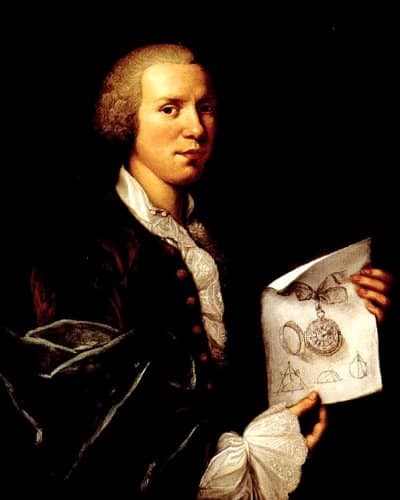 Ferdinand Berthoud, Master Watchmaker and Professor
Ferdinand Berthoud was one of those men who aspired as much to develop their knowledge as to transmit it to the greatest number; this is why publications and teaching were part of his work, just like his horological inventions. The man, who wrote several articles on horology for Diderot and d’Alembert’s Encyclopédie, and who published a first popular science work in 1759, ‘L’Art de conduire et de régler les pendules et les montres à l’usage de ceux qui n’ont aucune connaissance d’horlogerie’ (The Art of Operating and Adjusting Clocks and Watches for Those Who Have No Knowledge of Horology), was far from an elitist scientist secluded in his art. Berthoud was a great innovator and a generous personality, who, rather than keeping his knowledge to himself and his peers, wished above all to share it.
Berthoud was born in Switzerland, in the watchmaking country, on March 18, 1727, in Plancemont-sur-Couvet, into a prominent family itself involved in timekeeping. When he was 14, his brother Jean-Henry took him on as an apprentice clockmaker in Couvet; he also benefited from a solid scientific education.
This was the height of the Age of Enlightenment, and it was in Paris, the center of intellectual and scientific influence of the time, that things were happening, under the reign of Louis XV. At 18, in 1745, Ferdinand Berthoud moved there to perfect his profession as a watchmaker-clockmaker, alongside the master watchmakers of the Parisian community. The setting was ideal, and Berthoud was able to freely cultivate his talents in science, engineering, and mechanics – gifts that would gently lead him to become one of the greatest watchmakers in history.
Berthoud was only 26 when he received the title of Master Watchmaker, by special favor of the King of France. A year earlier, in 1752, he had impressed the jury of the Royal Academy of Sciences by submitting for their judgment a project for the manufacture of an equation clock, a brilliant proof of his exceptional talents in horology. It was the glowing report from the academicians that prompted the king to grant him his mastership, even though he was still too young for such an honor. Berthoud was then able to open his own workshop in Paris, and his reputation only grew. This unstoppable success culminated with the writing of articles for the Encyclopédie, published between 1751 and 1772 under the direction of Diderot and d’Alembert, as well as the publication of his first popular science work in 1759.
Marine Chronometers
At that time, the question of measuring longitudes occupied the scientific world. In France as in England, governments promised such rewards – and such high prestige – that the most talented watchmakers became interested in this problem, notably John Harrison in London. In 1763, Berthoud was moreover mandated by the king to go to England and examine Harrison’s marine clock – a mission to which Harrison categorically objected. The French watchmaker did not waste his time, as he was elected ‘foreign associate member’ of the Royal Society of London on February 16, 1764. But before that, there was 1760, when Berthoud submitted a ‘Mémoire sur les principes de construction d’une Horloge de Marine’ (Memoir on the Principles of Construction of a Marine Clock) to the Royal Academy of Sciences in Paris. In 1761, he completed and presented Marine Clock No. 1. In 1766, he proposed the construction of marine clocks No. 6 and 8. Once completed, these were entrusted by the Duke of Praslin to Chevalier de Fleurieu, explorer and hydrographer, who was to test them during a voyage aboard his corvette, L’Isis, to Saint Domingue. This full-scale trial was a success, particularly for No. 8, which calculated longitude to within half a degree. These two clocks, like many other works by Berthoud, are currently preserved at the Musée des arts et métiers. Berthoud continued his research, particularly in the direction of improving the precision of his marine clocks. By working on compensating for the effects of temperature variations, he discovered average compensation in 1768; in parallel, he developed various escapements. In any event, he dedicated himself to the field of marine horology, bringing his nephew Pierre-Louis, himself a talented young watchmaker-clockmaker, from Switzerland to assist him in the production and maintenance of mechanisms intended for the French and Spanish Navies. His (indirect) successes at sea led Berthoud to be appointed, in 1770, Horloger-Mécanicien du Roi et de la Marine (Watchmaker-Mechanic to the King and the Navy). He was also responsible for supplying the French Admiralty with marine chronometers, essential tools for the cartographic and hydrographic campaigns that would mark the end of the 18th century. In total, Ferdinand Berthoud designed, produced, and delivered about ten weight-driven or spring-driven clocks to the Admiralty. True to his ambition, he also dedicated himself to transmitting his knowledge, through two new works, in 1773 and 1775: ‘Traité des horloges marines’ (Treatise on Marine Clocks), which detailed the manufacture of such an object, followed by ‘Les longitudes par la mesure du temps’ (Longitudes by Time Measurement). In the year of his last work’s publication, 1807, Ferdinand Berthoud passed away. He was buried in Groslay, in Val d’Oise, where a monument celebrates his memory. He left behind an extraordinary body of work, of unparalleled scope, consisting of clocks, watches, marine chronometers, as well as scientific measuring instruments and specialized or popular science works.Berthoud’s Recognitions
It was at the end of his career that honors concentrated. After his recognitions from the King of France and the English Royal Society, Ferdinand Berthoud:- Was elected resident member of the first class in the mechanical arts section of the National Institute (1795);
- Won the prize of the Institute of Sciences and Arts for his chronometers No. 27 and No. 32, with decimal time division;
- Received the title of Watchmaker-Mechanic of the Navy (1802);
- Received the title of Watchmaker of the Observatory and the Bureau des longitudes of Paris (1805);
- Received the title of Knight of the Legion of Honor from Napoleon as a member of the Institute (1804).
Bibliography:
- L’Art de conduire et de régler les pendules et les montres à l’usage de ceux qui n’ont aucune connaissance d’horlogerie (1759)
- Essai sur l’horlogerie (1763)
- Traité des horloges marines (1773 – available in its entirety on this page)
- Les longitudes par la mesure du temps (1775)
- La mesure du temps ou supplément au Traité des horloges marines et à l’Essai sur l’horlogerie (1787)
- Traité des montres à longitudes (1792)
- État des horloges et des montres à longitudes construites et exécutées par Ferdinand Berthoud (1793)
- Suite du Traité des montres à longitudes (1796)
- Histoire de la mesure du temps par les horloges (1802)
- Supplément au Traité des montres à longitudes (1807)