

The town of Fleurier is one of the centerpieces of a region that has been dedicated to the field of Swiss watchmaking for nearly three centuries. Driven by ancestral tradition and exceptional expertise, Val-de-Travers, in the Swiss canton of Neuchâtel, has long produced watches and clocks that have been exported to all corners of the globe. Today, the former municipality of Fleurier hosts the Fleurier Quality Foundation and issues a label synonymous with excellence in the world of mechanical watches.
The quartz crisis in the 1970s nearly swept away the entire Swiss watch industry, and Fleurier’s production did not escape the tsunami of electronic watches. The number of watchmakers plummeted, dropping from 742 to 160 in just 20 years; the hamlet lost a quarter of its population. Only the House of Piaget managed to survive the storm from the small municipality of La Côte-aux-Fées, where it was peacefully established.
Once calm returned, the entire local watchmaking industrial body decided to turn toward the very high-end market—a niche market, certainly, but a very promising one, as the future of global watchmaking would prove. It was this ambition for renewal that marked the birth of the House of Parmigiani Fleurier, whose first creations were launched in 1996, a date that marks the return to business for Fleurier’s watchmaking production. Since then, the town of Fleurier has continued to shine on the international stage with its high-end productions, whose excellence is proven more than ever by the presence of the Fleurier Quality label.
Today, 1,500 employees work in the watchmaking field in Val-de-Travers, 700 of whom are based in Fleurier. Major watch brands have their headquarters or production centers there:
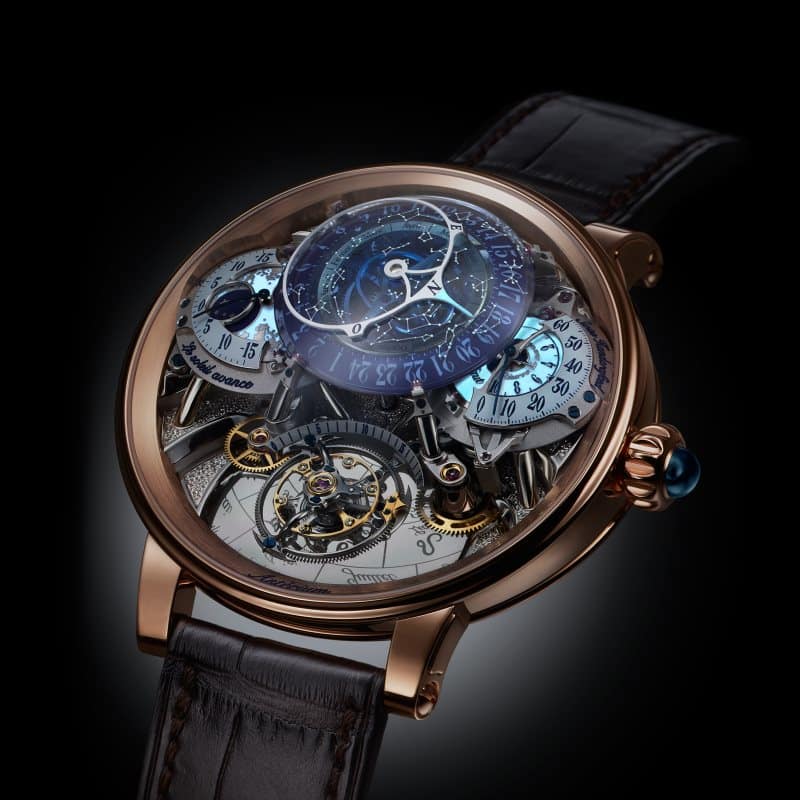
Created in June 2001 and inaugurated in 2004, the Fleurier Quality Foundation marks the region’s taste for horological precision and aesthetic beauty. Launched at the initiative of several brands based in Val-de-Travers (Chopard, Bovet Fleurier, Parmigiani Fleurier, and Vaucher), the Foundation is an independent body that issues a high-quality watchmaking certification, the Fleurier Quality hallmark.
Any certification from the Foundation requires meeting five conditions:
The Watchmaking Heart of Fleurier
How did the town of Fleurier, now an integral part of the municipality of Val-de-Travers in the canton of Neuchâtel, become one of the beating hearts of Swiss watchmaking history? Until the 18th century, the economy of this rural hamlet was based on agriculture. However, in 1730, a young man introduced the watchmaking virus into the Fleurier community: at the age of 18, David-Jean-Jacques-Henri Vaucher completed his watchmaking training and returned home, bringing with him the expertise that would profoundly change the future of his region. Where did he receive this training? Who taught him the subtle arts of watch mechanics? No one knows. Some suggest an apprenticeship with the great Daniel JeanRichard. Others, more prosaically, refer to a stay in Geneva. Regardless, Vaucher quickly demonstrated his talents: he was capable of designing and manufacturing a watch in its entirety, including all its parts. What had already happened in Le Locle around JeanRichard then occurred in Fleurier: through the sublime expression of his passion, Vaucher attracted the attention of the villagers, to whom he transmitted his techniques. As a result, by 1750, about fifteen watchmakers were already walking the streets of the hamlet. There would be more than a hundred by 1794, including three descendants of the great man who founded the Vaucher Frères company. At the same time, this development linked to watchmaking was accompanied by a demographic explosion, doubling the population of Fleurier to reach 800 souls by the end of the 18th century. Nevertheless, watchmaking was still nothing more than a secondary activity for the inhabitants of Fleurier. During slack agricultural periods, farmers turned into artisans to produce mechanical parts at home, providing passing merchants with the components to assemble clocks and watches themselves. Local production was diverse: watch parts, textiles, absinthe, tobacco, and bicycles. This economic diversification allowed Fleurier to escape the violent crises that affected surrounding towns dependent on a single activity. However, watchmaking production in Fleurier continued to develop, especially thanks to the export of its clocks and watches to the Chinese market starting in 1820, under the impetus of Edouard Bovet. And because a good watchmaker needs tools suited to his craft, the region saw the birth of companies manufacturing specialized tooling. So much so that Val-de-Travers would eventually count up to 20 such factories, scattered between Fleurier and Couvet. Then came the era of industrialization at the end of the 19th century—an upheaval whose epicenter was located in the United States. Fleurier reacted quickly: thanks to the presence of mind of Jules-Samuel Jequier, mechanized factories rapidly took their place in the municipality, replacing traditional watchmaking workshops. In the process, Fleurier experienced a significant demographic boom that forced the rapid construction of housing for the watchmaking workforce, as well as adequate infrastructure—this was also the case, on a larger scale, in the nearby towns of Le Locle and La Chaux-de-Fonds. Soon, part of Fleurier’s urban planning reflected the needs of watchmaking production: a grid layout, architecture that was as rational as it was sober, and buildings designed to meet the demographic challenge. The Current Role of Watchmaking in Fleurier
The quartz crisis in the 1970s nearly swept away the entire Swiss watch industry, and Fleurier’s production did not escape the tsunami of electronic watches. The number of watchmakers plummeted, dropping from 742 to 160 in just 20 years; the hamlet lost a quarter of its population. Only the House of Piaget managed to survive the storm from the small municipality of La Côte-aux-Fées, where it was peacefully established.
Once calm returned, the entire local watchmaking industrial body decided to turn toward the very high-end market—a niche market, certainly, but a very promising one, as the future of global watchmaking would prove. It was this ambition for renewal that marked the birth of the House of Parmigiani Fleurier, whose first creations were launched in 1996, a date that marks the return to business for Fleurier’s watchmaking production. Since then, the town of Fleurier has continued to shine on the international stage with its high-end productions, whose excellence is proven more than ever by the presence of the Fleurier Quality label.
Today, 1,500 employees work in the watchmaking field in Val-de-Travers, 700 of whom are based in Fleurier. Major watch brands have their headquarters or production centers there:
- Bovet Fleurier
- Chopard
- Parmigiani Fleurier
- Valfleurier (belonging to the Richemont Group)
- Vaucher Manufacture Fleurier
- Voutilainen
- Waeber HMS (hand manufacturer)
 The Fleurier Quality Label
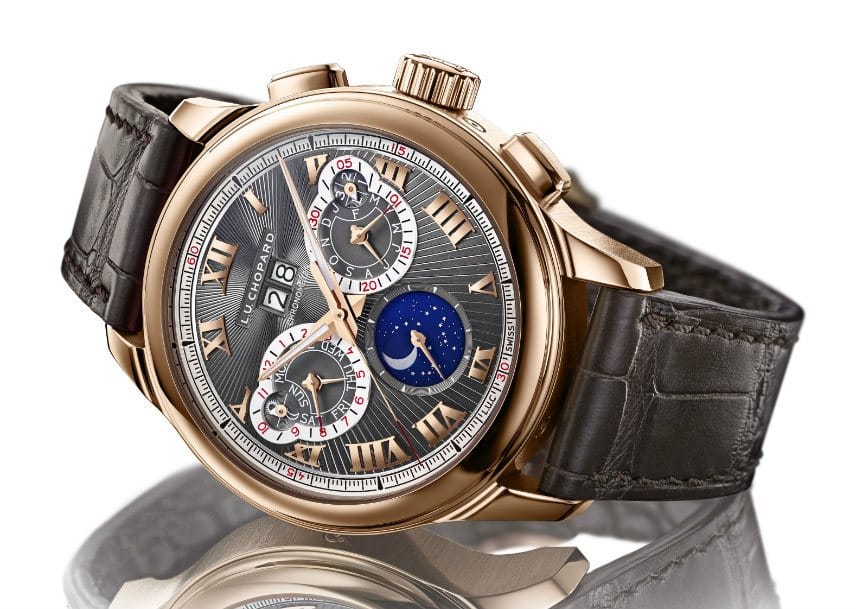
Created in June 2001 and inaugurated in 2004, the Fleurier Quality Foundation marks the region’s taste for horological precision and aesthetic beauty. Launched at the initiative of several brands based in Val-de-Travers (Chopard, Bovet Fleurier, Parmigiani Fleurier, and Vaucher), the Foundation is an independent body that issues a high-quality watchmaking certification, the Fleurier Quality hallmark.
Any certification from the Foundation requires meeting five conditions:
- The manufacturing of the watch must be entirely Swiss
- The movement must meet exclusive aesthetic finishing criteria
- The movement must have successfully passed a series of aging tests
- The movement must first be certified as a chronometer by the Swiss Official Chronometer Testing Institute (COSC)
- The watch is tested by a simulator that reproduces the movements of a human wearer, alternating between active and calm phases