

Driven as much by illustrious watchmakers as by prestigious brands, Swiss watchmaking benefited very early on from exceptional expertise in the design and manufacture of timepieces. Today it continues to dominate the watch industry, despite several major crises—some of which came close to bringing this long-standing hegemony to an end.
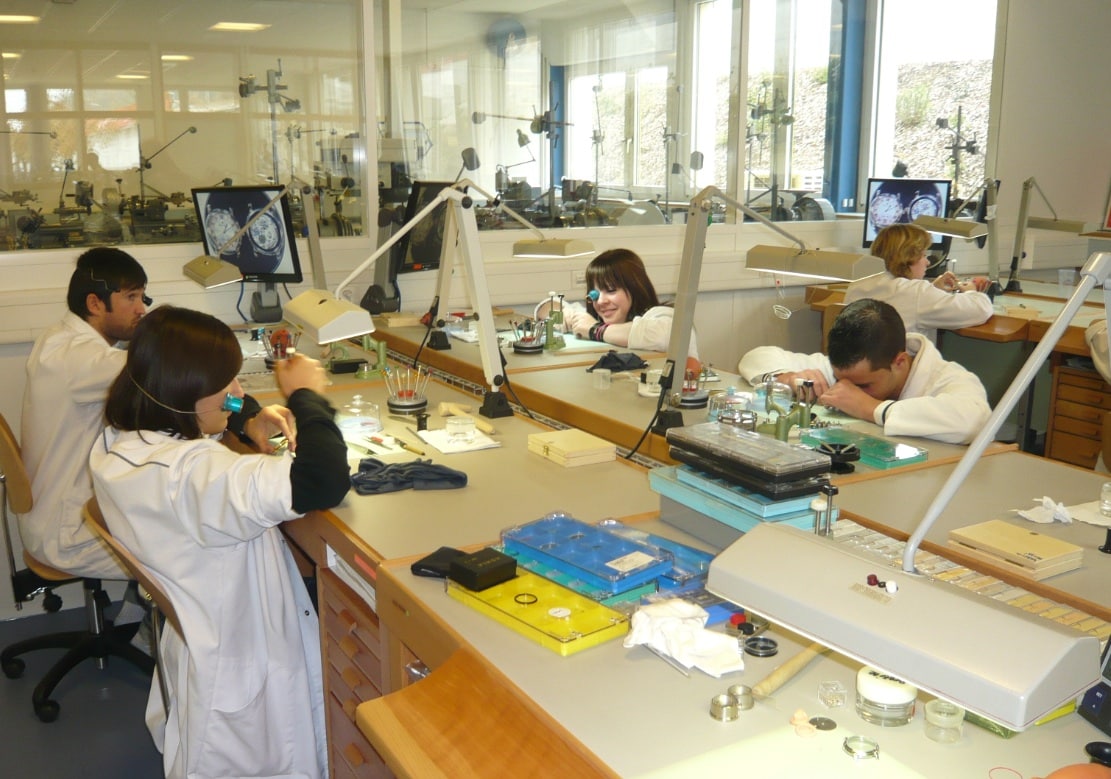
Renowned for its craftsmanship, Swiss watchmaking draws on many talents working at the heart of tiny, highly specialized workshops: it can sometimes take a hundred pairs of hands to produce a clock or a watch, each deploying a specific expertise. Training is deeply artisanal: the master watchmaker traditionally receives his certificate after presenting a finely finished piece made by his own hand. Then, gradually, a pre-industrial production method known as « établissage » developed—particularly in the Jura—encouraging craftsmen to specialize in their own fields, while the entrepreneur managed production from above. By the end of the 18th century, Swiss watchmaking was reaching new heights: 20,000 employees worked in this industry in Geneva, and some 85,000 watches were produced each year.
However, from the mid-19th century onward, the sector—driven by the Industrial Revolution—was forced to adapt as quickly as possible. Établissage, though well established, was disrupted by American-style industrialization, characterized by highly efficient task division.
This was the first warning shot to hit Swiss watchmaking, and it originated in North America. Under the aegis of a visionary industrialist, Aaron Lufkin Dennison, American companies (foremost among them the Waltham Watch Company) developed movements with interchangeable parts, faster to produce. The first automatic screw-making machine and Waltham’s assembly line, presented at the Philadelphia World’s Fair in 1876, caused a sensation—and marked the starting point of the sector’s industrialization, which struck traditional Swiss craftsmanship head-on, forcing it to modernize and—following a damning report by Jacques David, sent by Longines to the said Exhibition, entitled « MM. les horlogers suisses, réveillez-vous ! »—to adapt its production methods. With considerable success, nonetheless.
Forced industrialization was only a warning: in the 20th century, Swiss watchmaking was buffeted by several major crises. A land of innovation and watchmaking prestige, yet dominated by small, scattered structures, Switzerland was hit hard by the consequences of the Great Depression in the United States. The Swiss Confederation was called upon to respond: it pushed banks to create a holding company in order to bring together manufacturers of watchmaking components.
This first serious shock gave no indication of the earthquake of the 1970s. The electronic quartz watch swept into Europe from Japan. Electronic components and low-cost labor made it possible to sell these timepieces at prices that undercut all competition—and Switzerland could no longer absorb the blow, all the more so because these watches, besides being far cheaper, were also more accurate. Gradually, the Swiss watchmaking industry saw its exports shrink drastically, workshops disappear, and employee numbers melt away. But Japanese competition was not the only cause. Among other factors, the watchmaking statute (a set of legal measures adopted to save the industry), introduced in 1931, helped to turn Swiss watchmaking inward, explaining its lack of preparedness for the arrival of rivals on the market.
In 1981, Swiss watchmaking was at an impasse. The market share of domestic watches had fallen from 83% in 1970 to 22% in 1981 (it would drop to as low as 15% in 1983). What would have become of it without the support of Nicolas Hayek? The Lebanese-born businessman led an audit of the sector and drew all the necessary lessons from it. In 1983, under his impetus, a new holding company was created, bringing together the two main Swiss watch groups: the Société de microélectronique et d’horlogerie (SMH), the future Swatch Group. In the wake of this, Hayek transformed local production by launching the Swatch: a watch bearing the “Swiss quality” stamp, yet sold at a competitive price. This small plastic timepiece is what enabled the national watchmaking industry to bounce back.
High technology, selective brand marketing: the transformation of Swiss watchmaking saved the industry from shipwreck. Since then, the sector has renewed itself across two segments: the Swatch type, watches sold at very affordable prices; and the very high end, via brands favoring the manufacture of mechanical timepieces offering complications (a synonym, in watchmaking, for great prestige). Today, the number of watches produced in Switzerland is extremely limited, but the value of these watches is unmatched.
The great names of Swiss watchmaking—craftsmen and inventors—have given the sector its hold over the global watchmaking industry in every era, from the 16th century to the present day. Here are a few of the most renowned (in alphabetical order):
How can one name all the major Swiss brands, so numerous and so prestigious? Here is, at least, a non-exhaustive selection:
The birth of Swiss watchmaking
Swiss watchmaking emerged along the French border, in the French-speaking part of the country, around Geneva, Neuchâtel, Le Locle, La Chaux-de-Fonds, the Vallée de Joux and Fleurier. It is here that illustrious houses came to life—watchmaking manufactures that would become among the most famous in the world (Audemars Piguet, Jaeger-LeCoultre, Breguet, Vacheron Constantin, etc.). Driven toward watchmaking by Calvinist doctrine, which forbade the wearing of jewelry (on the grounds that it was a superfluous accessory), goldsmiths and jewelers helped establish the Swiss watchmaking industry—an industry that leaned toward luxury, with watches set with precious stones that were once intended for jewelry. After Louis XIV revoked the Edict of Nantes, many watchmakers based in France—Protestants by faith (the Huguenots)—fled the country for neighboring nations. This is how they arrived in large numbers, notably in Switzerland, where they would contribute to the development of the national watchmaking industry, to the detriment of their homeland. This was not a new phenomenon—one century earlier, Thomas Bayard had already cited the St. Bartholomew’s Day massacre as a pretext to take refuge in Geneva—but the scale of the exodus was striking, with a genuine flight of watchmaking talent from France. In Geneva, as throughout the Jura arc, craftsmen settled in a peaceful environment where they benefited from a workforce as patient as it was meticulous—precious assets for producing such precise mechanisms. Swiss watchmaking was born.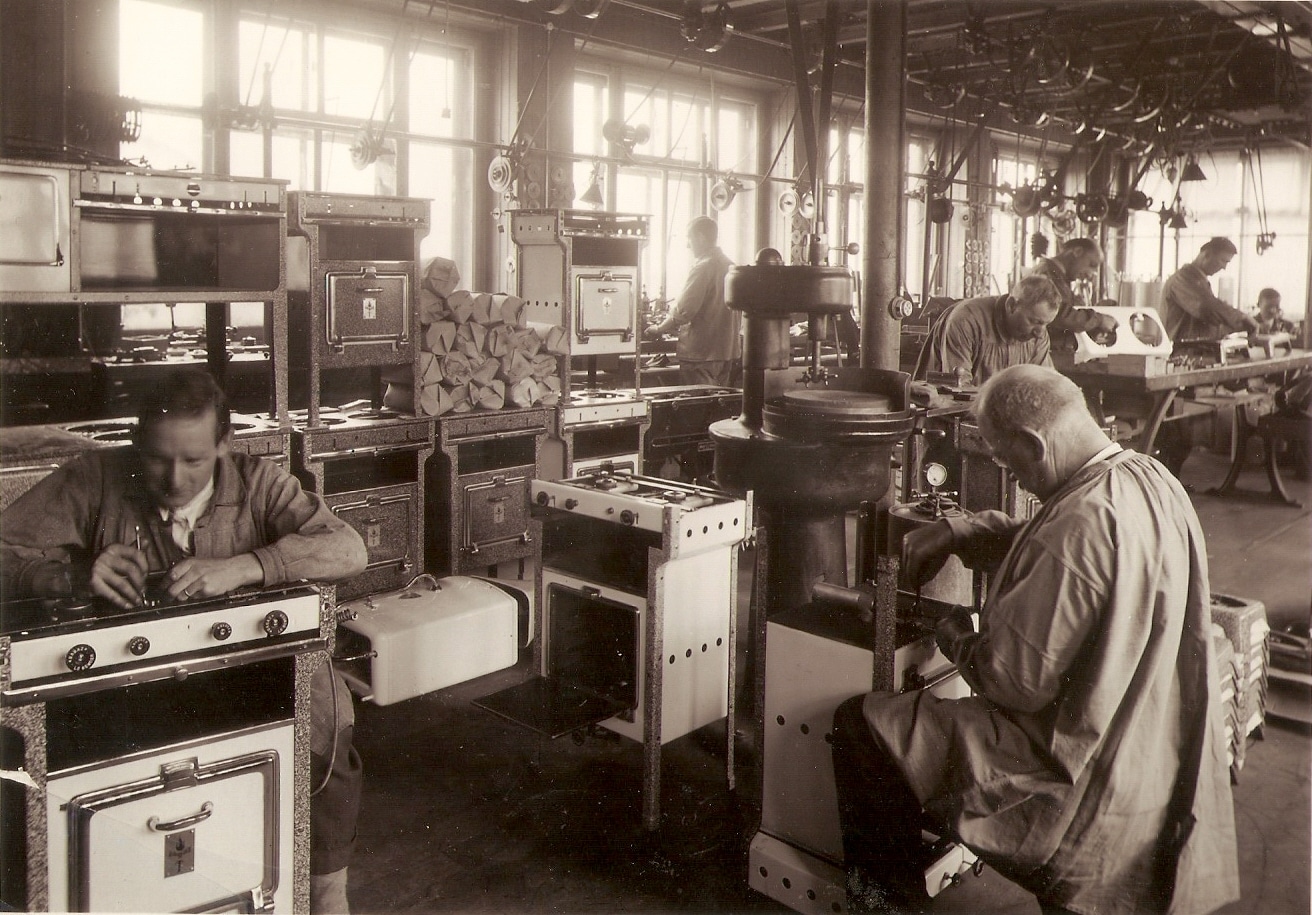 From craftsmanship to industrialization
Renowned for its craftsmanship, Swiss watchmaking draws on many talents working at the heart of tiny, highly specialized workshops: it can sometimes take a hundred pairs of hands to produce a clock or a watch, each deploying a specific expertise. Training is deeply artisanal: the master watchmaker traditionally receives his certificate after presenting a finely finished piece made by his own hand. Then, gradually, a pre-industrial production method known as « établissage » developed—particularly in the Jura—encouraging craftsmen to specialize in their own fields, while the entrepreneur managed production from above. By the end of the 18th century, Swiss watchmaking was reaching new heights: 20,000 employees worked in this industry in Geneva, and some 85,000 watches were produced each year.
However, from the mid-19th century onward, the sector—driven by the Industrial Revolution—was forced to adapt as quickly as possible. Établissage, though well established, was disrupted by American-style industrialization, characterized by highly efficient task division.
This was the first warning shot to hit Swiss watchmaking, and it originated in North America. Under the aegis of a visionary industrialist, Aaron Lufkin Dennison, American companies (foremost among them the Waltham Watch Company) developed movements with interchangeable parts, faster to produce. The first automatic screw-making machine and Waltham’s assembly line, presented at the Philadelphia World’s Fair in 1876, caused a sensation—and marked the starting point of the sector’s industrialization, which struck traditional Swiss craftsmanship head-on, forcing it to modernize and—following a damning report by Jacques David, sent by Longines to the said Exhibition, entitled « MM. les horlogers suisses, réveillez-vous ! »—to adapt its production methods. With considerable success, nonetheless.
 The crises of the 20th century
Forced industrialization was only a warning: in the 20th century, Swiss watchmaking was buffeted by several major crises. A land of innovation and watchmaking prestige, yet dominated by small, scattered structures, Switzerland was hit hard by the consequences of the Great Depression in the United States. The Swiss Confederation was called upon to respond: it pushed banks to create a holding company in order to bring together manufacturers of watchmaking components.
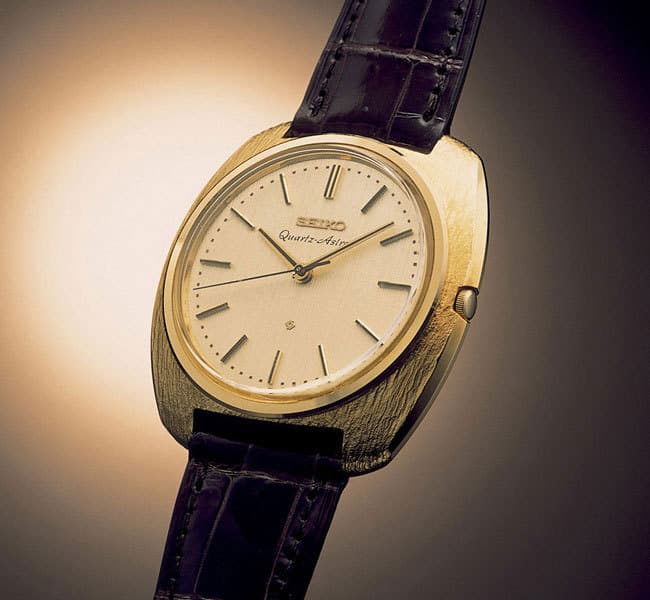
This first serious shock gave no indication of the earthquake of the 1970s. The electronic quartz watch swept into Europe from Japan. Electronic components and low-cost labor made it possible to sell these timepieces at prices that undercut all competition—and Switzerland could no longer absorb the blow, all the more so because these watches, besides being far cheaper, were also more accurate. Gradually, the Swiss watchmaking industry saw its exports shrink drastically, workshops disappear, and employee numbers melt away. But Japanese competition was not the only cause. Among other factors, the watchmaking statute (a set of legal measures adopted to save the industry), introduced in 1931, helped to turn Swiss watchmaking inward, explaining its lack of preparedness for the arrival of rivals on the market.
In 1981, Swiss watchmaking was at an impasse. The market share of domestic watches had fallen from 83% in 1970 to 22% in 1981 (it would drop to as low as 15% in 1983). What would have become of it without the support of Nicolas Hayek? The Lebanese-born businessman led an audit of the sector and drew all the necessary lessons from it. In 1983, under his impetus, a new holding company was created, bringing together the two main Swiss watch groups: the Société de microélectronique et d’horlogerie (SMH), the future Swatch Group. In the wake of this, Hayek transformed local production by launching the Swatch: a watch bearing the “Swiss quality” stamp, yet sold at a competitive price. This small plastic timepiece is what enabled the national watchmaking industry to bounce back.
High technology, selective brand marketing: the transformation of Swiss watchmaking saved the industry from shipwreck. Since then, the sector has renewed itself across two segments: the Swatch type, watches sold at very affordable prices; and the very high end, via brands favoring the manufacture of mechanical timepieces offering complications (a synonym, in watchmaking, for great prestige). Today, the number of watches produced in Switzerland is extremely limited, but the value of these watches is unmatched.
 Swiss watchmakers and inventors
The great names of Swiss watchmaking—craftsmen and inventors—have given the sector its hold over the global watchmaking industry in every era, from the 16th century to the present day. Here are a few of the most renowned (in alphabetical order):
- Louis-Benjamin Audemars
- René Bannwart
- Felix Baumgartner
- Daniel Bernoulli
- Ferdinand Berthoud
- Abraham-Louis Breguet
- Léon Breitling
- Roger Dubuis
- Frédéric-Louis Favre-Bulle
- Pierre Jaquet-Droz
- Louis JeanRichard
- Antoine Le Coultre
- Georges-Auguste Leschot
- Abraham-Louis Perrelet
- Georges-Édouard Piaget
- Jean-Marc Vacheron
 The major Swiss brands
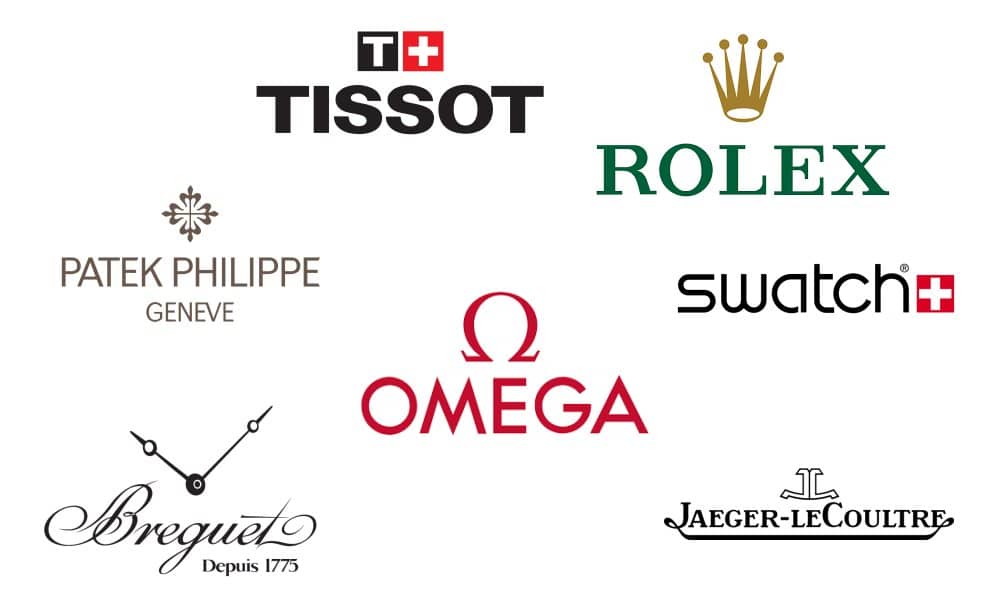
How can one name all the major Swiss brands, so numerous and so prestigious? Here is, at least, a non-exhaustive selection:
- Audemars Piguet
- Blancpain
- Breguet
- Breitling
- Chopard
- Hamilton
- Jaeger-LeCoultre
- Jaquet Droz
- Jeanrichard
- Omega
- Patek Philippe
- Piaget
- Rolex
- TAG Heuer
- Tissot
- Vacheron Constantin
- Zenith