Shaped by architecture and horology, the history of La Chaux-de-Fonds merges with humanity’s most refined creative ambition. The municipality that gave birth to Le Corbusier was also the stage for the development of the watch industry, to the point where its urban planning was transformed to better integrate timepiece manufacturing into its economic landscape. This led Karl Marx to define La Chaux-de-Fonds as a unique example of a “watchmaking city” created for and by Swiss watchmaking.
A History Linked to Watchmaking
What would have happened if La Chaux-de-Fonds, a small town nestled in the Swiss Jura mountains, had not invested in the prestigious field of timepiece manufacturing? It would likely have remained the agricultural village it had been since its founding in 1656 and until the dawn of the 18th century, before the pursuit of precision took hold. But here’s what happened: the art of clockmaking established itself during the Age of Enlightenment, and by the mid-18th century, 68 clockmakers and 8 cabinetmakers were engaged in this noble pursuit. This transformation, it must be noted, was due to an exceptional individual who left his mark on both Le Locle and La Chaux-de-Fonds: Daniel JeanRichard, a legendary self-taught watchmaker who originated the établissage system and, consequently, the expansion of the watchmaking industry in the canton of Neuchâtel.
The significant demographic and economic growth that La Chaux-de-Fonds experienced in the 19th century was intimately linked to that of the watchmaking industry, particularly watches, which would make the city’s fortune. In 1870, nearly 50% of the local population worked directly or indirectly in the watchmaking sector—approximately 4,500 individuals. A few decades earlier, in 1820, the city was chosen to host the headquarters of the Cantonal Precious Metals Control Bureau—metals so essential to watch cases. For these reasons, for 100 years, La Chaux-de-Fonds was the global center of watchmaking.
????????????????????????????????????
La Chaux-de-Fonds, a Watchmaking City Down to Its Very Streets
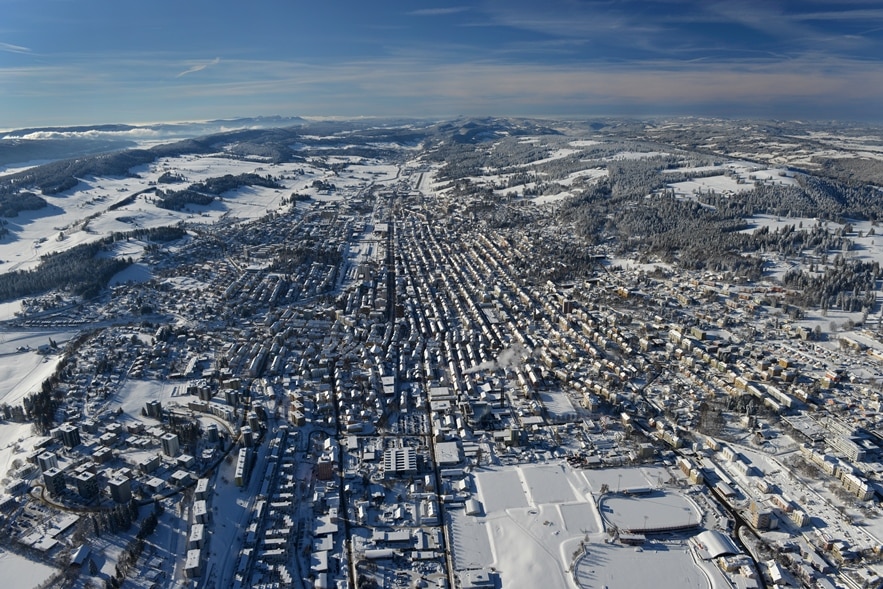
What distinguishes La Chaux-de-Fonds, like its neighbor Le Locle, from most surrounding towns? Certainly not the climate (cold and harsh) or the serenity of the setting. No, what differentiates these two municipalities is what is called their “watchmaking urbanism,” the fact that their history is so thoroughly intertwined with that of the watchmaking industry that their streets and buildings were designed with local manufacturing in mind.
Like what would happen in Le Locle nearly half a century later, La Chaux-de-Fonds fell victim in 1794 to a vast fire that left the municipality devastated. The municipal authorities then decided to rebuild by adopting a remarkable consensus between hygienist concerns and production efficiency. Here, then, is a very singular example of a city conceived, designed, and built around a mono-economy: that of clocks and watches.
Throughout the 19th century, La Chaux-de-Fonds developed an urbanism whose purpose was to promote economic prosperity through watchmaking: workshops stood alongside workers’ housing within the same buildings, structures specialized to become factories, in a total and exceptional symbiosis between two needs—social and industrial. All that would be missing is for the city, seen from above, to form a watch dial with its hands for the correlation to be perfect. This led Karl Marx to state in Das Kapital that La Chaux-de-Fonds could be considered in its entirety as a single watchmaking manufacture, or “watchmaking city.”
La Chaux-de-Fonds and Le Locle were moreover distinguished by UNESCO, which inscribed their watchmaking urbanism on the World Heritage List in 2009. Furthermore, since 2010, a Watchmaking Heritage Biennial has taken place across these two municipalities, with the aim of familiarizing the public with this unparalleled heritage.
The Watchmaking Present of La Chaux-de-Fonds
Today, the city of La Chaux-de-Fonds continues to cultivate its watchmaking heritage. Numerous manufactures operate there: Breitling, Cartier, Corum, Girard-Perregaux, Jaquet Droz, JeanRichard, TAG Heuer… whose workshops can be visited to discover the secrets of watchmaking by observing watchmakers in their daily work—provided you make an appointment! At the same time, the Haute École Arc Ingénierie trains students (among other things) in the art of restoration and conservation, so valuable in the world of watches.
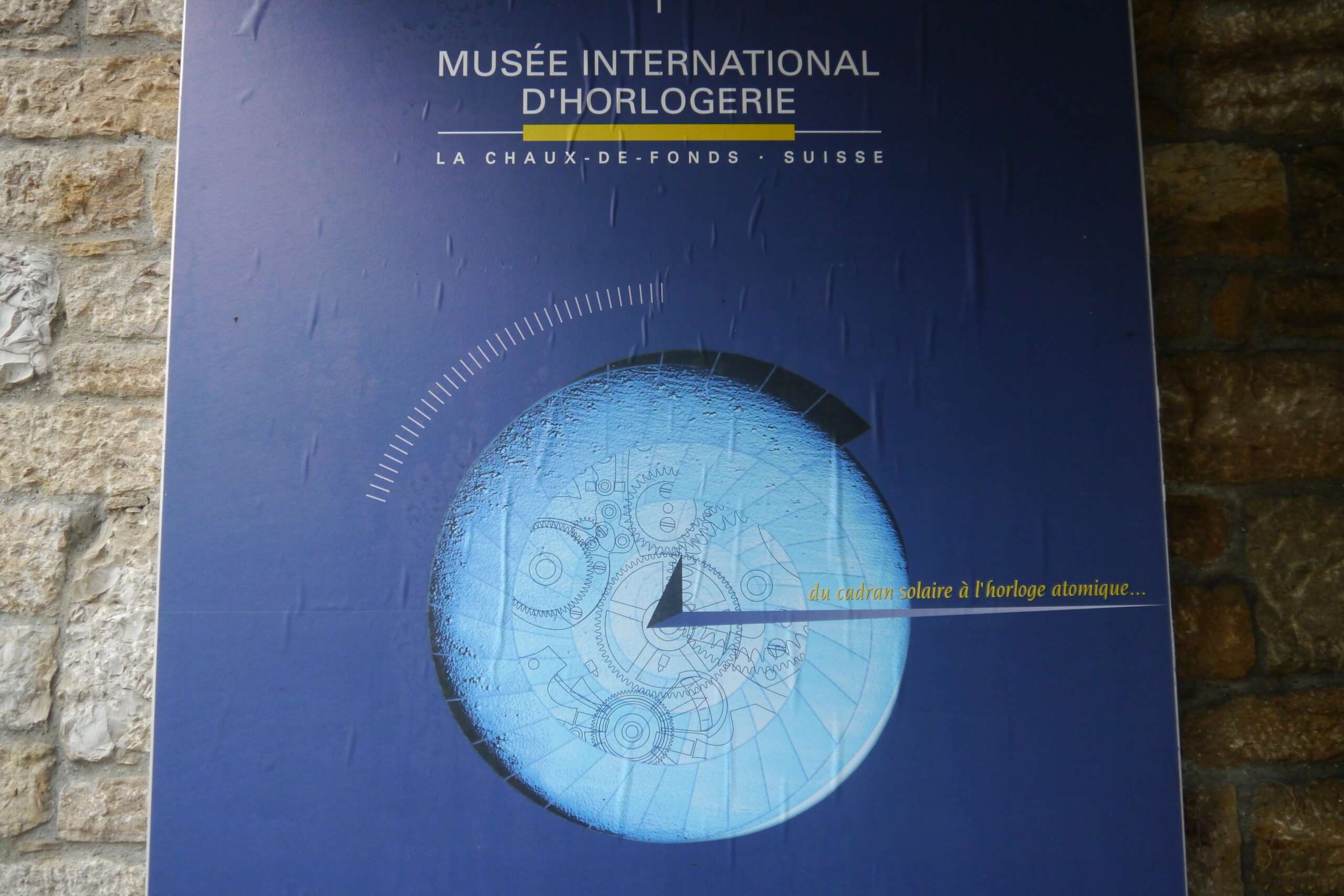
As for the International Museum of Horology, it offers both novices and specialists some 2,700 watches, 700 clocks, and 4,500 various objects (chronometers, sundials, and other non-mechanical installations) through a permanent exhibition that traces the historical evolution of the technique and art of timepiece manufacturing.


 The Watchmaking Present of La Chaux-de-Fonds