
Key takeaway: to open a watch case back, first identify how it is secured. A snap-off case back is pried open with a case opener knife via its notch, a screw-down case back is unscrewed using a pin case wrench, and a case back secured by screws is opened with a precision screwdriver. Work flat on a soft surface, without forcing, and check the gasket before closing.
Replacing a battery, inspecting a caliber, or examining a movement up close: sooner or later, any watch enthusiast will want to open the case back—the plate that seals the rear of the watch case. The procedure is straightforward when using the tool designed for that specific closure. It becomes risky as soon as you improvise with a kitchen knife or an electrician’s screwdriver: the tool slips and leaves a permanent scratch.
This tutorial teaches you how to identify the three main types of case backs, choose the appropriate tool for each, and open and close the watch cleanly. It also highlights when it is best to stop and entrust the watch to a professional watchmaker, especially for a water-resistant watch intended for aquatic use. The tools mentioned are part of our watchmaking tools collection.
Identifying Your Watch Case Back Type
Turn the watch over and inspect the perimeter of the case back. Three key indicators are sufficient in the vast majority of cases.
The Snap-Off Case Back
The snap-off (or press-fit) case back is simply fitted into the case. Its rim is smooth, and you can generally spot a small notch near one of the lugs into which a blade is inserted to pry it open. It is found primarily on quartz watches and entry-level timepieces. It does not unscrew: there is no use in attempting to twist it.
The Screw-Down Case Back
A screw-down case back features evenly spaced notches around its perimeter—often six—or sometimes a fluted edge. It screws into the case like a jar lid and compresses a gasket, making it the standard closure for water-resistant watches, diving watches, and most automatic timepieces. Certain brands employ proprietary case back profiles that require a specialized wrench.
The Screw-On Case Back
Here, four to eight small screws pass through the case back and secure it to the case. This is the easiest closure to identify, and often the simplest to open, provided you use a screwdriver whose blade matches the screw slots precisely.
If your watch displays none of these features, it may be a monobloc (one-piece) case that opens from the front by removing the crystal. This procedure should be handled in a watchmaker’s workshop.
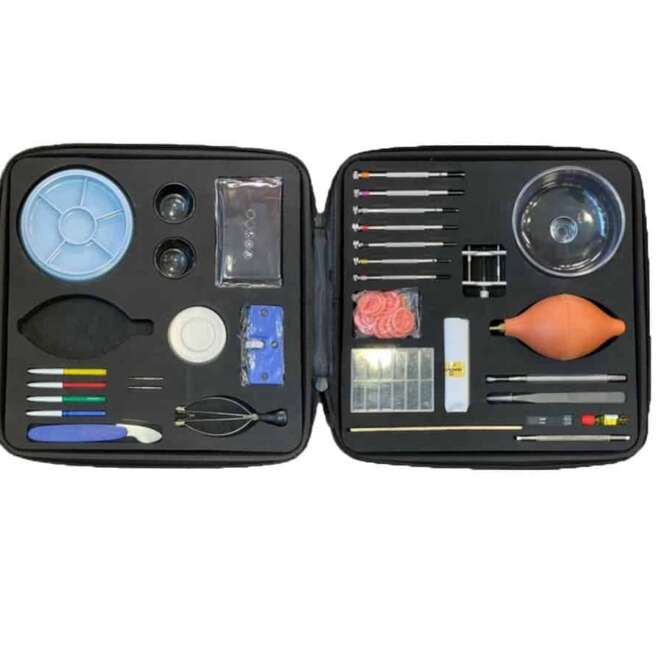
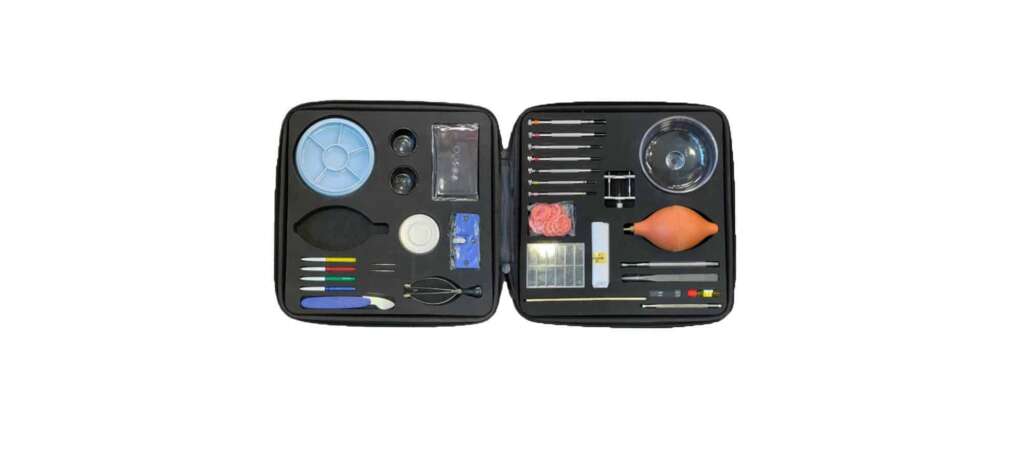
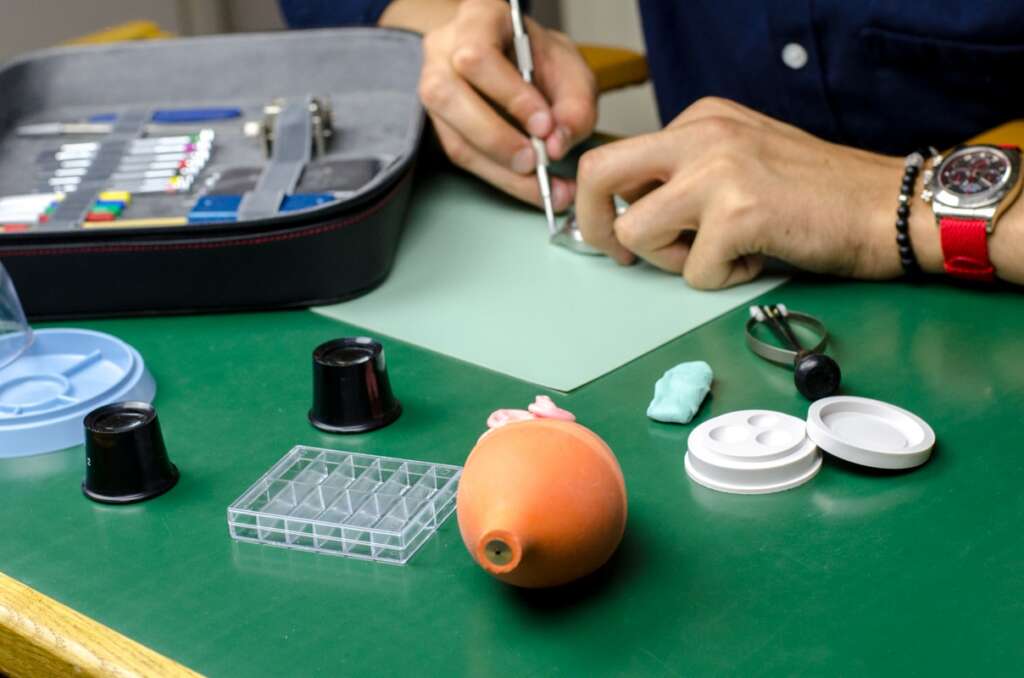
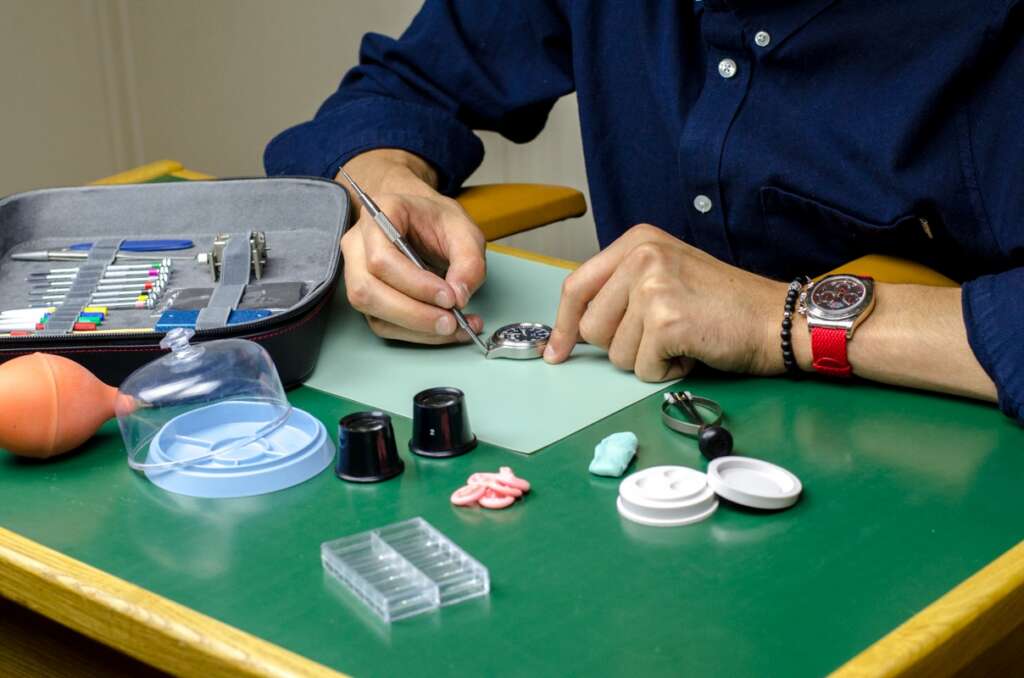
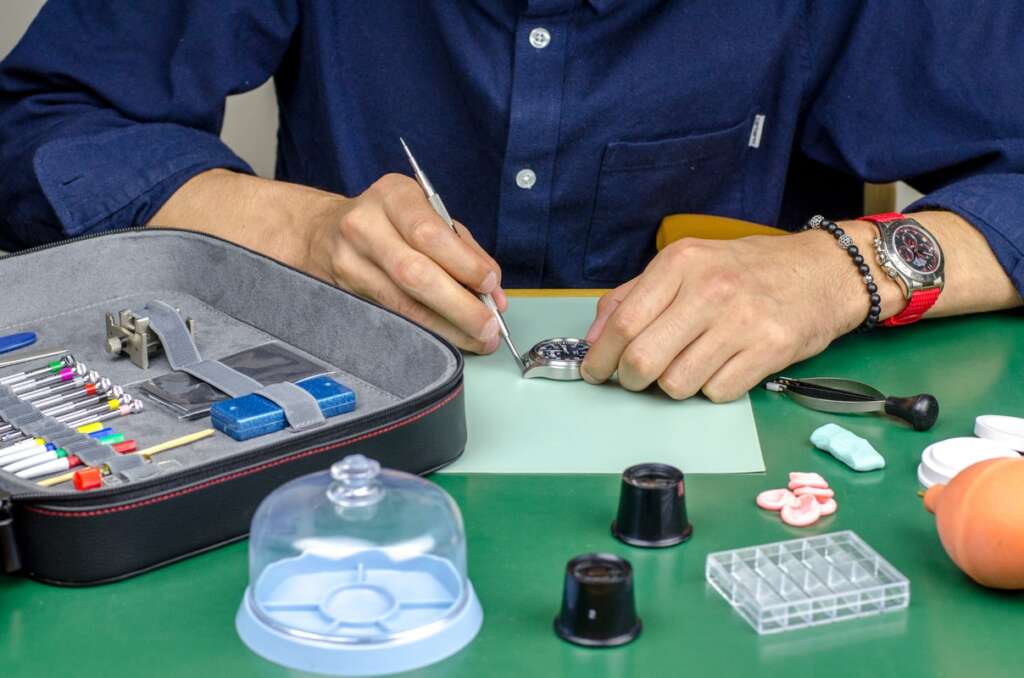
Kit d’outils expert OH Selection
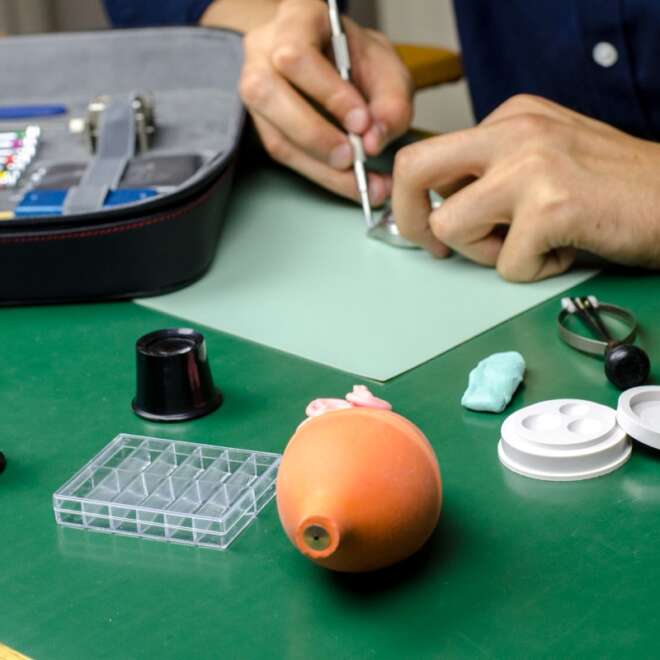
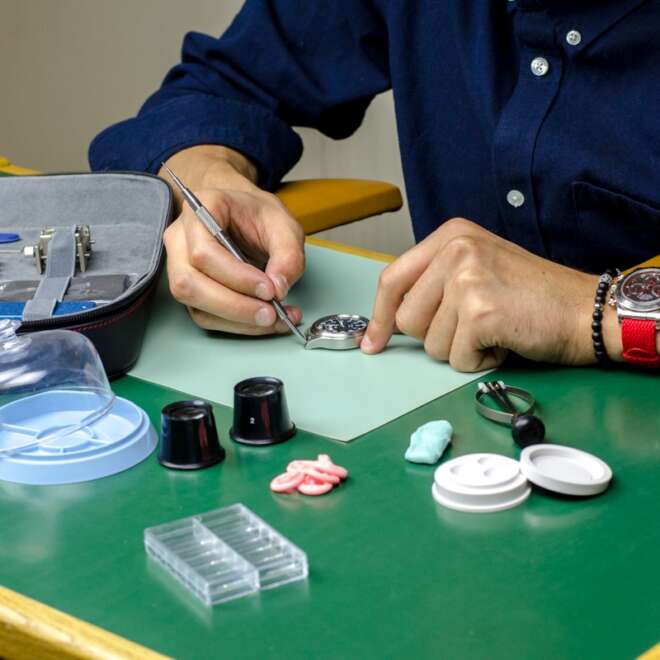
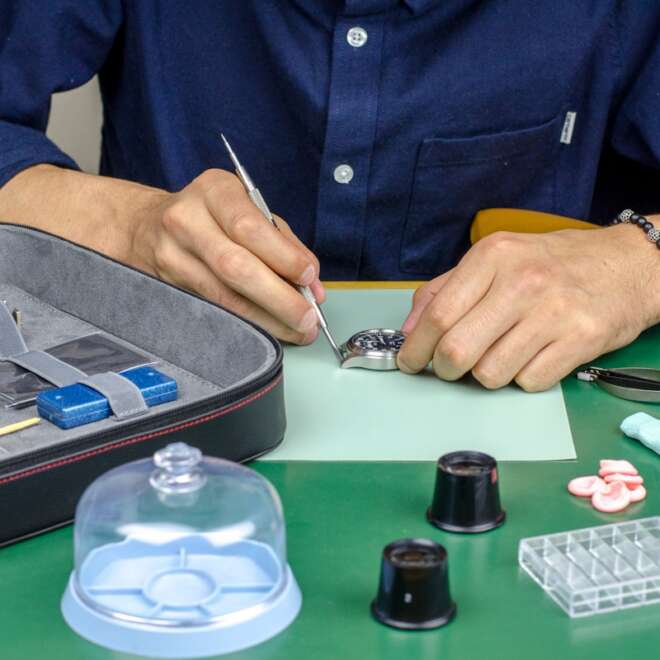
Ce kit d’outils expert rassemble tous les instruments essentiels pour travailler et entretenir des montres : tournevis de précision, ouvre-boîtier, loupe, huile horlogère, support de mouvementlivré dans une housse de rangement pratique. Garantit 2 ans, il convient aussi bien aux amateurs avertis qu’aux horlogers professionnels.
Le Kit Expert est actuellement indisponible, réassort prévu début d’année prochaine.
Out of stock
Which Tool for Which Case Back?
Each closure type requires its own tool, and adhering to this rule prevents damage. Here are the three tools to keep on hand:
- The case opener knife: a short, rigid blade that slips into the notch of a snap-off case back and lifts it with a gentle levering motion;
- The case opener wrench: an adjustable two- or three-pin wrench that is adjusted to match the spacing of the notches on a screw-down case back before turning;
- Precision screwdrivers: featuring blades of various widths, designed for screw-secured case backs.
Our OH Selection Expert Tool Kit brings these three tools together, along with seven precision screwdrivers featuring interchangeable blades, tweezers, an air blower, and finger cots to avoid leaving marks on the movement. For a smooth or fluted screw-down back without notches, a specialized rubber friction ball firmly pressed against the back can often unscrew it through adhesion. To get started properly, our article on essential equipment for beginner watchmaking complements this selection.
Opening the Case Back Step by Step
Work on a stable, well-lit table, and place the watch dial-down on a soft cloth or a watch cushion: the crystal and hands must not experience friction or bear the weight of the tool. If the strap gets in the way, remove it. Keep a small container within reach for the screws, which can easily vanish if dropped.
For a snap-off case back, slide the tip of the knife into the notch at an angle, then apply a gentle upward levering motion. The case back should pop open immediately. If it resists, do not apply extra force: make sure the blade is firmly seated in the notch and not pressing against the case.
For a screw-down case back, adjust the wrench so that its pins seat precisely into two opposing notches, hold the watch firmly, and turn counterclockwise. The wrench must remain completely flat: if it tilts, the pins can slip out and scratch the back. A factory-tightened case back requires a firm initial effort, after which it can be unscrewed by hand.
For a screw-secured case back, loosen each screw by half a turn in a crisscross pattern, then remove them completely. A blade that is too small will damage the screw slot, while one that is too wide will rub against the case. Once the case back is free, lift it flat and set it down with the inner surface facing upward.
The movement is now exposed. Avoid touching it with bare fingers: skin oils leave marks and attract dust. If you must handle components, such as when replacing a battery, wear finger cots and handle parts using tweezers. A puff from an air blower will remove dust before reassembly. Do not touch the balance wheel or the regulating mechanism of a mechanical movement: these tasks must be performed by a watchmaker.
The Gasket and Water Resistance: What to Check
Between the case back and the case lies a gasket—a pliable ring that prevents water and dust from entering. Upon opening, inspect it immediately. If it is flattened, cracked, dried out, or dislodged from its groove, it will no longer function effectively and must be replaced with one of identical dimensions. If it is in sound condition, reseat it flat in its groove before closing.
Once opened, a watch no longer offers any guarantee of water resistance until it has been professionally tested. If you intend to swim with it, have a pressure test conducted by a watchmaker after resealing: this is a quick pressure test verifying that the case back and gasket are sealing properly. Our article on watch water resistance in ATM, bar, and meters explains what these ratings guarantee.
Closing the Watch
A screw-down case back should be started by hand, then tightened gently with the wrench: the gasket must be compressed, not crushed. A screw-on case back should be tightened gradually in a crisscross pattern. A snap-off case back is the most delicate: it requires firm, even pressure to close, ideally using a case press, as pressing with your thumbs while the watch rests on its crystal can cause the glass to crack. Without a press, a watchmaker can reseal it in seconds.
When to Consult a Watchmaker
Stop immediately if the case back does not budge under reasonable force, if the notches or screw slots begin to strip, or if you do not recognize the closure mechanism. Diving watches, luxury timepieces, and watches still under warranty also benefit from professional servicing: certain brands restrict servicing to their authorized service centers, and third-party intervention may impact warranty claims. A visit to a watchmaker is always less expensive than repairing a scratched case back or a cracked crystal.
FAQ
A smooth screw-down case back can sometimes be unscrewed using a rubber friction ball pressed firmly against it, but there is no safe, tool-free method for snap-off or notched case backs. A kitchen knife or ordinary screwdriver will slip and scratch the case. It is much better to use the appropriate tool or visit a watchmaker.
A screw-down case back unscrews counterclockwise with the watch placed dial-down. Adjust the case wrench to two opposing notches, keep it perfectly flat, and apply a firm initial turn. If the case back resists, do not force it, as you risk letting the pins slip.
A screw-down case back features notches or a fluted edge around its entire perimeter. A snap-off case back has a smooth rim with a single small notch, usually located near one of the lugs. If you see small screws around the edge, the case back is secured by screws and requires a precision screwdriver.
Not necessarily. Water resistance depends on the condition of the gasket and proper seating of the case back. Once opened, a watch should no longer be considered water-resistant until it has passed a pressure test by a watchmaker, especially if you plan to wear it while swimming or diving.
Yes, on the vast majority of quartz watches, the battery is located beneath the case back. Identify the type of case back, open it with the proper tool, replace the battery with an identical model, and inspect the gasket before resealing. For a water-resistant watch, arrange for a pressure test afterward.