
Key takeaway: Watch winder settings involve two parameters: the number of turns per day (TPD) and the direction of rotation. Both depend on the watch's movement and are found in its manual. Most automatic watches require 650 to 950 turns per day; if unsure about the direction, bidirectional mode suits almost all movements. More turns…
When you discover the fascinating world of watchmaking, you quickly face a crucial question: which tools should you choose to start with? Between delicate tweezers, precision screwdrivers, and magnifying loupes, watchmaking equipment can seem intimidating at first glance. However, with the right advice and a judicious selection, you can set up your first workshop without…
Key takeaway: ATM or meter ratings indicate resistance to static pressure in a laboratory, not actual immersion depth. This distinction is crucial for preserving the movement, as a watch marked "30 meters" only tolerates splashes. For swimming, only a water resistance of 10 ATM, or a theoretical 100 meters, guarantees reliable protection.
You…
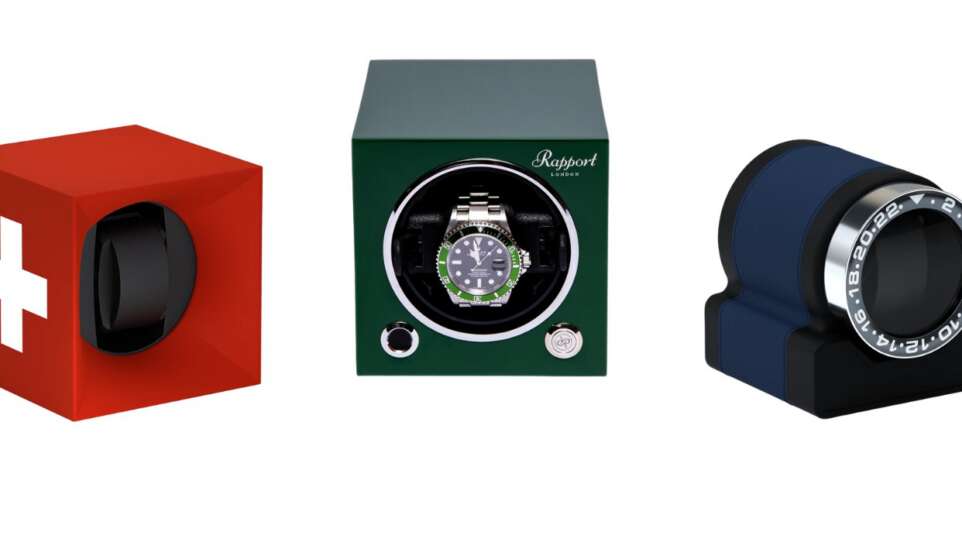
In brief: A watch winder keeps automatic watches running and prevents having to set the time and complications. SwissKubik, Scatola del Tempo, and Rapport London are the 3 leading brands offering silent motors, programmed TPD, and high mechanism protection. A quality watch winder extends the movement's lifespan, ensures constant lubrication, and protects timepieces.
Tired…
Key takeaways For a perfect strap, measure the lug width (common sizes: 18mm, 20mm, 22mm), your wrist circumference (170-210mm = size M), and check the buckle (often 2mm narrower than the strap). Forget the old, deformed strap! A caliper and these simple steps guarantee a perfect, hassle-free fit. Perfect comfort and style are within your…
Key takeaways: The tang buckle is classic, slim, and suits thin wrists and vintage watches, but it marks the strap over time. The deployment clasp secures the watch better and preserves the leather, at the cost of being thicker. The choice depends on your usage, your wrist, and the strap material.
You thought…
Key takeaway: To choose a compatible watch strap, first measure the lug width, i.e., the distance between the lugs, then check the right length for your wrist and the fastening system. Next, choose the material based on use: nylon, rubber, or silicone for sports; leather or Milanese mesh for a dressier style.
Have you…
